African Inflation Reverses Course
Africa's battle against inflation is showing signs of reversal, with several of the continent's largest economies recording faster consumer price growth in the first half of 2026. This follows a year of easing inflation and is primarily due to higher fuel costs stemming from the Iran conflict, which are impacting transport, food, and household expenses.
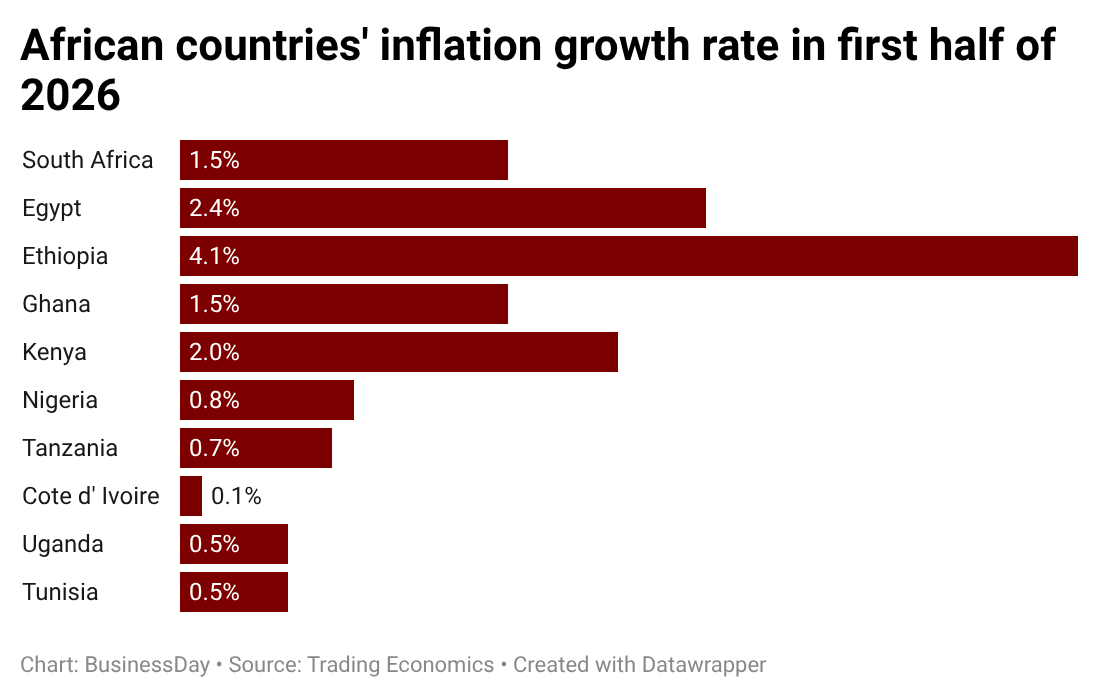
A BusinessDay analysis of the latest inflation data from the statistical agencies of 10 major African economies revealed that all recorded higher inflation in the first six months of 2026 compared to the same period in 2025. This marks a sharp reversal from last year, when price pressures broadly eased across the continent.
The average inflation increase among the four worst-performing countries rose by 2.5 percentage points in H1 2026, contrasting with an average 5.3 percentage-point decline during the same period a year earlier. This resurgence comes after about 70 percent of African countries recorded lower inflation in 2025, supported by tighter monetary policy, moderating food and energy prices, and stronger currencies.
Ethiopia Leads Price Surge
Ethiopia recorded Africa's largest inflation increase during the first half of 2026, rising by 4.1 percentage points. Annual inflation in the country climbed to 13.9 percent in June from 13.4 percent in May, according to the Ethiopian Statistical Service, reaching its highest level in a year.
Food inflation in Ethiopia also saw an upward trend, reaching 15.1 percent after falling into single digits in December for the first time in almost a decade. This resurgence prompted the National Bank of Ethiopia to raise its benchmark policy rate to 16 percent from 15 percent, marking its first increase since introducing the policy rate framework in 2024.
Egypt Pauses Easing Amid Elevated Inflation
Egypt recorded the second-largest rise in inflation among the analyzed countries, with an increase of 2.4 percentage points. Headline inflation in Africa's second-biggest economy stood at 14.3 percent last month, up from 11.9 percent in January, despite weaker economic growth and softer domestic demand.
The Central Bank of Egypt kept its benchmark interest rate unchanged at 19 percent, extending its pause after nearly a year of monetary easing. The bank stated it remains too early to resume rate cuts, despite expectations that inflation will moderate over the medium term. The Egyptian pound also weakened 3.9 percent against the US dollar during the first half of the year, contributing to imported inflation pressures.
World Bank Warns of Geopolitical Risks
The World Bank warned in its April Africa's Pulse report that Sub-Saharan Africa's growth is projected to remain at 4.1 percent in 2026, but rising geopolitical risks threaten this outlook. Higher fuel, food, and fertilizer prices, coupled with tighter global financial conditions, are likely to push inflation higher, weaken economic activity, and disproportionately affect poorer households.
Andrew Dabalen, the Bank's chief economist for the Africa region, advised governments to target scarce resources to protect the most vulnerable households in the short term. He emphasized that maintaining macroeconomic stability through inflation control and prudent fiscal management is essential to navigate the current shock and position African countries for a faster recovery.
The resurgence of conflict in the Middle East since July has erased the temporary decline in oil prices that followed the June ceasefire between Israel and Iran. After falling below $80 a barrel, Brent crude has rebounded towards $100, increasing fuel import costs for many African economies. These higher energy prices have fed into transport and food costs, weakening household purchasing power and complicating central banks' efforts to sustain the disinflation achieved last year.
Business activity has also moderated, with S&P Global’s Africa Purchasing Managers’ Index averaging 50.5 in the first half of 2026, slightly below 50.9 a year earlier. This indicates that private-sector activity remained in expansion territory but expanded at a slower pace amid geopolitical uncertainty. Kenya, despite ranking third in inflation increase, remained relatively stable in its overall economic indicators.