South Africa’s annual producer price inflation for final manufactured goods accelerated to 7.8% in May 2026. This marks a significant rise from 4.8% recorded in April, according to the latest Producer Price Index report from Statistics South Africa.
The surge was primarily driven by higher prices for petroleum, chemical, rubber, and plastic products. The PPI for final manufactured goods also increased by 2.6% month-on-month in May.
The category of coke, petroleum, chemical, rubber, and plastic products recorded an annual inflation rate of 22%. This segment made the largest contribution to the headline PPI rate, adding 4.7 percentage points.
Other notable increases included paper and printed products, which rose by 8.7% and contributed 0.7 percentage points. Food products, beverages, and tobacco products saw a 2.1% increase, contributing 0.6 percentage points.
Metals, machinery, equipment, and computing equipment also increased by 2.9%, adding 0.5 percentage points to the overall PPI. Month-on-month, coke, petroleum, chemical, rubber, and plastic products rose by 9%, contributing 2 percentage points to the monthly PPI increase.
Producer price pressures also intensified in intermediate manufactured goods, with annual inflation climbing to 13.7% in May from 10% in April. The index for intermediate manufactured goods increased by 2.4% month-on-month.
Within this category, basic and fabricated metals rose by 14.3%, contributing 6.9 percentage points to the annual rate. Chemicals, rubber, and plastic products increased by 17.2%, contributing 5.2 percentage points, and by 10.6% month-on-month, contributing 3 percentage points.
Sawmilling and wood products also saw an 8.2% increase, contributing 0.8 percentage points. These figures indicate that higher input costs for manufacturers are building across several industrial categories.
The PPI for electricity and water rose by 12.3% year-on-year in May, a slight decrease from 12.5% in April. Electricity prices specifically increased by 12.4%, contributing 10.4 percentage points to the annual electricity and water PPI rate.
Water prices rose by 11%, contributing 1.8 percentage points. The electricity and water index increased by 1.1% month-on-month, primarily driven by a 1.3% increase in electricity prices.
South Africa’s mining PPI also saw a significant rise, increasing by 28.1% year-on-year in May, up from 24.9% in April. Non-ferrous metal ores surged by 50.4%, contributing 22 percentage points to mining PPI inflation.
Gold and other metal ores increased by 11.6%, contributing 3.3 percentage points. Coal and gas prices rose by 8.1% annually and 11.3% month-on-month.
In contrast, the PPI for agriculture, forestry, and fishing declined by 5.4% year-on-year, compared with a 6.5% decline in April. Agricultural prices increased by 1.3% month-on-month in May, though the sector’s annual producer price index remained below its level a year earlier.
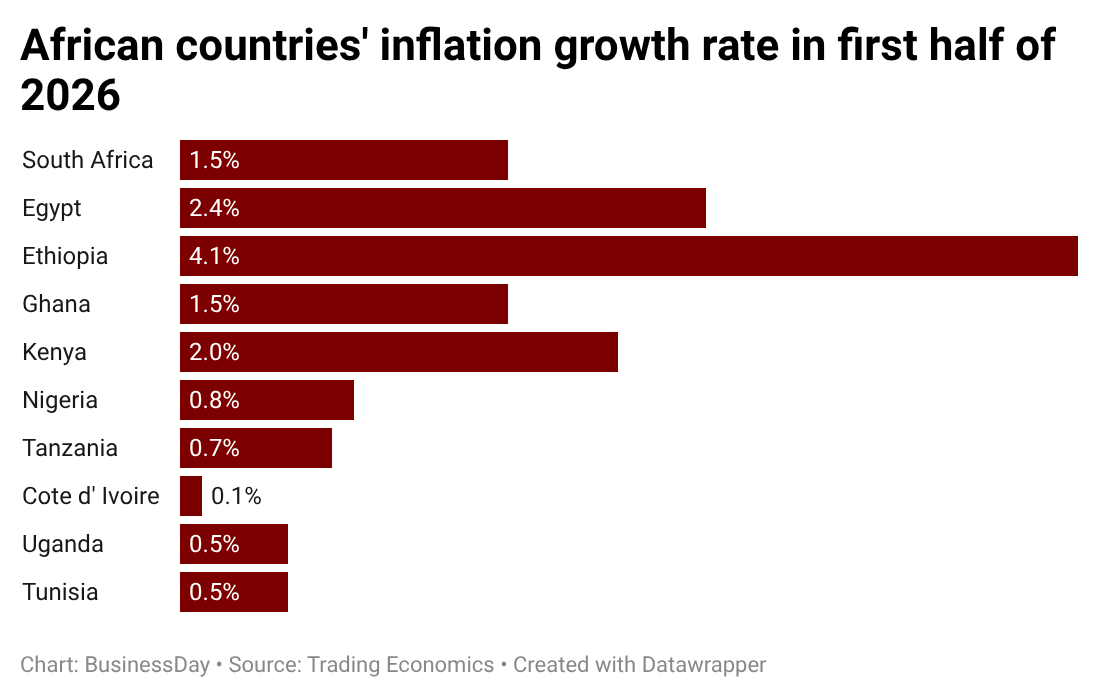
This rise in producer inflation aligns with broader economic trends in South Africa, where the annual inflation rate accelerated to 4.5% in May 2026, up from 4.0% in April. Nigeria’s headline inflation rate also edged higher, rising to 15.93% in May 2026 from 15.69% in April.
The persistence of high producer inflation could increase cost pressures for businesses heavily reliant on energy and manufactured inputs. This comes as South Africa reported a further deterioration in its labour market, with the official unemployment rate rising to 32.7% in the first quarter of 2026, up from 31.4% in the fourth quarter of 2025.