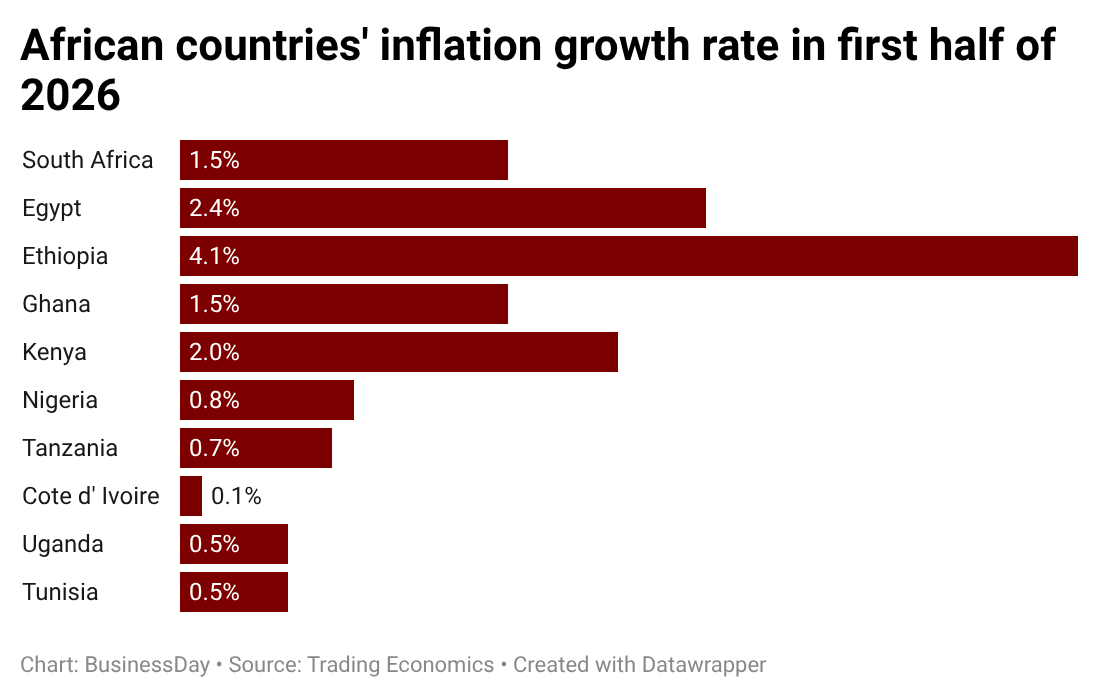
S&P Global has revised its forecast for Nigeria’s average inflation rate in 2026, increasing it to 16.9% from its previous projection of 15.0%. This adjustment is attributed to a stronger-than-expected pass-through from global oil prices to domestic energy costs.
The ratings agency disclosed this in its latest assessment, titled “Economic Outlook Emerging Markets Q3 2026: Inflationary Pressures Will Persist.” The report also indicated a reduction in Nigeria’s gross domestic product (GDP) growth forecasts for both 2026 and 2027.
S&P Global's Revised Outlook
Nigeria’s GDP growth forecast for 2026 was lowered by 30 basis points to 3.7%, while the 2027 projection was also cut by 30 basis points to 3.5%. Despite these revisions, S&P Global maintained that the Nigerian economy would remain resilient.
The agency noted that inflationary pressures have intensified across emerging markets in Europe, the Middle East, and Africa. Nigeria and Turkiye were specifically highlighted among countries experiencing higher energy inflation.
Drivers of Persistent Inflation
S&P Global anticipates a further increase in food inflation over the coming months. This expected rise is linked to higher transportation and fertilizer costs, which directly impact agricultural production and distribution.
The revised inflation outlook for Nigeria, which saw the largest upward adjustment among key EM EMEA economies, reflects the significant impact of higher oil prices on domestic energy costs. This transmission has been more pronounced than initially expected.
Impact on Economic Growth
The inflation outlook has directly influenced S&P Global’s growth expectations for Nigeria, given the substantial role of household consumption in the economy. Higher consumer prices are expected to weaken household spending, a major driver of economic activity.
This projection comes amidst renewed global commodity price pressures, stemming from geopolitical developments in the Middle East and disruptions to global energy supply chains. Earlier in June 2026, Nigeria’s headline inflation rate rose to 15.93% in May, up from 15.69% in April.
Further contributing to these pressures, the World Bank Energy Index increased to 146.4 points from 130.6 points. Similarly, the FAO Food Price Index rose by 1.6% to 130.7 points, marking its third consecutive monthly increase. The revised forecast suggests that price pressures in Nigeria may remain elevated, even with expectations of exchange-rate stability and stronger oil production.