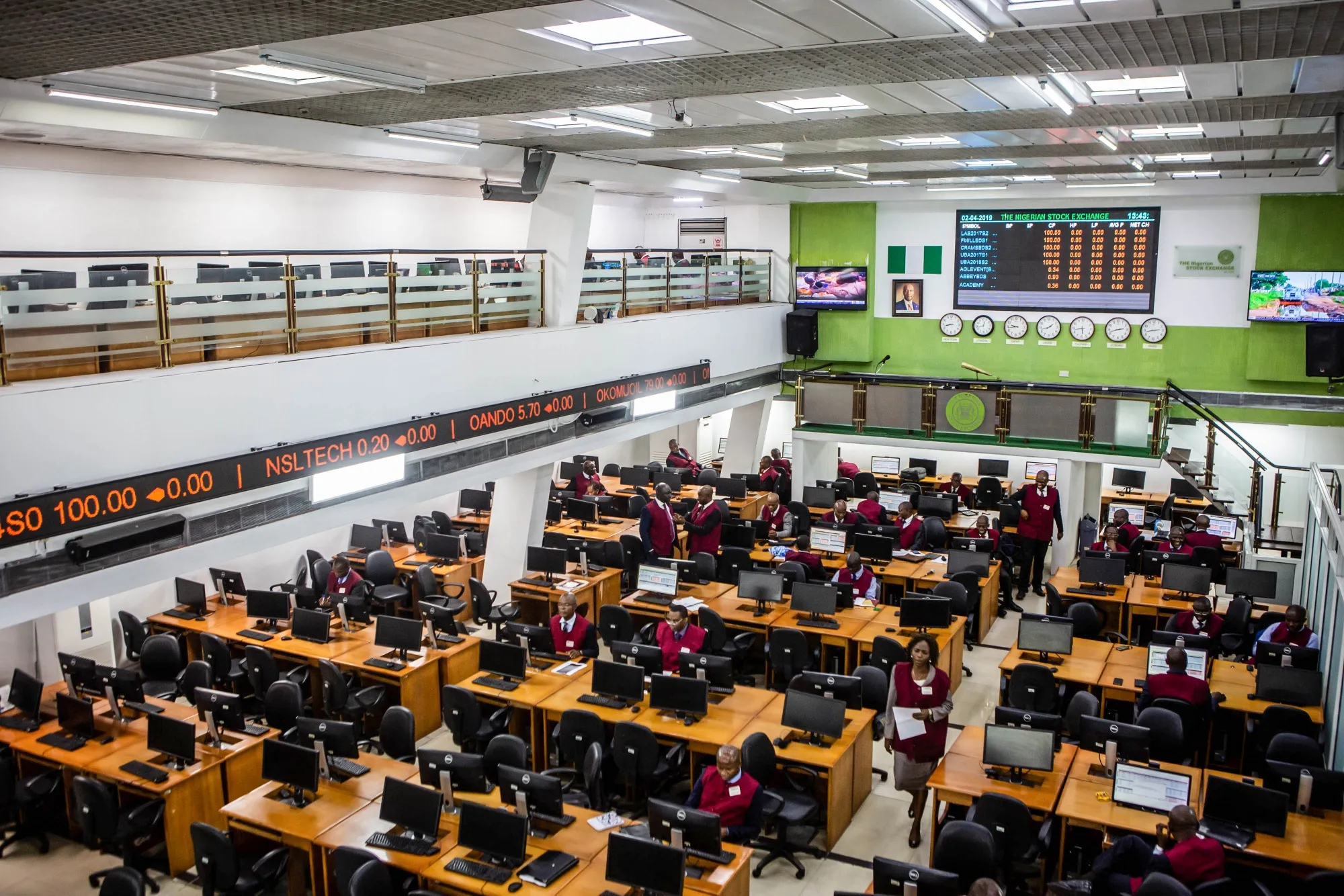
The Nigerian stock market faced a significant downturn in June 2026, recording its steepest correction and worst monthly performance of the year after an extended bull run. The NGX All-Share Index (ASI) fell by 8.4% during the month, resulting in investors losing over N13 trillion.
The most severe trading day occurred on Wednesday, June 24, 2026, which saw the market's value decline by N3.64 trillion as the ASI dropped 2.35%. This sharp fall was primarily driven by profit-taking in major stocks such as Dangote Cement (DANGCEM), BUA Cement (BUACEMENT), and Geregu Power (GEREGU), all of which hit their maximum daily loss limits. Their significant influence led the Industrial Goods sector down by 8.30% in a single day.
Beyond typical quarter-end profit-taking, broader economic factors contributed to capital moving away from equities. Treasury bill yields surged by 76%, indicating increased government borrowing that strained liquidity and pushed yields higher. This made risk-free assets highly attractive, prompting many institutional investors to shift funds from equities to capitalize on better returns in the debt market.
Despite the substantial correction, the market's year-to-date (YTD) performance remains robust, standing at an impressive +48% in local currency terms. This strong showing follows an exceptionally powerful first half of the year, which saw market capitalization cross the N160 trillion level in May. Even after shedding N10 trillion from its peak, the NGX maintains its position as Africa's number one stock market performance from a US dollar perspective.
From a fundamental perspective, Nigerian stocks have rerated their valuations, moving into an oversold area. This presents a potential opportunity for institutional domestic funds to position themselves at attractive discount entry levels before the upcoming Q2 earnings season.
The banking sector experienced challenges due to ongoing central bank recapitalization efforts and HoldCo adjustments. Stocks like FBNH, Access, and FCMB saw declines as investors reassessed bank valuations amid tighter liquidity. However, analysts view this dip as a healthy correction, creating attractive opportunities for top banking stocks that now appear undervalued.
With many banks restructuring under the holding company framework following the Central Bank of Nigeria's (CBN) March 31, 2026, recapitalization drive, some profitable banks may prioritize cash preservation for growth. H1 2026 interim dividend yields will serve as key benchmarks for the persistence of high yields.
Companies like Aradel (ARADEL) and Seplat Energy (SEPLAT) have demonstrated stellar capital appreciation, making them total return plays despite their significant cash payoffs resulting in smaller percentage yields. Presco (PRESCO) and Okomu are expected to benefit from dollar-referenced prices on their products, such as palm oil, continuing to show decent dollar yields.
Technically, the NGX All-Share Index (ASI) concluded June 2026 near an uncertain support level of 228,321 after its sharp decline, having lost over 7.4% from early-month highs. Immediate support is anticipated around the 227,500-228,000 levels, confirmed by the low point of 227,827.56 on June 29, which marked the peak of recent declines. Should the index fall further, a major psychological support at 225,000 could come into play, based on historical accumulation zones before prices surged above 250,000.
Looking ahead to July, initial resistance levels are projected around 232,000 to 233,500, where previous consolidations occurred on June 25-26. These levels will be crucial as the market attempts a relief rally. Traders are advised to monitor the Relative Strength Index (RSI) on the daily chart, as the index is approaching oversold territory following declines driven by major stocks like Dangote Cement and BUA Cement, which may encourage corporate investors to acquire undervalued stocks ahead of the Q2 earnings season.