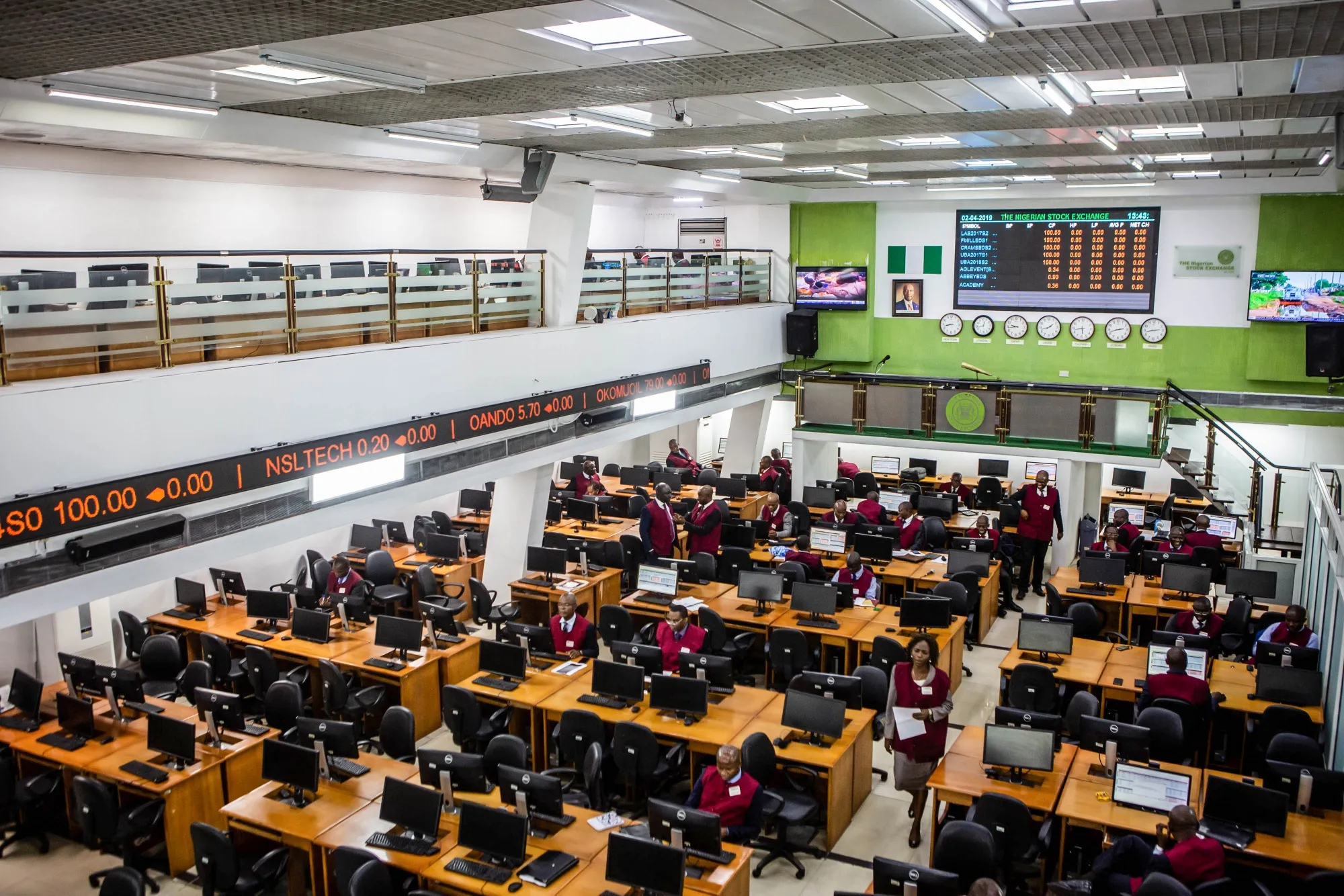
The Nigerian stock market has experienced a substantial decline, with investors losing over N5 trillion since June 1. This downturn follows a period of significant gains, where market capitalization had surpassed N160 trillion by the end of May, and equity returns had seen over N60 trillion gained year-to-date, translating to a YtD return exceeding 60%.
While the N5 trillion drop might seem significant, it represents a correction within a larger N160 trillion+ market, viewed by some as a healthy breather for an overheated market. The All-Share Index (ASI) has frequently been in deep overbought territory, often sitting above 75 or even 80 on the Relative Strength Index (RSI) after rallies in major stocks.
Sudden market panics on the NGX are typically contained and often sector-specific, rather than indicative of a broader economic collapse. Underlying macro forces continue to support the market, despite persistent inflation and a weakened naira.
The Nigerian banking sector is undergoing significant restructuring, driven by the Central Bank of Nigeria's (CBN) directive to raise minimum capital requirements. This has spurred a rush of restructuring and fresh capital inflows into major banks, with minimal panic selling observed.
Nigerian pension funds, previously favoring fixed-income assets, have shifted strategy due to inflation eroding returns. Large domestic asset managers and pension funds have collectively invested over N1.4 trillion into stocks as a hedge against the naira's depreciation. This consistent inflow of domestic capital provides a crucial support for the market, mitigating the likelihood of prolonged downturns.
Major companies in the consumer goods, telecommunications, and industrial sectors, including Dangote Cement PLC and BUA Cement PLC, have demonstrated resilience and adaptability.
The market is currently trading at a Price-to-Earnings (P/E) ratio of approximately 13.6x, which is higher than its three-year average of 9.5x, indicating investor confidence in future growth.
However, significant risks remain. A potential aggressive interest rate hike by the CBN to combat inflation could make fixed-income assets more attractive, potentially drawing liquidity away from equities and triggering a sharp correction. Additionally, the risk of share dilution exists if banks and other large companies issue substantial new shares to meet capital requirements or strengthen their balance sheets.