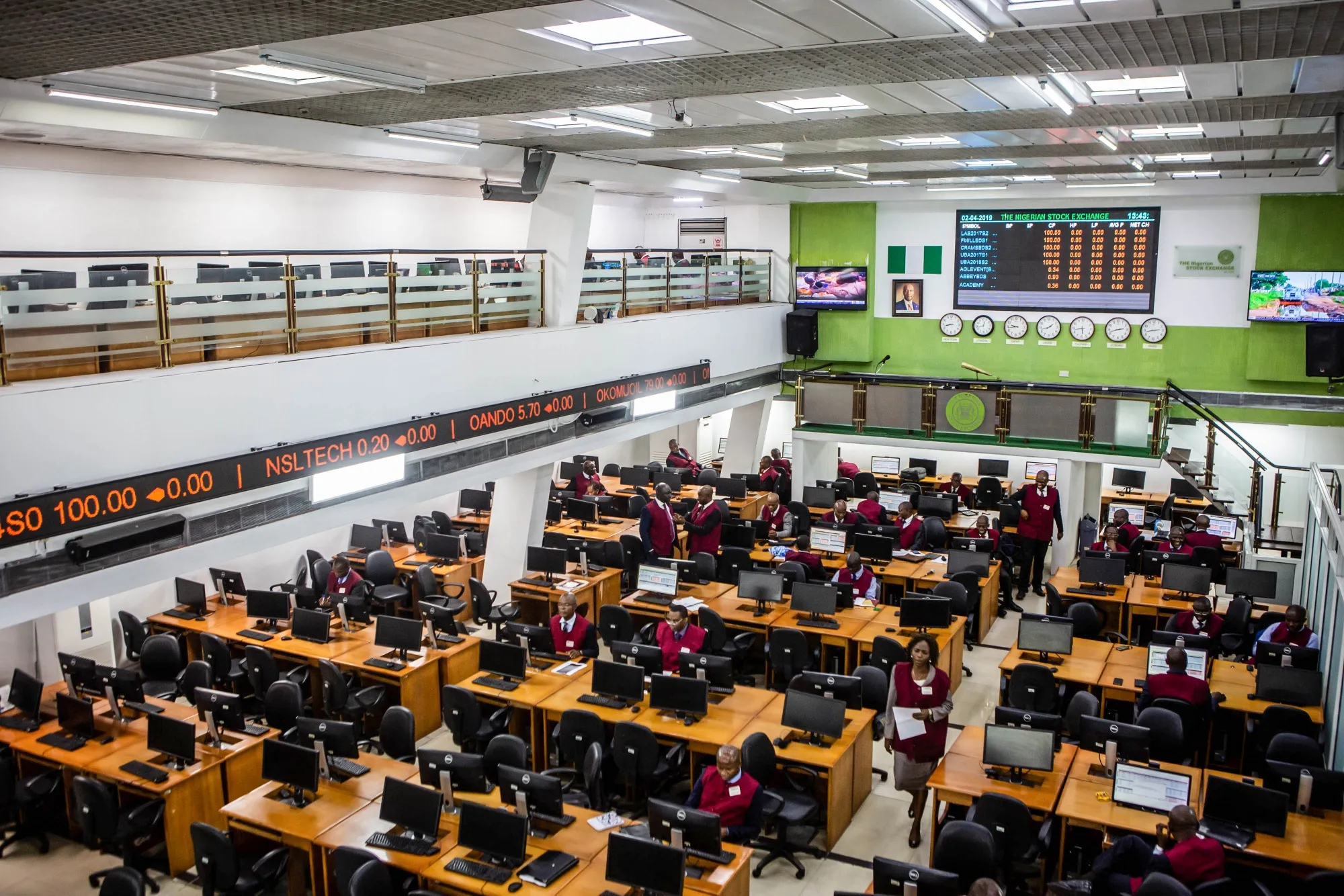
For the first time in four years, the Nigerian stock market is set to close the month of June in negative territory, abruptly ending what had been one of its strongest starts to any year in recent memory. After adding almost N60 trillion in market capitalization between January and May, the Nigerian Exchange has surrendered approximately N11.6 trillion this month alone.
This correction has been broad-based, with the All-Share Index, which entered June with year-to-date gains approaching 60%, now seeing those returns trimmed to below 50%. Every major NGX sector index has ended the month in the red.
Factors Driving June's Decline
Several factors appear to have converged simultaneously, contributing to the market's sharp pullback. Investors rushed to lock in profits, dividend markdowns weighed on heavyweight stocks, and liquidity shifted towards the highly anticipated Dangote Refinery private placement.
Banking stocks bore the brunt of the sell-off, falling 9.6% during the month. The NGX 30, Premium, and Industrial Goods indices all recorded declines of more than 7%, underscoring the extent to which investors have taken money off the table. Market estimates suggest the Dangote Refinery private placement attracted more than $5 billion in demand, likely diverting significant institutional liquidity away from listed equities.
Structural Reforms and Market Efficiency
The market itself is undergoing structural changes. The Nigerian Exchange recently migrated to a T+1 settlement cycle, reducing the time it takes for equity trades to settle from two business days to one. This reform aims to improve liquidity, allow investors to recycle capital more quickly, and align Nigeria closer to international market standards.
The Exchange has also extended trading hours, providing market participants a longer window to execute transactions. This change could potentially improve price discovery as trading volumes deepen over time. While neither reform is designed to stop a market correction, they could influence how quickly liquidity returns once selling pressure subsides, particularly if foreign institutional investors view the changes as evidence of improved capital market infrastructure.
Outlook for the Second Half
The bigger question is whether June represents a temporary pause or a turning point. History offers some perspective, with data spanning roughly three decades showing that July has been one of the weaker months for Nigerian equities, recording losses 16 times in the last 30 years, second only to March and September.
Periods of heavy selling in June have often spilled into July, partly due to thinner trading volumes during the northern hemisphere summer holidays. However, market corrections can create opportunities for investors willing to look beyond immediate headlines, especially when fundamentally strong companies become available at lower valuations.
The second half of the year will be shaped by a tug-of-war between competing forces. On one side are seasonal weakness, continued profit-taking, and the possibility of another large liquidity event should the Dangote Refinery proceed with an IPO. On the other are catalysts that could improve market sentiment, including stronger corporate earnings, Nigeria's expected return to major global equity indices, and structural reforms such as T+1 settlement and longer trading hours, which should make the market more attractive to both domestic and foreign investors.