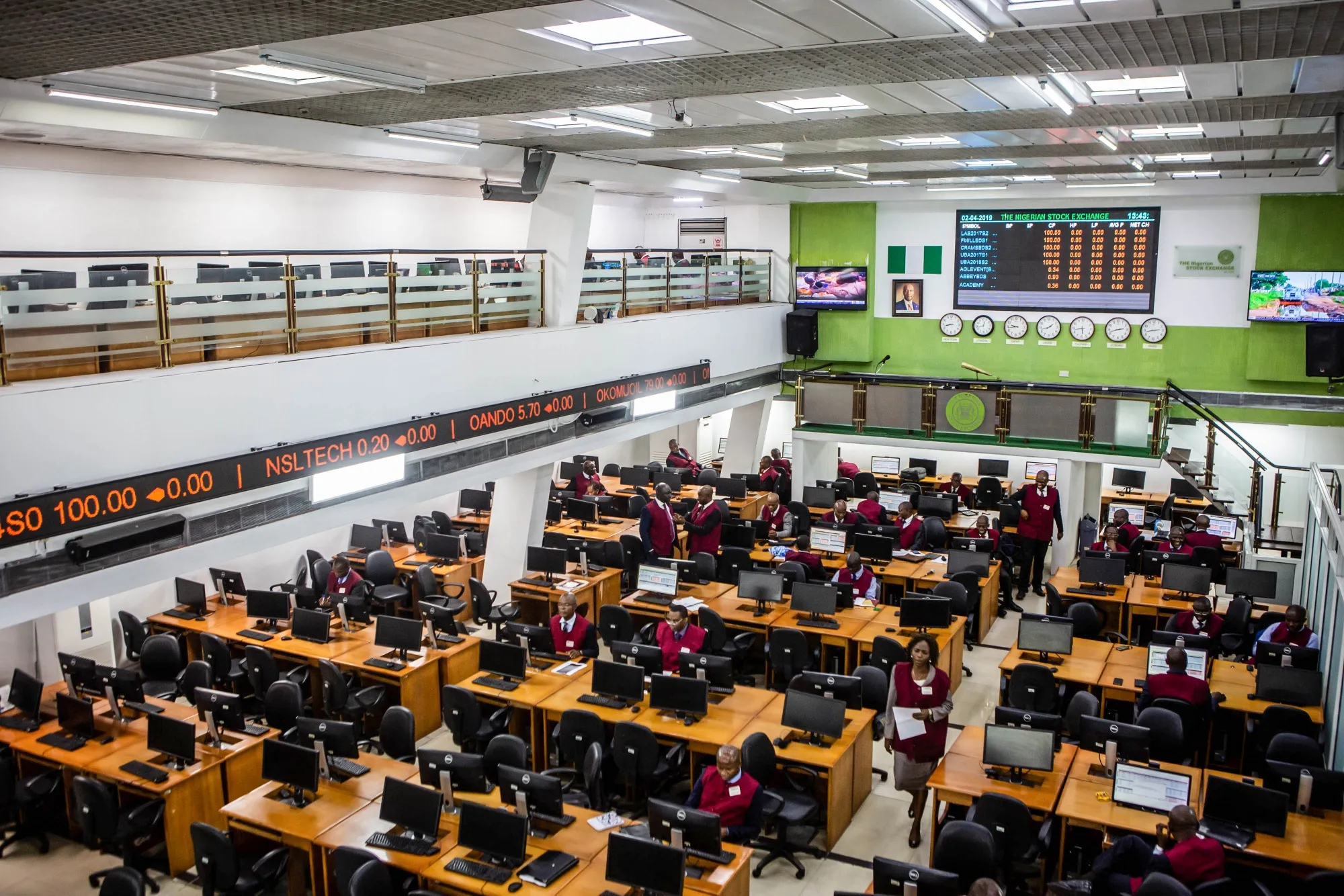
For the first time in four years, the Nigerian stock market is on course to close the month of June in negative territory. This abrupt end follows one of its strongest starts to any year in recent memory, having added almost N60 trillion in market capitalization between January and May.
The Nigerian Exchange has surrendered approximately N11.6 trillion this month alone. This correction was broad-based, with every major NGX sector index ending the month in the red.
Market Performance and Sector Impact
The All-Share Index, which entered June with year-to-date gains approaching 60%, has now seen those returns trimmed to below 50%. Banking stocks experienced a significant sell-off, falling 9.6% during the month.
The NGX 30, Premium, and Industrial Goods indices also recorded declines of more than 7%. This underscores the extent to which investors have taken money off the table across various segments of the market.
Factors Driving the Correction
Several factors converged to trigger this market correction. A market that had rallied by almost 60% in just five months was arguably overdue for a rebalancing as investors locked in profits ahead of the second half of the year.
Dividend adjustments further accelerated selling pressure on heavyweight stocks. Additionally, the Dangote Refinery private placement, which market estimates suggest attracted more than $5 billion in demand, likely diverted significant institutional liquidity away from listed equities.
Structural Reforms and Future Outlook
The market is also undergoing structural changes. The Nigerian Exchange recently migrated to a T+1 settlement cycle, reducing the time for equity trades to settle from two business days to one. The Exchange has also extended trading hours, aiming to improve liquidity and price discovery.
While these reforms are not designed to stop a market correction, they could influence how quickly liquidity returns once selling pressure subsides. Foreign institutional investors may view these changes as evidence of Nigeria’s capital market infrastructure becoming more efficient and globally competitive.
Looking ahead, history offers some perspective for July. Data spanning roughly three decades shows that July has been one of the weaker months for Nigerian equities, recording losses 16 times in the last 30 years, second only to March and September.
The second half of the year will be shaped by competing forces. Seasonal weakness, continued profit-taking, and the possibility of another large liquidity event, such as a Dangote Refinery IPO, are on one side. On the other, catalysts like stronger corporate earnings, Nigeria’s expected return to major global equity indices, and structural reforms could improve market sentiment.