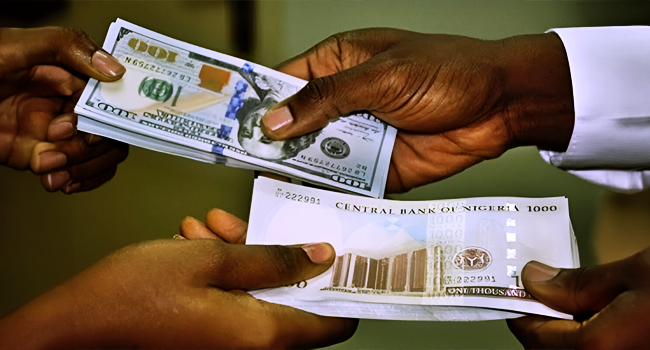
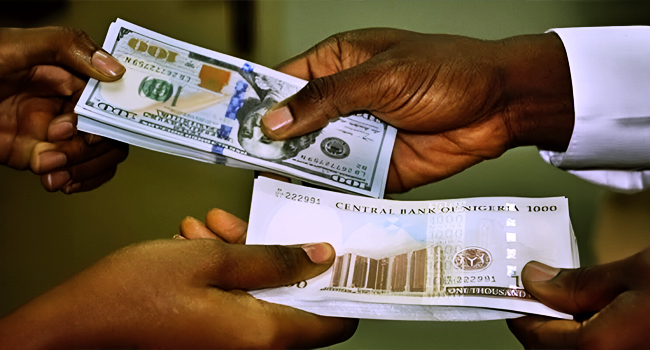
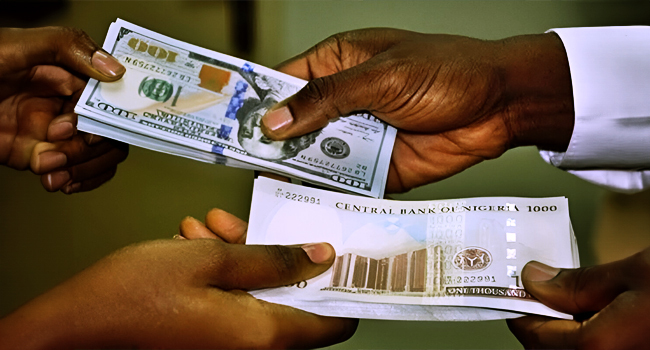
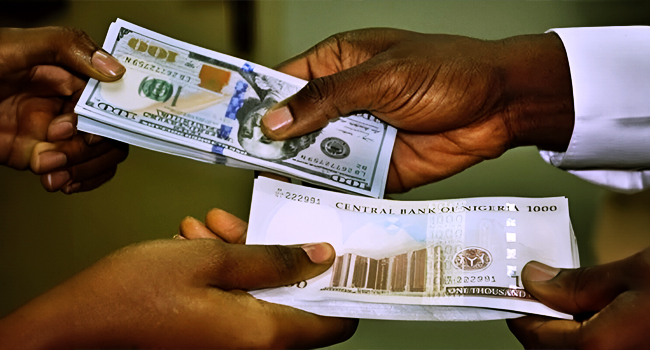
The naira recorded its sharpest daily loss since April, closing at N1,389 per dollar at the official foreign exchange market on June 24, 2026. This decline marks the weakest closing level for the currency since April 7, when it also closed at N1,389 per dollar.
Data from the Central Bank of Nigeria (CBN) indicated that the naira weakened by N16 from N1,373 per dollar recorded on June 23. This represented a 1.2% depreciation in a single day.
During the session, the naira traded within a range of N1,368 to N1,392 per dollar. The weighted average rate stood at N1,380.08 per dollar, while the simple average rate was N1,380.46 per dollar.
Interbank turnover saw a slight increase to $125.59 million from $125.31 million recorded on June 23. The number of interbank deals also rose to 126, up from 106 deals in the previous session.
Mallam Muftau Yusuf, a financial economist at Kwik Securities Ltd, commented on the situation, noting that a stronger dollar environment often creates challenges for emerging and frontier market currencies. He stated, “When global investors move toward dollar-denominated assets because of higher U.S. yields, emerging market currencies tend to face pressure. Nigeria is not insulated from these global developments.”
The naira had largely traded within the N1,356 to N1,375 per dollar range for much of June before this sharp decline. The currency had strengthened to N1,356 per dollar on June 15 before reversing its gains in subsequent sessions.
Specifically, the naira closed at N1,369 per dollar on June 22 and weakened to N1,373 per dollar on June 23, before falling further to N1,389 per dollar on June 24. Earlier, it had reached N1,348.10 per dollar on April 22, one of its strongest levels in the period under review, before weakening to N1,383 per dollar on April 28 and moderating in May and early June.
This depreciation occurred as the U.S. dollar continued to gain strength against major global currencies. The dollar index, which measures the greenback against six major currencies, rose to a 13-month high of 101.8.
The dollar strengthened against the euro, reaching its strongest level in 13 months at $1.1325. It also traded at 161.73 yen, close to its highest level in more than four decades against the Japanese currency. The dollar’s strength pushed gold below $4,000 per ounce for the first time in more than seven months, and Bitcoin briefly fell below $60,000 for the first time since 2024.
The stronger dollar reflects expectations that U.S. interest rates could remain elevated, as traders reassessed the outlook for rate cuts amid a stronger U.S. economy and inflation concerns.
Despite the recent depreciation, Nigeria’s external reserve position has significantly improved. Nigeria’s foreign reserves recently rose above $51 billion, reaching their highest level since 2009. External reserves gained more than $1 billion in the first half of June 2026, supported by stronger foreign exchange inflows. The CBN has maintained a relatively stable exchange rate framework in recent months through ongoing market reforms and improved liquidity conditions, projecting a stronger reserve position for 2026, supported by improvements in the country’s external sector.