Lagos State generated N1.67 trillion in recurrent revenue during the first half of 2026, achieving 90% of its half-year target. According to the state's second-quarter 2026 Budget Performance Report, the cumulative recurrent revenue collected as of June 30, 2026, stood at N1,667,058,379,835.53.
This performance represents 45% of the state's full-year recurrent revenue estimate of N3,700,509,565,766.67. In comparison, Lagos achieved 86% of its half-year recurrent revenue target in the corresponding period of 2025, when it collected 43.8% of that year's full-year estimate of N2,915,603,868,255.12, equivalent to N1,457,801,934,127.6.
Revenue and Expenditure Breakdown
The state government attributed the improved revenue collection to sustained administration reforms, enhanced compliance, stronger enforcement, and measures to reduce leakages. However, shortfalls in specific revenue lines occurred due to collection cycles, seasonal variations, and reduced demand for certain government services.
On the spending side, recurrent expenditure for the first half of 2026 reached N767.15 billion. This figure represents 36.4% of the full-year estimate and 72.83% of the half-year projection of N1.05 trillion.
Capital expenditure for the same period stood at N772.64 billion, representing 33% of the full-year capital budget of N2.34 trillion. This performance is equivalent to 66.10% of the half-year capital expenditure target of N1.17 trillion, driven by procurement timelines, contract awards, and project milestones.
Budget Performance and Sectoral Allocations
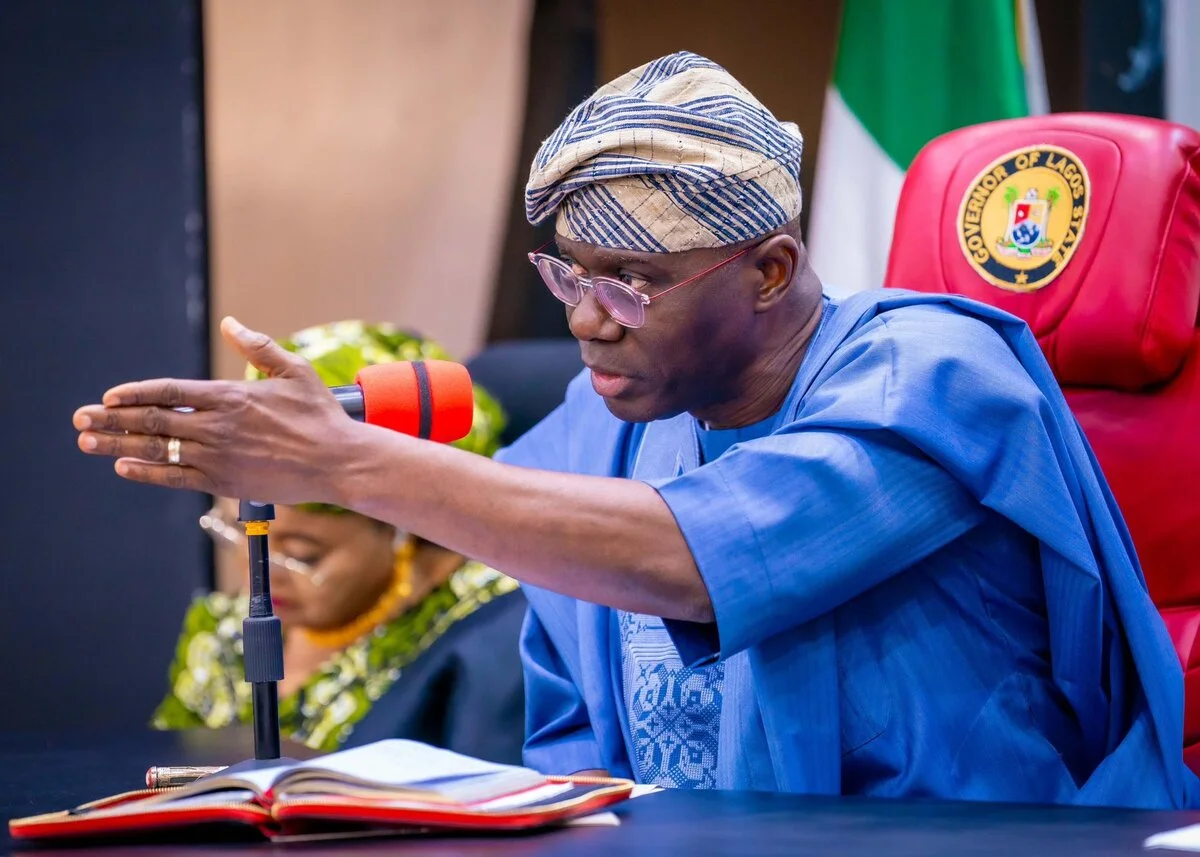
The revenue performance supports the N4.44 trillion budget approved by the Lagos State House of Assembly in January 2026. Governor Babajide Sanwo-Olu had originally presented a N4.24 trillion budget proposal in November 2025 before it was adjusted upward.
The approved N4.44 trillion budget comprises N2.052 trillion in recurrent expenditure and N2.185 trillion in capital expenditure. Personnel costs are projected at N440.45 billion, while debt servicing accounts for N143.88 billion in recurring debt charges and N383.40 billion for debt repayment.
Key sectoral allocations within the budget include N1.37 trillion for economic affairs, N338.45 billion for health, N249.13 billion for education, and N235.96 billion for the environment. These allocations reflect the state's focus on infrastructure and social development.
Infrastructure Financing and Debt Issuance
To bridge funding gaps for its N2.19 trillion capital expenditure program, the Lagos State Government is actively seeking new financing. In July 2026, the government requested approval from the State House of Assembly to issue a N200 billion bond.
This follows the state's return to the domestic debt market in November 2025, where it planned to raise up to N200 billion through a 10-year bond under its N1 trillion Debt and Hybrid Instruments Issuance Programme. This capital drive comes as the state continues to build on its growing internally generated revenue, which rose from N815.86 billion in 2023 to N1.26 trillion in 2024.
Additionally, Governor Sanwo-Olu previously disclosed at the Harvard Kennedy School Institute of Politics that Lagos attracted $2.73 billion in capital flows in the third quarter of 2025. This investment interest aligns with Lagos being ranked the world's fastest-growing tech ecosystem in 2025 by the Global Tech Ecosystem Index.