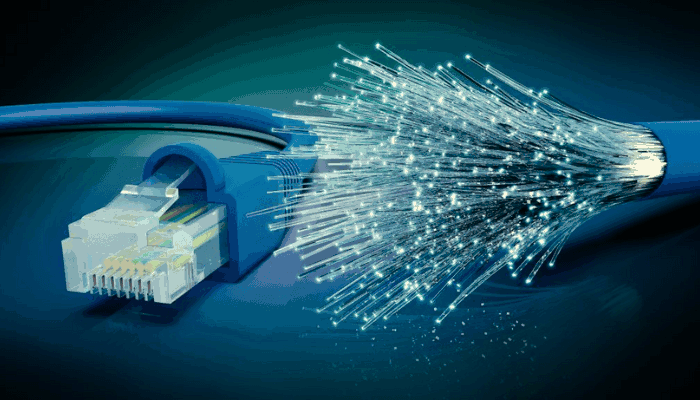
The Federal Government of Nigeria has officially incorporated Bridge Open Access (Bridge OA), the independent special purpose vehicle established to deliver the country's planned 90,000-kilometre nationwide fibre-optic network. This development transitions the $2 billion Building Resilient Digital Infrastructure for Growth (BRIDGE) project from the planning phase into active execution.
The Minister of Communications, Innovation and Digital Economy, Bosun Tijani, announced the incorporation on Saturday. He stated that the new entity provides the institutional platform required to advance the project, accelerate nationwide broadband deployment, and position Nigeria as a regional digital connectivity hub for West Africa.
Public Private Partnership Structure
Project BRIDGE is structured as a public-private partnership to ensure sustainable management and attract private capital. Under the framework outlined in the April 2026 investor prequalification notice, the Federal Government will hold a minority stake of between 25% and 49% in the special purpose vehicle. Private-sector investors will secure the majority ownership, holding at least 51% of the company.
This corporate structure aims to bring in strategic investors who will manage the fibre network to provide wholesale open-access services across the country. The initiative builds on initial plans approved by the Federal Executive Council in May 2024 to deepen Nigeria's digital backbone.
International Funding and Timeline
The project has secured significant financial backing from international development finance institutions over the last two years. In October 2025, the World Bank approved $500 million to support the rollout of the open-access fibre infrastructure. This was followed in February 2026 by a $100 million sovereign loan from the European Bank for Reconstruction and Development (EBRD) alongside a €22 million grant from the European Union.
In April 2026, the African Development Bank approved an additional $200 million loan for the project, completing the primary multilateral funding pool. Technical preparations have continued to progress, with EBRD procurement documents from May 2026 showing ongoing work on low-level designs for an initial 40,000-kilometre rollout package.
Bridging Regional Connectivity Gaps
The deployment of 90,000 kilometres of new fibre-optic cable will supplement Nigeria's existing 35,000-kilometre backbone, bringing the total national network to approximately 125,000 kilometres. The expanded infrastructure is expected to connect more than 200,000 educational, healthcare, and social institutions while delivering high-speed internet to underserved communities.
Currently, Nigeria has 101,148.36 kilometres of fibre-optic cable deployed, but distribution remains highly unequal. Data from the Nigerian Communications Commission shows that Lagos and the Federal Capital Territory account for 18,559.83 kilometres, representing 18.35% of the national total. Project BRIDGE is designed to correct this imbalance by extending high-speed connectivity far beyond these major commercial hubs.