Nigeria has deployed a total of 101,148.36 kilometres of fibre optic cable across its 36 states and the Federal Capital Territory (FCT). However, nearly one-fifth of this infrastructure is concentrated in just Lagos and Abuja, highlighting significant deployment gaps.
Analysis of state-by-state infrastructure data from the Nigerian Communications Commission (NCC) reveals that Lagos and the FCT together account for 18,559.83 km of fibre, representing 18.35% of Nigeria’s total deployed fibre network.
Concentration in Key Cities
Lagos remains Nigeria’s fibre capital with 11,586.70 km of deployed fibre, equivalent to 11.46% of the country’s total network. The state also boasts 7,996 Base Transceiver Stations (BTS), underscoring its position as Nigeria’s largest telecoms and enterprise market.
The FCT follows with 6,973.13 km of fibre, accounting for 6.89% of the national total and supporting 2,884 BTS sites. These two locations have attracted more fibre investment than many geopolitical zones combined, largely due to their concentration of businesses, government institutions, financial services, hyperscale data centres, and international internet traffic.
Other states with substantial fibre networks include Edo with 4,789.72 km, Kano with 4,616.71 km, Rivers with 4,616.01 km, Kaduna with 4,339.85 km, and Ogun with 4,246.48 km. Conversely, several states remain significantly underserved, with Bayelsa having only 656.87 km of fibre, Ebonyi 586.92 km, Jigawa 970.10 km, Borno 1,012.52 km, and Zamfara 1,100.98 km. More than a dozen states still have less than 2,000 km of deployed fibre, impacting broadband availability and internet quality.
Right of Way Costs Hinder Expansion
The uneven distribution of fibre infrastructure reflects long-standing investment challenges for telecom operators. A primary barrier is the high cost of Right of Way (RoW) fees, which operators pay state governments to lay fibre cables.
Despite the National Economic Council approving a harmonised RoW charge of N145 per linear metre in 2020, implementation has been inconsistent. Some states have adopted the approved rate or eliminated charges, while others impose significantly higher fees, increasing deployment costs and slowing network expansion.
According to NCC data, Ogun State is currently the most expensive state for fibre deployment, charging N6,600 per linear metre. Kano follows with N2,745, and Delta charges N2,706, making them the top three states with the highest costs.
Engr. Gbenga Adebayo, Chairman of the Association of Licensed Telecommunications Operators of Nigeria (ALTON), stated that high RoW charges are the major reason for slow broadband penetration. He noted, “What we are seeing in some states is that despite officially waiving right-of-way fees, they now impose hidden costs such as education taxes and highway levies, which discourage investment.”
Dr. Aminu Maida, Executive Vice Chairman of the NCC, also acknowledged this, stating, “One of the most significant barriers to broadband deployment in Nigeria has been the high RoW fees charged by state governments, despite a resolution by the Nigerian Governors Forum fixing the rate at N145 per linear metre.”
Government Initiatives to Bridge Gap
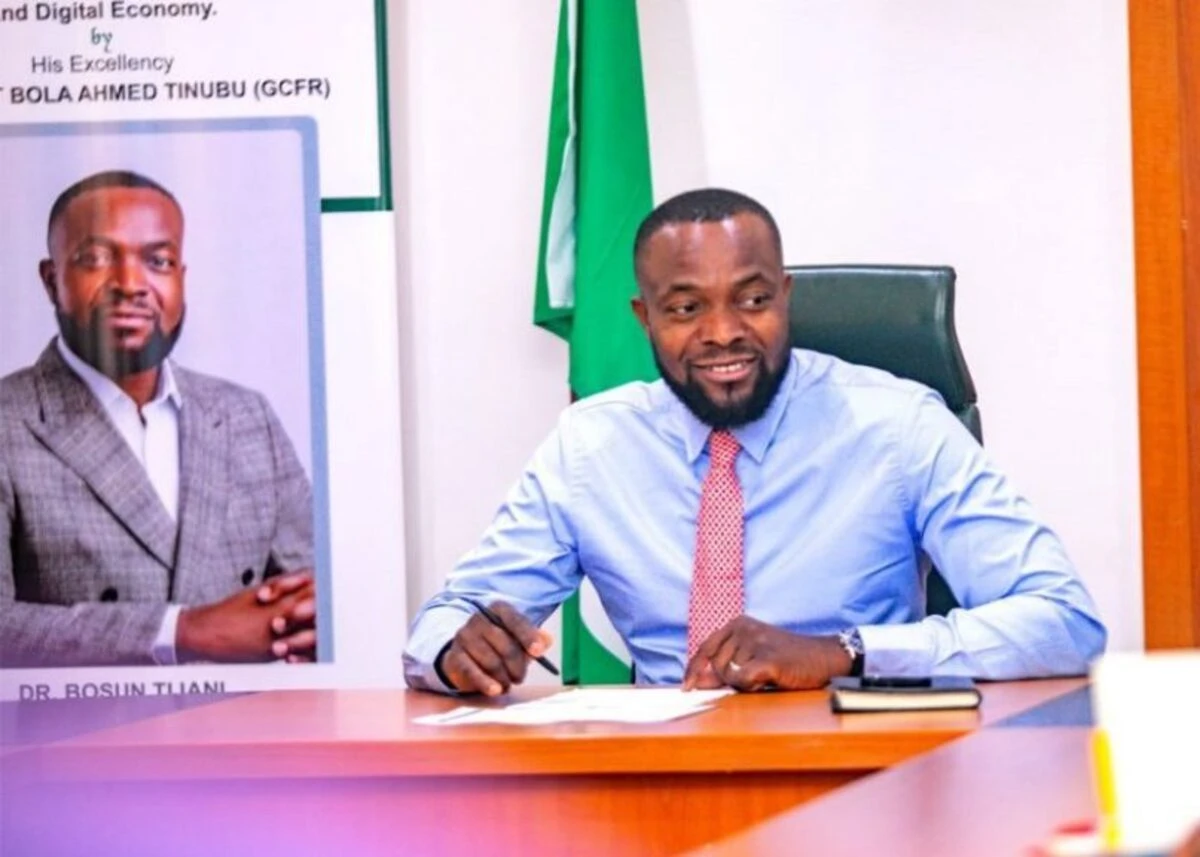
To address these infrastructure gaps, the federal government is advancing Project Bridge, a 90,000-kilometre fibre project. Minister of Communications, Innovation and Digital Economy, Dr. Bosun Tijani, indicated the project will be implemented through a Special Purpose Vehicle (SPV) to attract private investment and public-private partnerships.
In April this year, the government secured a $200 million loan from the African Development Bank Group to support Project Bridge. Earlier in February, the government also secured a $100 million investment from the European Bank for Reconstruction and Development (EBRD) for the initiative.
However, stakeholders warn that Project Bridge may face similar challenges as private operators unless state governments fully commit. Mr. Chidi Ibisi, Executive Director of Broadbased Communications, emphasized the need to address high RoW costs, destruction of fibre by road construction companies, and vandalism for the SPV initiative to succeed.
ALTON Chairman Adebayo added, “For the project to succeed, I think the governments at sub-nationals should take ownership. This issue of state governments seeing right of way as IGR should be a thing of the past.”
Despite these challenges, the NCC disclosed that telecommunications operators invested more than N2.5 trillion in network infrastructure in 2025. Mobile Network Operators invested over N2.13 trillion, while Tower Companies committed an additional N373.8 billion to support expansion and modernisation efforts. These investments supported the addition and upgrade of more than 2,800 telecommunications sites nationwide to address network congestion, coverage gaps, and capacity challenges.