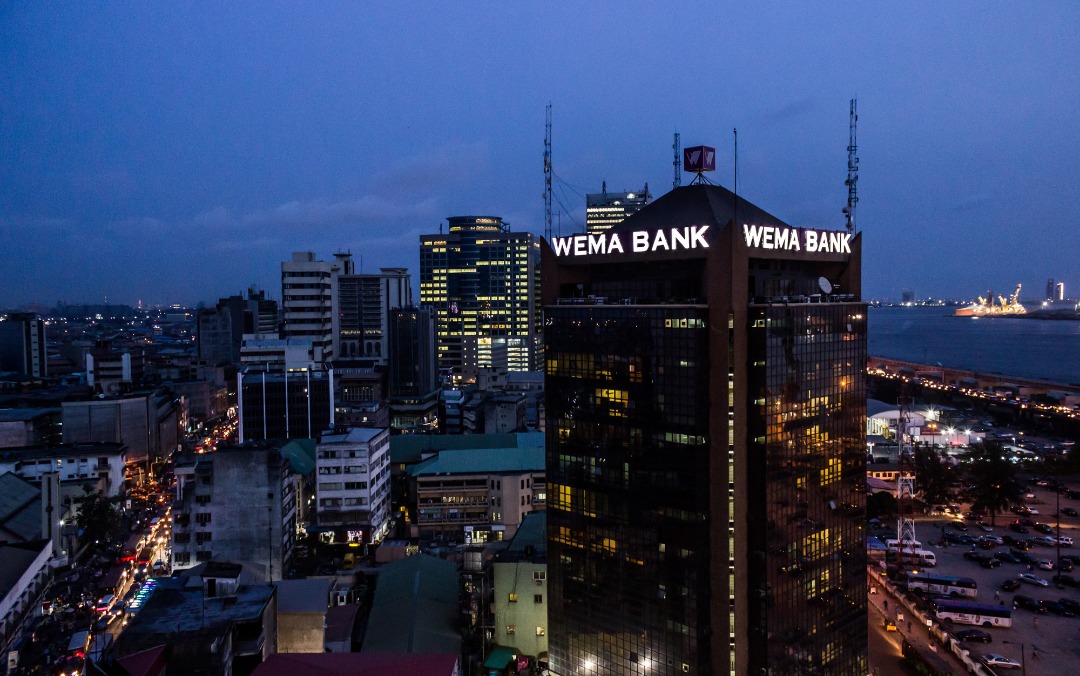
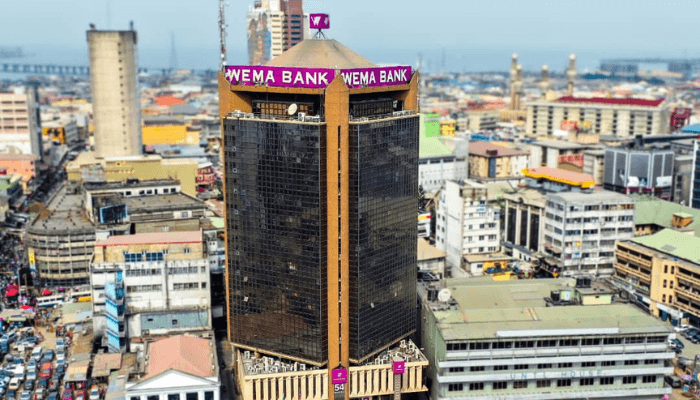
Wema Bank Plc has released its unaudited financial results for the first half of 2026, demonstrating strong operating leverage despite restrictive monetary conditions. The bank converted its expanded capital base into a 53.65% growth in profit before tax, which rose to N154.56 billion from N100.59 billion in H1 2025.
Profit after tax increased by 50.12% to N131.37 billion. Gross earnings rose 36.90% to N415.09 billion, while operating income climbed 39.27% to N267.07 billion, indicating that revenue expanded faster than operating costs.
Operating Leverage Drives Earnings Growth
The bank achieved positive operating leverage as total operating expenses, including personnel and depreciation, rose by 23.40% year-on-year to N112.51 billion. This controlled growth lowered the bank's cost-to-income ratio to an estimated 42.13% from 47.55% in the first half of 2025. The pretax margin on gross earnings subsequently improved to 37.23% from 33.18%.
High interest rates in the macroeconomic environment supported the performance. The Central Bank of Nigeria (CBN) held its monetary policy rate at 26.5% in July and maintained the cash reserve requirement at 45%. Meanwhile, inflation eased to 15.91% in June, and real GDP grew by 3.89% in the first quarter of the year.
Wema Bank's interest income increased by 42.69% to N342.64 billion, while interest expense rose at a slower pace of 32.72% to N147.19 billion. This resulted in a 51.26% expansion in net interest income to N195.45 billion. The bank retained 57.04 kobo of net interest income for every naira of interest income, up from 53.81 kobo in the prior year.
Non-interest income streams showed mixed results. Net trading income surged by 658.1% to N21.53 billion from N2.84 billion, driven by N16.77 billion from treasury bills. Other income stood at N10.68 billion, supported by N2.35 billion in foreign exchange revaluation and N7.60 billion in other classifications. However, fee and commission income declined by 20.48% to N36.09 billion, as electronic-product fees fell 65.89% to N7.14 billion.
Balance Sheet Expansion and Funding Dynamics
Wema Bank's balance sheet grew faster than its customer deposits during the period. Net loans and advances increased by 21.73% from December to N2.12 trillion, while customer deposits rose by 4.96% to N3.45 trillion. Consequently, the net loan-to-deposit ratio rose to 61.27% from 52.83%.
Total assets expanded by 13.52% to N5.76 trillion. Investment securities rose to N1.42 trillion, while cash and cash equivalents remained above N1.02 trillion. Restricted deposits with the CBN reached N976.33 billion, reflecting the impact of the 45% cash reserve ratio on bank liquidity.
Funding structures showed shifts between March and June. During this quarter, net loans grew by 13.57% while customer deposits increased by 1.29%. Deposits from banks rose to N158.77 billion, and other liabilities expanded to N1.30 trillion.
Capital Adequacy and Asset Quality
The bank's capital position remains robust, with share capital and share premium totaling N260.66 billion at the end of June. This is N60.66 billion above the CBN's N200 billion paid-in capital threshold for national commercial banks. Total equity grew by 12.89% from December to N700.45 billion, after the payment of N50.15 billion in dividends during the half-year.
On a derived basis, the bank recorded an annualised return on average equity of approximately 39.8% and an annualised return on average assets of about 4.85%. Wema Bank also disclosed N110.96 billion in development-related and other borrowed funds, including facilities from the Bank of Industry, Development Bank of Nigeria, ECOWAS Bank for Investment and Development, and CBN intervention programmes.
Asset quality metrics showed improvement, with Stage 3 loans representing 3.87% of gross loans in June, down from 4.90% in December. Stage 2 exposures also fell sharply. Recoveries of N4.21 billion helped keep the net impairment charge low at N831.11 million. However, absolute Stage 3 loans rose by 3.63% between March and June, while total loan allowances increased by 7.02% alongside a 13.37% growth in gross loans.