Tinubu Seeks Senate Approval for ₦10.79trn External Borrowing to Finance 2026 Budget

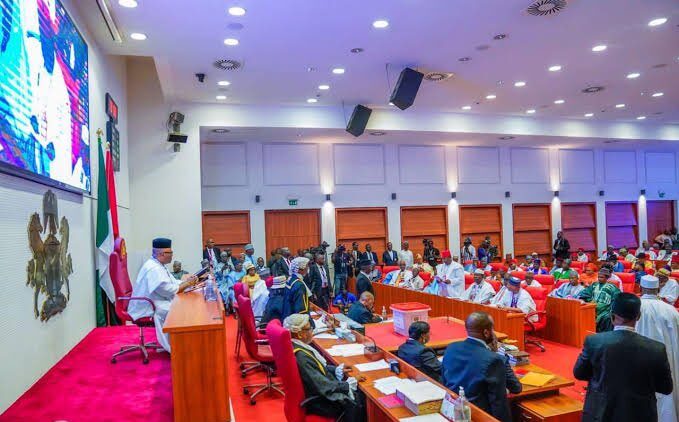
President Tinubu has asked the Senate to approve $7.707 billion, about ₦10.79 trillion, of external borrowing already provided for in the 2026 Appropriation Act, with Eurobond issuance expected to carry the largest share.

NGN Market

Written by NGN Market

·4 min read
Tinubu Seeks Senate Approval for ₦10.79trn External Borrowing to Finance 2026 Budget

Already Written Into the 2026 Budget

This request is an implementation step rather than a new borrowing decision. The ₦10.79 trillion was provided for when the 2026 Appropriation Act set total new borrowings at about ₦29.2 trillion, and Sections 21(1) and 27(1) of the Debt Management Office Act require external loan terms to come back to the National Assembly for approval. The Senate is being asked to activate a provision it has already legislated, with authority for the Minister of Finance and the Debt Management Office to execute the plan.

The stated uses are the budget's priority sectors: defence and security, transportation, agriculture, power, education and health. The letter also makes a balance of payments argument: because the proceeds will be received by the Central Bank of Nigeria for the Federal Government, the inflow would add to external reserves and support stability for the naira.

Why Eurobonds Lead the Plan

The funding mix leans toward the market. Tinubu told the Senate that greater emphasis would be placed on Eurobond issuance because it can be concluded relatively quickly and can raise substantial sums, while concessional and commercial facilities from multilateral and bilateral lenders, the IMF, bridge financing and loan syndications remain available as alternatives. That ordering is pragmatic: concessional windows are cheaper but slower and usually tied to specific projects, whereas a Eurobond raises general budget financing in one transaction.

Advertisement

The trade off is price. The letter acknowledges that the final interest rates and terms of any Eurobond will be set by market conditions at pricing, so the cost of this borrowing is not known at approval stage. The Finance Ministry and the Debt Management Office are tasked with securing the most favourable terms available, but the Senate is effectively approving the quantity of debt while the market decides its price later.

The Request Replaces a Larger Supplementary Plan

The clarification role of this letter matters as much as its size. Only last week, the President sent the Senate a supplementary external borrowing plan of $20.52 billion and €1.045 billion for infrastructure and development projects, a figure that drew attention for its scale. Akpabio told the chamber that the new submission supersedes that request and is more explicit about sources and purpose, and the ₦10.79 trillion ask is anchored to a line in the Appropriation Act rather than a supplementary programme.

For markets, the practical read is sequencing. Senate approval would clear the Debt Management Office to move on the external leg of the 2026 funding plan, most likely through the Eurobond market, while the larger ₦18.4 trillion domestic leg runs through the local auction calendar. The committee's report is the next step, and the pricing of the eventual Eurobond, not the approval itself, is where the real cost of the 2026 deficit will be set.

Advertisement

Advertisement