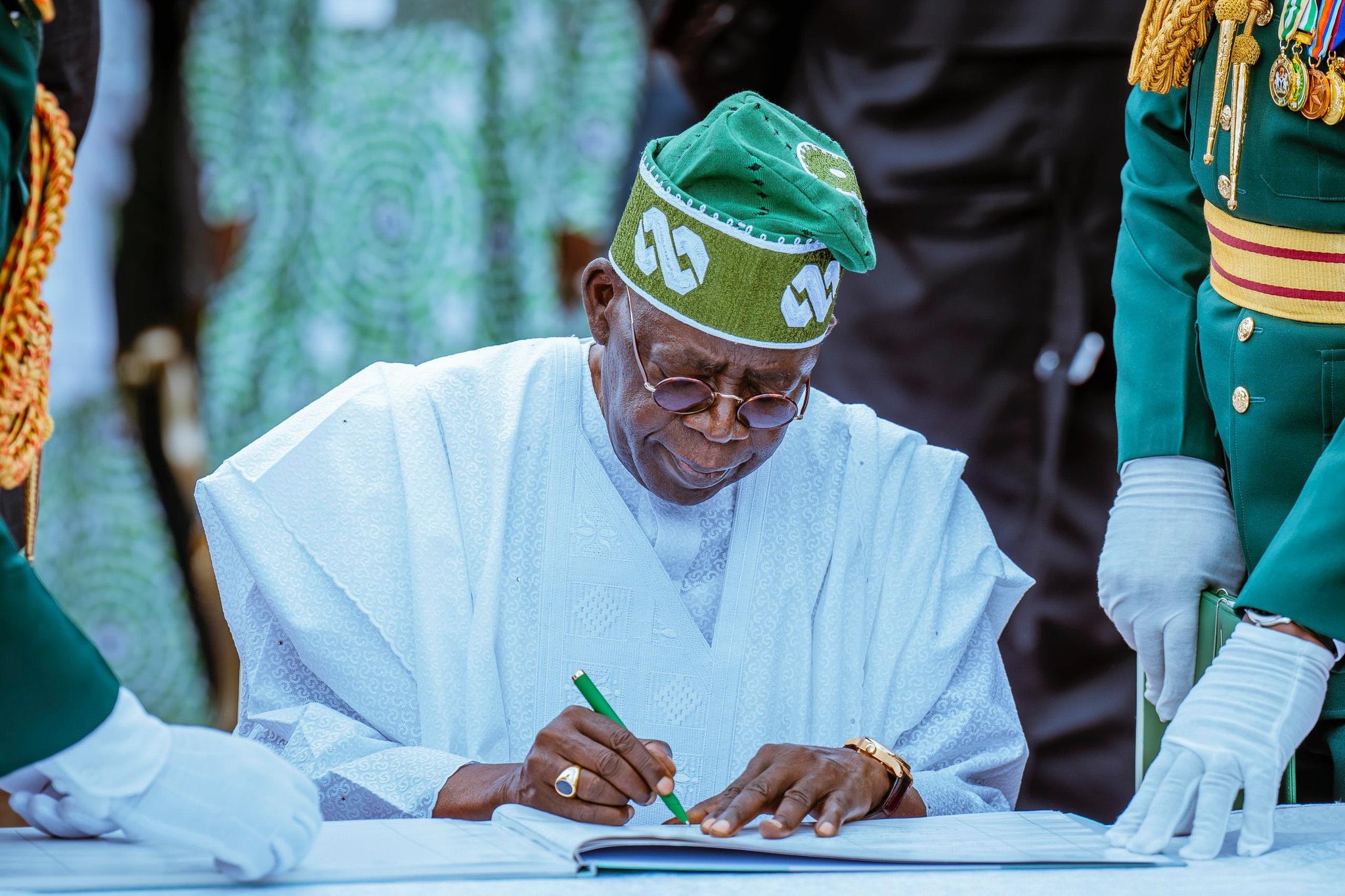
President Bola Ahmed Tinubu has signed into law the 2026 Appropriation Bill, approving a record N68.32 trillion national budget. This substantial spending plan is designed to stabilize the economy, drive infrastructure development, and address Nigeria’s fiscal challenges.
The newly enacted budget, the largest in the country’s history, signals the administration’s aggressive fiscal stance. It aims to consolidate economic reforms, boost investor confidence, and stimulate growth across key sectors including energy, transportation, agriculture, and security. The signing ceremony took place at the Presidential Villa in Abuja.
The N68.32 trillion budget includes N4.799 trillion for statutory transfers and N15.8 trillion earmarked for debt servicing. Recurrent expenditure is set at N15.4 trillion, with N32.2 trillion allocated to the Development Fund for capital expenditure. The presidency stated that capital spending constitutes about 50% of the total budget, underscoring the administration's focus on economic stability, national security, infrastructure development, and inclusive growth.
In a related development, President Tinubu also assented to a bill extending the implementation period of the capital component of the 2025 budget. This extension moves the deadline from March 31, 2026, to June 30, 2026. The presidency indicated this is to ensure the full utilization of previously approved funds, especially for infrastructure and development projects nearing completion.
The extension aims to allow Ministries, Departments, and Agencies (MDAs) to consolidate ongoing works, improve project completion rates, and maximize value for public spending. The 2026 Appropriation Act officially took effect on April 1, 2026.
The budget's objectives include consolidating macroeconomic stability, improving the business and investment environment, promoting job-rich growth, and strengthening human capital development while protecting the vulnerable. Key sectoral allocations include N5.41 trillion for defence and security, N3.56 trillion for infrastructure, N3.52 trillion for education, and N2.48 trillion for health.
The budget, titled “The Budget of Consolidation, Renewed Resilience and Shared Prosperity,” was initially presented to the National Assembly on December 19, 2025, at a proposed sum of N58.47 trillion. It underwent legislative scrutiny, emerging at N68.32 trillion before presidential assent.
Economic experts note that the success of the 2026 budget will heavily depend on implementation efficiency. Historically, Nigeria has faced challenges with budget execution, including delays in fund releases and project completion. Observers emphasize the need for timely disbursement of funds and strict monitoring mechanisms to ensure value for money.
The administration has reiterated its commitment to deepening fiscal reforms, enhancing revenue generation, and prioritizing investments that stimulate economic growth, create jobs, and strengthen social protection mechanisms.