Nvidia's first earnings report since Jensen Huang resigned as chief executive last week answered the demand question emphatically and left the harder questions open. Revenue for the quarter ended October 25 came in $7.8 billion above the midpoint of the company's own August guidance, and the outlook for the current quarter sits well above what analysts had modelled. The numbers were delivered by Colette Kress, the long serving finance chief now acting as interim chief executive, in a release that named a leadership transition and a board investigation among its forward looking risks and offered no timetable for a permanent appointment.
Data Center Did Almost All of the Work
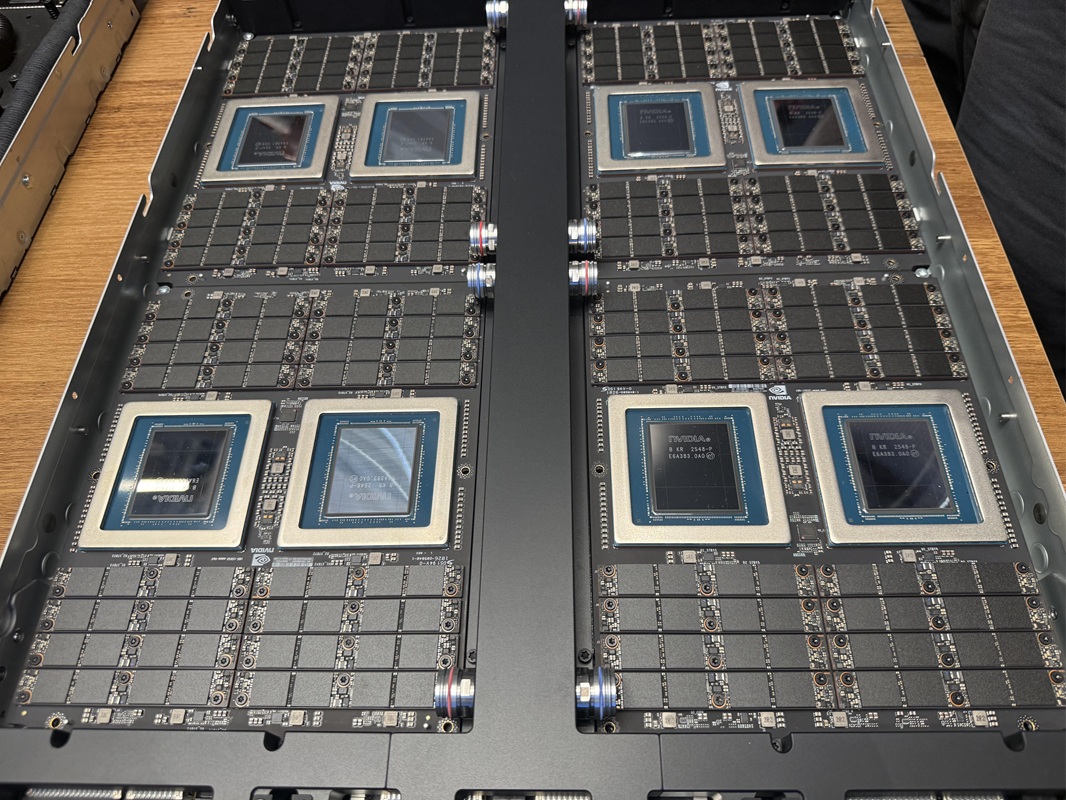
Data Center supplied $107.6 billion of the $115.8 billion total, about 93 cents of every revenue dollar, and grew 21% in a single quarter. The driver was the Vera Rubin NVL72 system, which the company said has begun shipping in the fastest product ramp in its history, with racks already running at CoreWeave, Google Cloud, Microsoft Azure, Oracle Cloud Infrastructure and Nebius. Edge Computing added $8.2 billion, up 42% from a year earlier, a growth rate most companies would headline and one that barely registers beside the data center line.
Profitability kept pace with the volume. GAAP gross margin was 74.8%, down 0.2 points from the prior quarter and up 1.4 points from a year earlier, and operating income rose 115% to $77.5 billion. The company returned $28.1 billion to shareholders through buybacks and dividends during the quarter and still held about $227.3 billion of repurchase authorisation at its end, after the board added $150 billion to the programme in September.
Guidance Raises the Bar and Lowers the Margin
The fourth quarter outlook is where the report turns from a beat into a test. Revenue of $130.0 billion, plus or minus 3%, would be another sequential jump of about 12%, and it is built without any data center compute sales to China, the market at the centre of the new US licence rules. Part of the increase is calendar rather than demand, because the quarter carries an additional week, and the cost of the ramp shows up in the margin line: gross margin is guided to a range of 71.0% to 72.0%, roughly three points below the quarter just reported, with operating expenses of about $11.0 billion on a GAAP basis.
That trade is the analytical centre of the release. A company guiding revenue 3.8% above consensus while guiding margin down is telling investors that filling AI factory orders at this speed requires spending ahead of the revenue, and the stock's after hours gain of about 2% suggests the market accepted the exchange on first reading. It is also a notably smaller move than the 8.5% swing options traders had priced for this report, which reads as relief that the demand story survived the leadership crisis rather than a fresh round of enthusiasm.
The Beat Does Not Settle the Leadership Question
Kress used the release to project continuity, saying the company's momentum is real and its roadmap is on track. The financial statements support her on demand, orders and cash generation. What they cannot settle is the governance overhang that has cost the stock about a third of its value since its October record: a chief executive search with no stated timetable, a board committee investigation listed in the company's own risk disclosures, and fresh regulatory scrutiny of chip shipments to China. Wednesday's regular session, and the analyst revisions that follow the conference call, will show whether investors price this report as a clean beat with a margin asterisk or as the moment the AI trade found its footing again.