Nigeria’s crude oil production fell by 4% month-on-month in July 2026, according to the latest data from the Nigerian Upstream Petroleum Regulatory Commission. Despite the decline, the country successfully met and exceeded its Organisation of Petroleum Exporting Countries quota of 1.5 million barrels per day for the third consecutive month.
The regulatory commission reported that Nigeria pumped an average of 1.505 million barrels per day of crude oil in July. When condensate production of approximately 170,000 barrels per day is added, the total combined output stood at 1.67 million barrels per day. This represents a 3.75% decrease, or a loss of about 65,000 barrels per day, compared to the 1.735 million barrels per day recorded in June.
Data from the OPEC Monthly Oil Market Report also confirmed the downward trend, showing crude-only output falling to 1.505 million barrels per day in July from 1.555 million barrels per day in June. Despite this 50,000 barrels per day drop on a crude-only basis, Nigeria maintained its position as Africa's largest producer, outperforming Libya at 1.391 million barrels per day and Algeria at 995,000 barrels per day.
Operational Disruptions and Terminal Performance
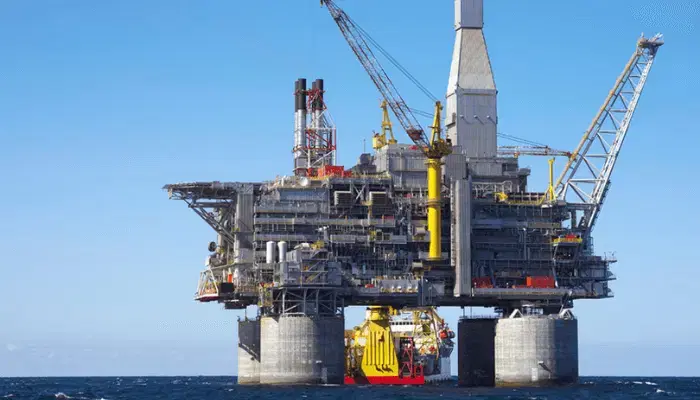
The Nigerian Upstream Petroleum Regulatory Commission attributed the July decline to operational challenges at the Erha and Akpo fields. Eniola Akinkuotu, the Head of Media and Corporate Communications at the commission, stated that these disruptions constrained production volumes but noted that other producing assets remained relatively stable.
During the month, daily combined crude and condensate production fluctuated between a low of 1.57 million barrels per day and a peak of 1.78 million barrels per day. Operators and industry stakeholders are currently working to resolve the technical issues and restore lost capacity at the affected facilities.
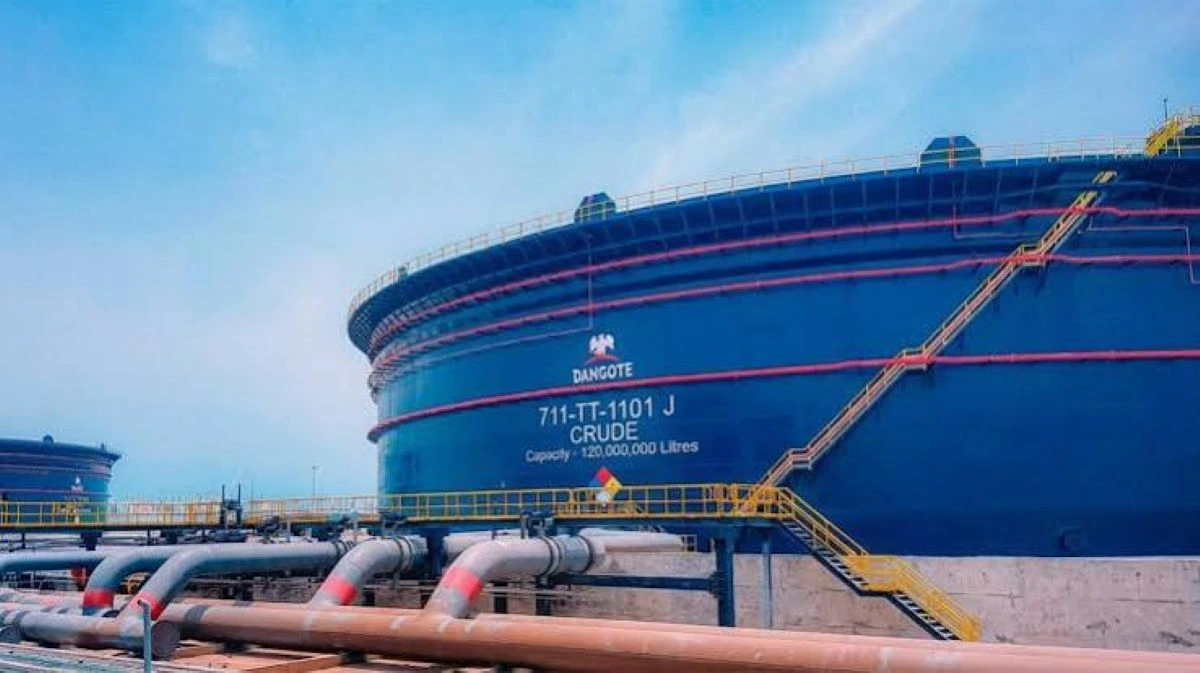
A breakdown of production by terminals showed that the Forcados Terminal recorded the highest average output at 322.34 thousand barrels per day. The Bonny Terminal followed with 303.72 thousand barrels per day, while the Qua Iboe Terminal ranked third with 158.02 thousand barrels per day of crude and condensates. The Escravos Oil Terminal and Bonga stream recorded 131.41 thousand barrels per day and 100.23 thousand barrels per day, respectively.
Historical Growth and Refining Supply
The July decline marks the first monthly drop in 2026 after a period of steady growth. Combined production started the year at 1.459 million barrels per day in January, rising to 1.483 million barrels per day in February, 1.564 million barrels per day in March, 1.663 million barrels per day in April, 1.701 million barrels per day in May, and peaking at 1.735 million barrels per day in June. July's combined output of 1.67 million barrels per day is still 14.5% higher than January's levels.
On a quarterly basis, Nigeria's average crude production rose to 1.525 million barrels per day in Q2 2026, up from 1.388 million barrels per day in Q1 2026. This is a significant improvement from the historical averages of 1.415 million barrels per day in Q4 2025, 1.432 million barrels per day for the full year 2025, and 1.345 million barrels per day in 2024.
This sustained production level has supported domestic refining capacity. The regulatory commission revealed that local refineries received 53.7 million barrels of crude oil and condensate in Q2 2026, satisfying 97.4% of domestic crude supply requirements. To maintain this momentum, President Bola Tinubu's administration has introduced fiscal incentives, including tax waivers and accelerated regulatory approvals, to attract fresh capital and achieve the national target of 3 million barrels per day by 2030.
As of January 1, 2026, Nigeria's total petroleum reserves stood at 37.01 billion barrels of crude oil and condensate, alongside 215.19 trillion cubic feet of natural gas. The Nigerian National Petroleum Company Limited has also outlined plans to expand the country's gas reserves to 600 trillion cubic feet through an estimated 60 billion dollars in new investments.