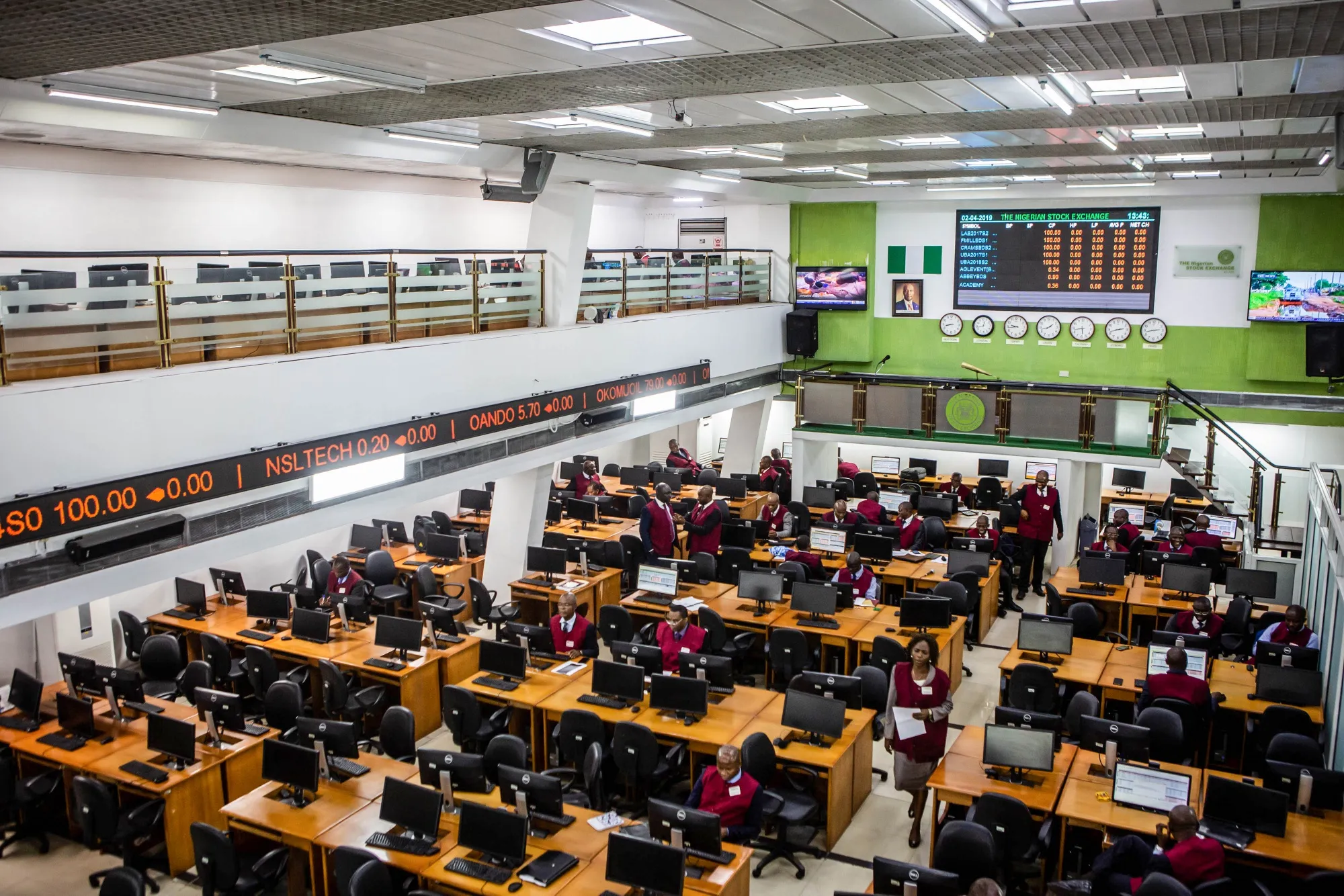
Temi Popoola, Group Managing Director/Chief Executive Officer of Nigerian Exchange Group (NGX Group), has called on the Central Bank of Nigeria’s Monetary Policy Committee (MPC) to recognize capital market development as a macroeconomic imperative. Popoola argues that the efficacy of monetary policy is increasingly tied to the depth, liquidity, and coherence of Nigeria’s financial markets.
During a presentation at the CBN MPC Workshop, delivered by Jumoke Olaniyan, Group Chief Strategy Officer, NGX Group, the group's stance was detailed. The session focused on the structure and behavior of Nigeria’s equity and government debt markets and their implications for monetary policy effectiveness.
Popoola emphasized that monetary policy's impact on households and businesses is channeled through the market architecture. He stated that weak market structures can diminish policy effectiveness, irrespective of the MPC's decisions. “The real question is not only the level of the policy rate, but whether the financial architecture through which it is transmitted is sufficiently deep and liquid,” he noted.
He further highlighted that Nigerian markets are now factoring in broader reforms, such as FX adjustments and fiscal measures, alongside improving investor confidence, rather than solely reacting to changes in the Monetary Policy Rate (MPR). This indicates a maturing market response.
The Nigerian capital market has seen significant growth, with equity market capitalization reaching ₦159.73 trillion in 2026 and the fixed-income market standing at ₦55.82 trillion. The NGX All-Share Index (ASI) achieved a 60.13% year-to-date return in 2026, signaling growing investor confidence despite high interest rates.
However, the presentation pointed out that market activity is concentrated in a few dominant sectors, and retail participation remains low. This limits the wealth effect through which monetary policy influences ordinary Nigerians.
In the debt market, Popoola cited the divergence between the current MPR of 26.50% and the 10-year sovereign yield of 14.95%. This gap suggests that markets are pricing in long-term reform credibility rather than just reacting to prevailing interest rates. The ASI's 51.19% return in 2025, achieved amidst elevated rates, further supports this view.
Popoola also raised concerns about the complexity of short-term debt instruments, including Treasury Bills, Open Market Operations (OMO) Bills, and standing facilities. He argued that these create competing signals, weakening benchmark clarity and diluting policy transmission. “MPR changes are absorbed across multiple instruments rather than transmitted cleanly through a single benchmark,” he explained.