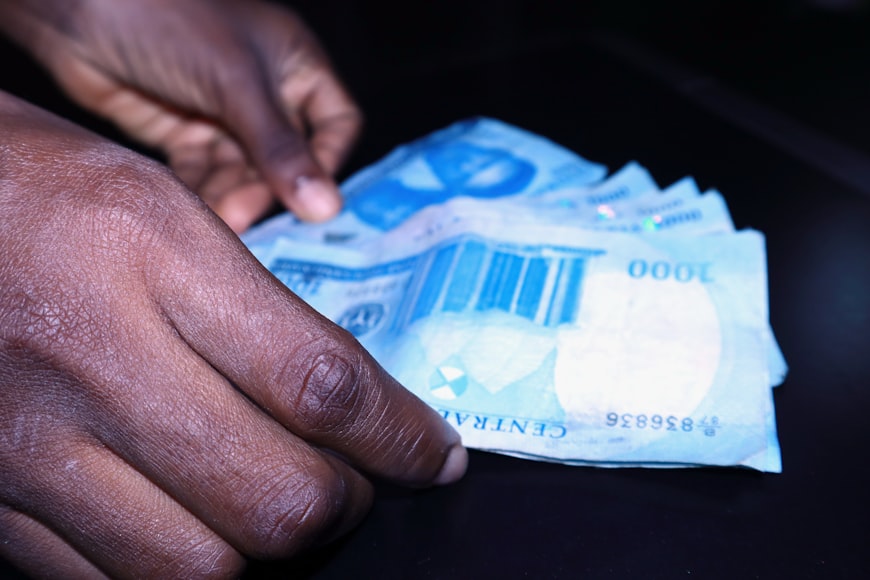
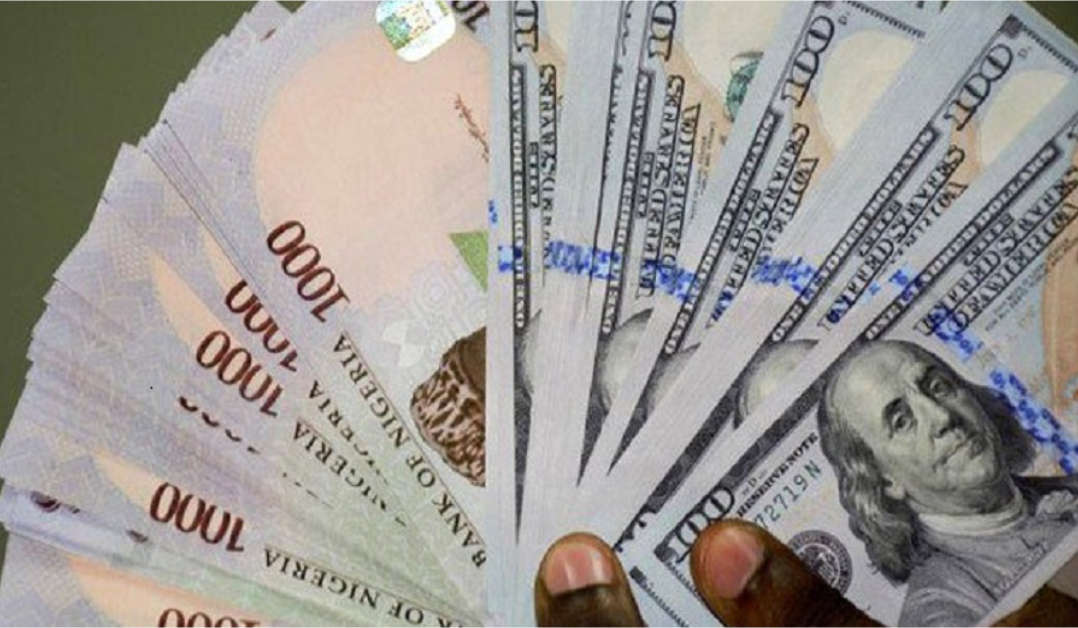
The Nigerian naira experienced a weakening trend in the official foreign exchange (FX) market, closing the week at N1,380.93 per dollar despite a significant increase in dollar inflows and stronger external reserves.
Data from the Central Bank of Nigeria (CBN) revealed that the naira depreciated by N10.47 week-on-week, representing a 0.76 percent decline from N1,370.46 recorded on the previous Friday. On a day-on-day basis, the local currency shed 82 kobo from N1,380.11 per dollar traded on Thursday.
Over the five trading sessions, the naira weakened by 0.86 percent or N11.82 from its opening rate of N1,369.11 on Monday. In contrast, the parallel market saw the local currency close unchanged at N1,395 per dollar, maintaining an N15 gap with the official rate.
Despite the naira’s decline, trading activity in the official market strengthened considerably. Total turnover at the Nigerian Foreign Exchange Market (NFEM) rose by 26.82 percent week-on-week to $2.79 billion on Thursday, marking a $590 million increase from $2.20 billion recorded the previous week.
The number of deals at the NFEM, however, saw a marginal decline of 1.12 percent, falling to 1,241 transactions from 1,255 deals a week earlier. Activity in the interbank segment of the FX market also improved, with total turnover surging by 34.08 percent week-on-week to $635.69 million on Friday, an increase of $161.56 million from $474.13 million.
The number of interbank deals rose by 3.5 percent to 555 transactions from 536 deals over the same period. Nigeria’s external reserves, crucial for supporting the naira, continued their steady ascent, reaching $51.24 billion as of June 25, 2026.
This represents a substantial 36.97 percent increase from $37.41 billion recorded during the corresponding period in 2025, according to data published on the CBN’s website.
Analysts at Comercio Partners noted the naira's remarkable stability throughout May 2026, exhibiting significantly lower volatility compared to previous years. The currency traded within a relatively narrow band of N1,360 to N1,375 per dollar at the official NFEM window.
It opened the month around N1,367 to N1,375 per dollar and closed near N1,372, experiencing only modest day-to-day fluctuations and avoiding significant depreciation pressures. The firm attributed this stability to improved FX liquidity, stronger foreign exchange inflows, and timely interventions by the CBN.
Comercio Partners also highlighted that the parallel market remained closely aligned with the official market, trading between N1,390 and N1,397 per dollar, resulting in a premium of only about 1 to 2 percent. This narrow spread reflects improving market confidence and a sharp reduction in previous FX market distortions.
“Overall, the naira has shown remarkable resilience since late 2024, moving from extreme volatility, with peaks above N1,600 per dollar in early 2025, to a more predictable trading range,” the report stated. Nigeria’s gross external reserves also staged a strong recovery during May 2026 after experiencing pressure in April.
Reserves increased by about $1.22 billion during the month to close at $49.58 billion on May 29. Reserve levels rose from $48.34 billion on May 4 to $48.89 billion by May 21 before recording further gains towards the end of the month.
The report concluded that the combination of a unified, transparent FX market, naira stability, and rising reserves represents a positive consolidation of reform gains. However, it cautioned that sustainability would depend on maintaining strong FX inflows, prudent fiscal management, and avoiding renewed external pressures, such as weaker global oil prices or geopolitical shocks.