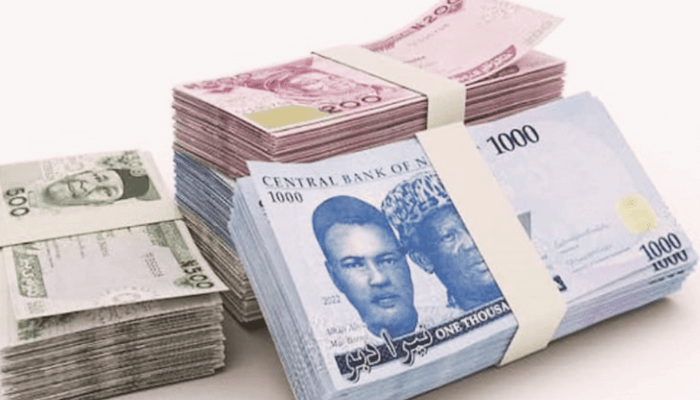
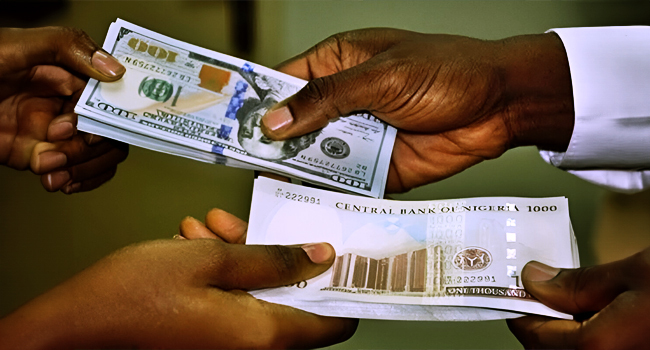
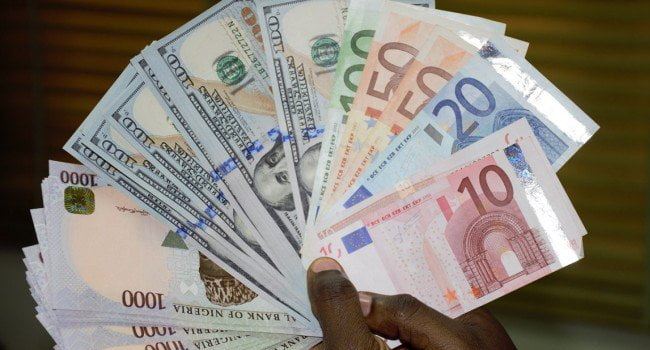
The Nigerian naira experienced a slight depreciation against the US dollar in the official foreign exchange (FX) market during May 2026. This occurred despite a notable surge in Nigeria’s external reserves, indicating that improved reserve buffers had not yet translated into enhanced market liquidity.
Data from the Central Bank of Nigeria (CBN) revealed that the naira weakened by N8.00 over the month, ending trading at N1,373.25. This represents a 0.58 percent loss from the N1,365.25 opening rate at the Nigerian Foreign Exchange Market (NFEM) window at the start of May.
Concurrently, Nigeria’s external reserves climbed to $49.34 billion as of May 26, 2026, an increase of $950 million or 1.96 percent from the $48.39 billion recorded on April 27, 2026. This reserve accumulation occurred while the CBN maintained a tight monetary policy stance.
Activity across both the interbank and official FX windows saw a slowdown. The number of deals executed in the interbank segment dropped by 15.19 percent to 1,776 transactions in May, down from 2,094 in April. Interbank turnover also declined significantly by 19.35 percent to $1.50 billion in May, compared to $1.86 billion in April.
At the NFEM window, the number of deals decreased by 21.17 percent to 4,758 transactions in May. Turnover at the official market moderated to $8.40 billion from $8.51 billion in April, a decline of 1.29 percent.
In contrast, the parallel market, or black market, saw the naira appreciate by N10 month-on-month, with the dollar quoted at N1,385. This performance helped narrow the spread between the official and unofficial exchange rates to N12 in May, down from N26 in April.
The CBN, through Governor Olayemi Cardoso, stated that gross external reserves stood at $49.49 billion as of May 15, 2026, sufficient to cover approximately 9.04 months of imports. The Monetary Policy Committee, in its 305th meeting, retained key monetary policy parameters, including the Monetary Policy Rate at 26.5 percent.
Analysts noted that the CBN’s decision reflects a commitment to sustaining investor confidence and exchange rate stability. Bismarck Rewane of Financial Derivatives Company suggested that inflation might approach 16.5 percent in the coming months but affirmed Nigeria's improved macroeconomic position.