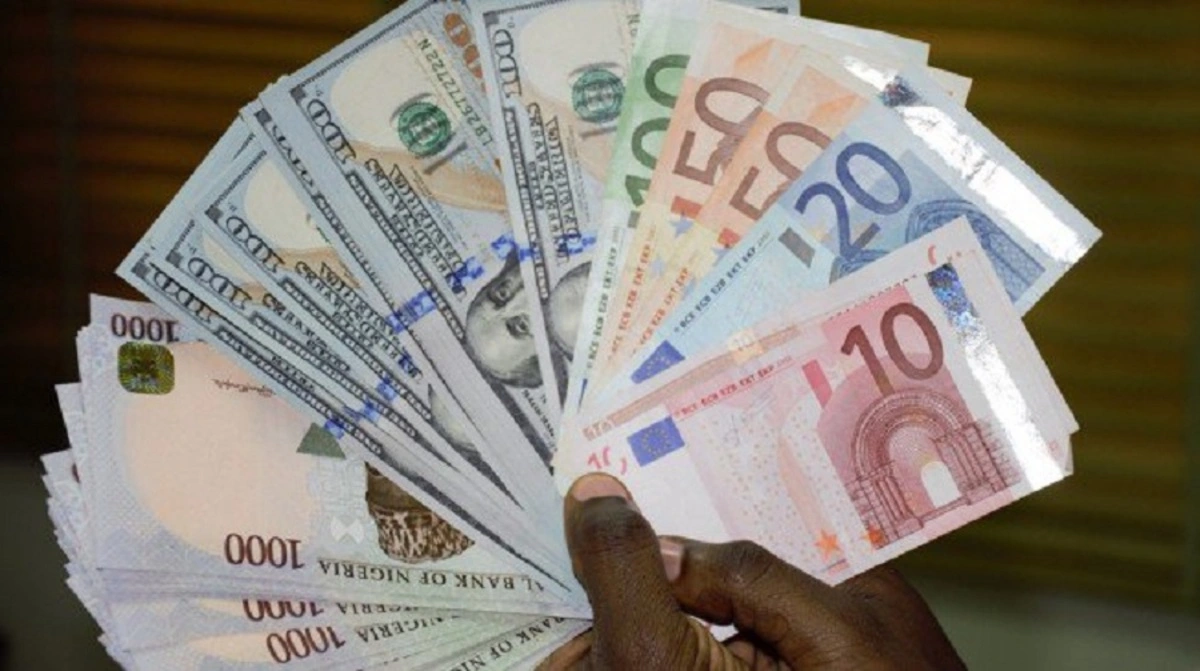
The Nigerian naira continued its appreciation against the Euro on Friday, with the Central Bank of Nigeria’s (CBN) latest data showing it settled at N1,557/€1. This marks an improvement from N1,570/€1 recorded in the past session.
The EUR/NGN exchange rate had previously peaked near N1,774/€1 in January 2026 before retreating to a multi-month low of approximately N1,555/€1. Since early July, the pair has largely remained stable within a narrow band of N1,561/€1–N1,576.7/€1.
The CBN’s high interest rates and tight money supply policy are credited with supporting portfolio flows into Nigeria and managing the local currency’s depreciation. These measures are aimed at stemming inflation and have proven supportive of the naira’s stability.
Meanwhile, rate cuts from the European Central Bank (ECB) have provided some upward momentum for the Euro relative to emerging market currencies, but not enough to significantly push EUR/NGN higher. The ECB’s Governing Council confirmed its intent to bring inflation back to its medium-term target of 2%, acknowledging high uncertainty and the unmaterialized full impact of the energy price shock.
Following a 25 basis point increase in June, the ECB decided to keep its key interest rates unchanged. The rate on the deposit facility stands at 2.25%, main refinancing operations at 2.40%, and marginal lending facility at 2.65%.
Globally, the major European currency traded near $1.14 against the US dollar, hovering around $1.138 levels in the London trading session on Friday after a slight loss. Gains for the EUR/USD pair remain possible in the short term, but the upward range is bounded.
Increased hostilities in the Middle East, such as Yemen’s Iran-linked Houthis militants reportedly attacking two Saudi oil tankers, could strengthen the US dollar as crude oil prices rise. The United States has retaliated with military airstrikes on Iran for a 13th consecutive night, with President Donald Trump threatening “major military punishment” if attacks persist.
Rising trade tensions also factor in, as the United States plans to impose new tariffs of 10% to 12.5% on imports from its biggest trading partners. European imports from the United States are expected to bear a tariff of at least 10%, structured to comply with existing trade agreements between the EU and the USA.
The CME FedWatch tool data indicates a 35.8% probability of a Fed rate hike in July, alongside an 82.1% likelihood of at least a quarter-point increase to the federal funds rate target in September.