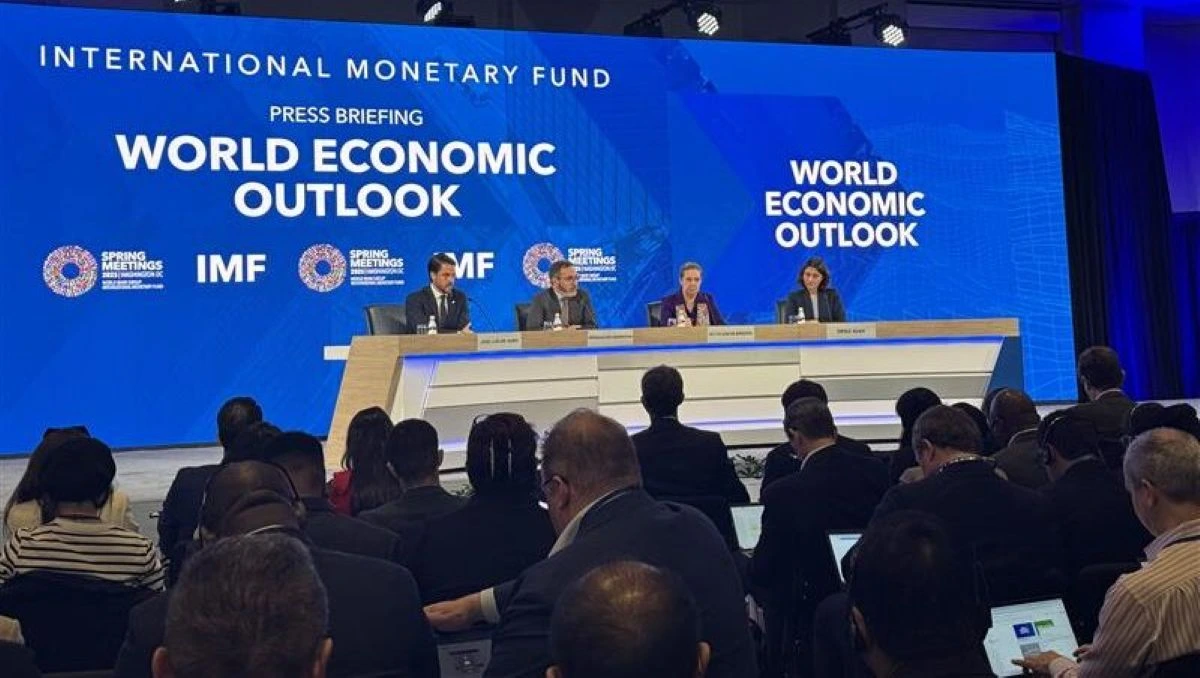
Financial repression has risen to its highest levels in decades as governments with elevated debt increasingly face constraints in using conventional fiscal measures to reduce their fiscal pressures. The International Monetary Fund (IMF) disclosed this in a Working Paper titled "The Coming Great Repression? New Measures and a Century of Evidence," prepared by Marijn A. Bolhuis, Jakree Koosakul, Neil Shenai, and Jie Yang.
The study examines the historical use of financial repression to reduce government debt and fiscal pressures. It warns that continued reliance on these policies could carry significant costs for financial development, private investment, and overall economic growth.
Global Debt Pressures Drive Unconventional Policies
The IMF paper reveals that financial repression has become a significant contributor to postwar debt reduction, with both fiscal and monetary channels re-emerging since 2008. Repression indicators tend to rise alongside higher public debt and low or negative real returns on government debt.
According to the IMF, global public debt is on track to exceed 100% of Gross Domestic Product (GDP) by 2029. In April 2025, the IMF warned about the rapid increase in global public debt, noting that it was expected to rise by 2.8% in 2025, pushing overall debt levels beyond 95% of GDP.
Governments may increasingly rely on financial repression where political support for fiscal consolidation, structural reforms, and debt restructuring is insufficient. While conventional options for reducing debt remain available, each faces significant political and reputational constraints.
How Governments Direct Private Savings to Public Debt
Financial repression refers to government policies that encourage or force private savings into public debt, allowing governments to borrow at relatively lower costs. These policies typically include interest-rate controls, high bank reserve requirements, and capital controls.
The IMF noted that fiscal repression can also arise through existing requirements that create structural demand for government bonds. Additionally, the monetary channel could become more important as central banks' post-quantitative easing reserve holdings expand the public sector's claim on the financial system.
However, the IMF cautioned that modern financial markets differ significantly from the postwar period. During that era, financial repression was highly effective because domestic institutions were more captive, capital accounts were more restricted, and savers had fewer alternative assets.
Nigeria Balances High Debt and Monetary Tightening
Nigeria's fiscal and monetary environment provides a relevant context as the country continues to manage elevated public debt and borrowing costs. The Debt Management Office reported that Nigeria's total public debt rose to N159.28 trillion as of December 31, 2025.
Meanwhile, the Central Bank of Nigeria (CBN) has projected public debt at 34.68% of GDP by the end of 2026. Under CBN Governor Olayemi Cardoso, Nigeria's monetary policy has undergone a significant tightening cycle to curb inflation pressures.
The Monetary Policy Rate (MPR) rose from 18.75% in 2023 to 27.5% by the end of 2024, while the Cash Reserve Ratio (CRR) for commercial banks was raised from 32.5% to 45% and later to 50%. As inflation pressures moderated, the CBN began cautiously easing monetary policy in late 2025, reducing the MPR to 26.5% in February 2026, where it remained through the 305th and 306th Monetary Policy Committee meetings.