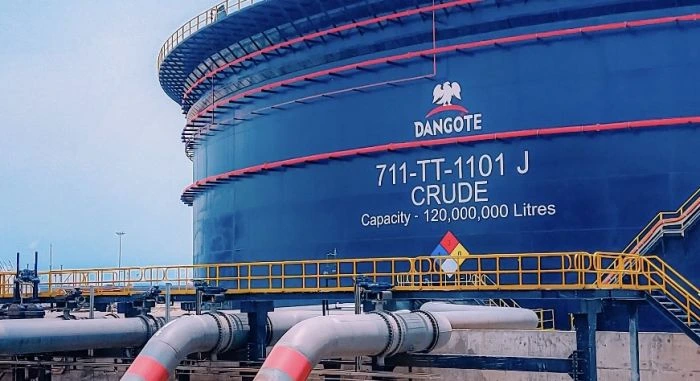
Dangote Petroleum Refinery and Petrochemicals has clarified its position following recent reports referencing data released by the Nigerian Upstream Petroleum Regulatory Commission (NUPRC). The reports suggested that the refinery rejected 15.5 million barrels of crude oil offered by local producers in the second quarter of 2026.
The company emphasised that it remains fully committed to sourcing Nigerian crude oil and supporting the objectives of the Domestic Crude Supply Obligation (DCSO) framework. However, it stressed that crude oil must be available in adequate volumes and offered on commercially competitive terms to ensure the sustainability of domestic refining and the supply of affordable petroleum products to Nigerians.
Commenting on the issue, the Group Vice President, Oil & Gas and Fertiliser, Dangote Industries Limited, Devakumar Edwin, said the central issue is not the volume of crude nominally offered under the DCSO arrangement, but the quantity that is genuinely available for purchase under commercially viable conditions.
Pricing and Intermediary Costs Drive Up Premiums
According to Edwin, the refinery has consistently raised concerns about inadequate availability of domestic crude and has recently encountered situations where crude is offered at prices that are significantly above prevailing market benchmarks.
He explained that since the commencement of the DCSO framework, the refinery has faced significant challenges in securing crude supplies directly from domestic producers. As a result, a substantial portion of the crude allocated under the arrangement has had to be sourced through International Oil Companies (IOCs) and third parties rather than directly from Nigerian upstream producers.
This process often introduces additional premiums and transaction costs that can drive crude prices above internationally recognized benchmarks published by agencies such as Platts and Argus. In many cases, this has made domestically sourced crude less competitive than alternative supplies available on the international market.
Policy Gaps in the Petroleum Industry Act
Edwin noted that the refinery’s concern is not with the intent of the DCSO policy, which it strongly supports, but with certain operational realities affecting its implementation. He highlighted concerns regarding aspects of the Petroleum Industry Act (PIA) framework that allow counterparties to withdraw from negotiations without any structured review process or adequate safeguards.
Dangote Refinery stated that, excluding cargoes supplied under NNPC term contracts, it has concluded negotiations for only a limited number of DCSO cargoes since the inception of the arrangement. In several instances, crude cargoes earmarked for domestic refining were reportedly already committed to other buyers before discussions with the refinery commenced.
The company said these experiences reinforce the need for greater transparency, improved market efficiency, and commercially sustainable supply arrangements that can support Nigeria’s refining ambitions.