The Nigeria Customs Service (NCS) announced on Monday, July 6, 2026, that it surpassed its 2025 revenue target by 10.24 per cent, generating a total of ₦7.28tn between January and December. This achievement comes despite numerous government-approved tax waivers and fiscal incentives designed to stimulate economic growth.
2025 Revenue Performance Exceeds Target
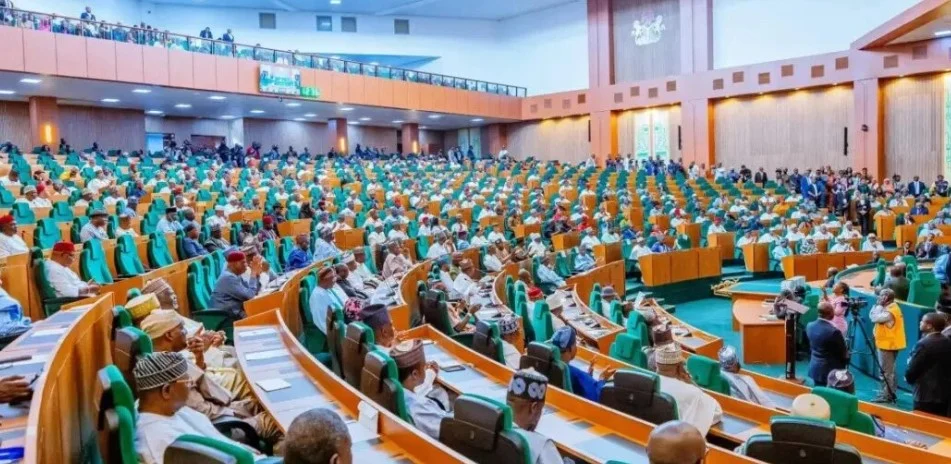
Comptroller-General of Customs, Adewale Adeniyi, disclosed this during the agency’s 2025 budget performance defence and 2026 budget proposal presentation before the House of Representatives Committee on Customs and Excise. He clarified an initial error in the budget document, confirming the correct revenue figure of ₦7.28tn.
This figure exceeded the annual revenue target of ₦6.58tn by ₦696bn. Adeniyi attributed this strong performance to sustained reforms in revenue administration, technology deployment, and trade facilitation efforts.
Impact of Waivers and Fiscal Policies
The Customs boss highlighted that this feat was achieved despite significant revenue losses stemming from fiscal policies introduced by the Federal Government to support critical economic sectors. These measures included the suspension of excise duty on telecommunications services throughout 2025 and the non-implementation of other proposed revenue measures, such as the green tax.
Further impacting Customs earnings were healthcare waivers, tax concessions on pharmaceutical products, and duty exemptions granted under the Presidential Compressed Natural Gas initiative, which covers CNG-powered and electric vehicles. Import duty exemption certificates accounted for the largest revenue shortfall, with approximately ₦34.53tn worth of imports receiving various exemptions and waivers in 2025.
Adeniyi detailed that the NCS recorded a loss of ₦34.54tn in projected revenue due to a huge volume of trade covered by Import Duty Exemption Certificates and VAT Order. This amount comprised 56.40% petroleum products and 40.52% military imports. He also noted that the limited number of products currently subject to excise duty constrained revenue generation, and geopolitical tensions in the Middle East disrupted global supply chains in the last quarter of 2025, particularly affecting wheat imports.
Budget Implementation and Lawmakers' Queries
Regarding expenditure, the Comptroller-General stated that out of an approved budget of ₦1.13tn for the 2025 fiscal year, only ₦808.86bn was available for implementation. This shortfall was due to the transition from the old seven per cent Cost of Collection funding arrangement to the four per cent Free-on-Board (FOB) Cost of Collection mechanism introduced under the Nigeria Customs Service Act.
The NCS operated under the previous funding model until August 2025 before migrating to the new framework. Lawmakers, including Abia lawmaker Alex Ikwechegh, queried discrepancies between the approved budget, actual funds received, and expenditure figures, particularly concerning concessionaire fees.
Adeniyi explained that the 2025 projection was based on the new four per cent FOB funding system, while actual implementation reflected the delayed transition from the seven per cent Cost of Collection until August. He further clarified that under the new Act, the responsibility for concessionaire payments was transferred to the NCS, with 25 per cent of the four per cent FOB Cost of Collection reserved for these obligations. The committee expressed satisfaction with the explanations.
2026 Revenue Target and Strategic Outlook
For the 2026 fiscal year, the NCS has set an ambitious revenue target of ₦11.07tn. This projection includes ₦5.54tn from federation accounts, ₦1.49tn from non-federation accounts, ₦2.27tn from import Value Added Tax, and ₦1.26tn from the four per cent FOB Cost of Collection.
To achieve this target, Adeniyi outlined strategies including deepening automation, strengthening post-clearance audit, expanding intelligence-led enforcement, and enhancing trade facilitation. A central component of this strategy is the Unified Customs Information System, known as B’Odogwu, a robust automated platform designed to streamline all Customs procedures.
Reforms undertaken in collaboration with the International Monetary Fund and the World Customs Organisation have significantly strengthened post-clearance audit operations, enabling real-time system audits and daily revenue recovery. The Authorised Economic Operator Programme and the Advance Ruling Programme are also fully operational, expected to improve compliance and facilitate legitimate trade.
Adeniyi acknowledged that while new excise measures under the 2026 fiscal policy could boost collections, recently approved tariff reductions on imported vehicles might moderate revenue growth. He confirmed that import duty on used vehicles had been reduced from 15 per cent to five per cent, and on brand-new vehicles from 20 per cent to 10 per cent. The House Committee Chairman on Customs, Leke Abejide, urged the NCS to publicise these reductions for public awareness.