The Central Bank of Nigeria's Monetary Policy Committee (MPC) on Tuesday retained the benchmark interest rate, the Monetary Policy Rate (MPR), at 26.5 per cent. This marks the second consecutive meeting the rate has been held, following a 50-basis-point cut in February 2026.
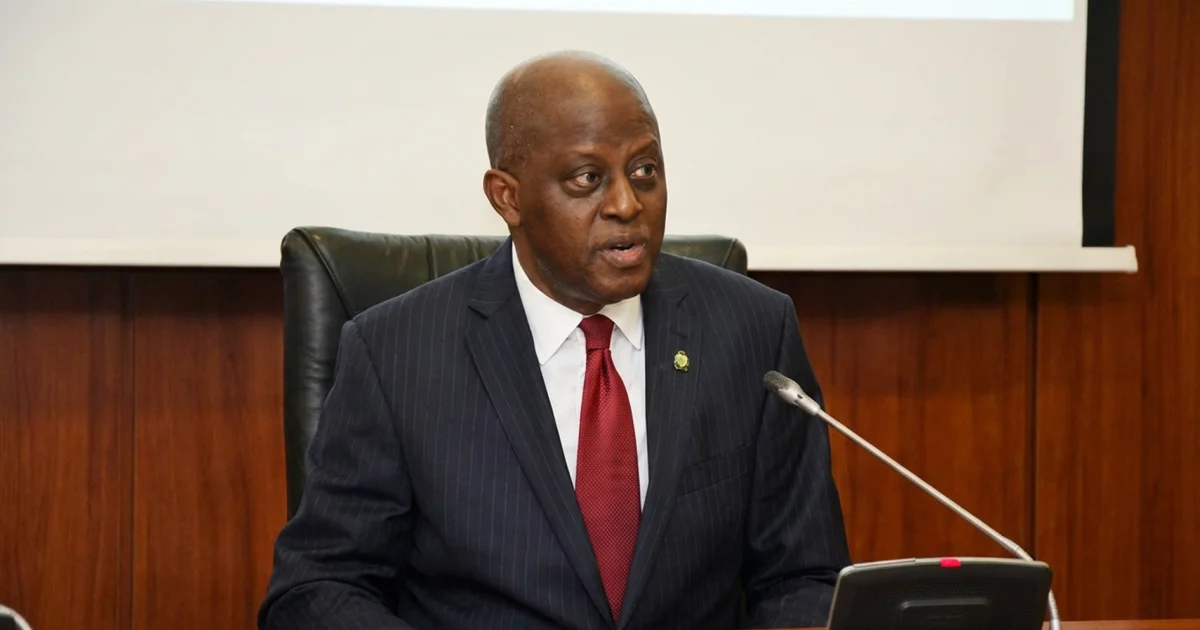
CBN Governor Olayemi Cardoso announced the decision at the conclusion of the MPC’s 306th meeting in Abuja, attended by all 11 members. The committee also retained the standing facilities corridor around the MPR at +50/-450 basis points.
Furthermore, the Cash Reserve Ratio (CRR) was held at 45 per cent for Deposit Money Banks and 16 per cent for Merchant Banks. The CRR on non-Treasury Single Account public sector deposits was also retained at 75 per cent.
Inflation Trends and Policy Rationale
The decision to maintain the current policy stance comes despite a marginal decline in Nigeria’s headline inflation rate. According to the National Bureau of Statistics, headline inflation eased to 15.91 per cent in June 2026 from 15.93 per cent in May.
This moderation represents the first decline after three consecutive monthly increases, with inflation having risen from 15.06 per cent in February to 15.38 per cent in March, 15.69 per cent in April, and 15.93 per cent in May.
Governor Cardoso explained that the committee considered the balance of risks, concluding that maintaining the current policy stance was the most appropriate option. He cited heightened global uncertainties due to renewed hostilities in the Middle East and their implications for global energy prices and potential domestic inflation.
Cardoso noted that the Nigerian economy has remained largely resilient to external shocks, attributing this to reforms implemented by both fiscal and monetary authorities. He added that retaining the current policy stance would allow the committee to monitor incoming economic data and assess the direction of inflation before taking further action.
The committee commended the Federal Government’s commitment to policy coordination and the implementation of Executive Order 9, which is seen as strengthening Nigeria’s macroeconomic fundamentals. It also urged sustained efforts to increase crude oil production and accelerate reforms in the solid minerals sector to diversify public revenue.
The outcome of the banking sector recapitalisation exercise was welcomed, as it has improved the resilience of the financial system. The CBN was urged to sustain effective supervision to preserve financial stability.
Detailed Inflation Breakdown and Economic Outlook
While headline inflation moderated, food inflation increased to 17.52 per cent in June from 16.96 per cent in May. This rise was primarily due to supply constraints in major food-producing areas and elevated transportation costs.
Conversely, core inflation moderated to 15.92 per cent from 16.82 per cent, largely benefiting from exchange rate stability. The 12-month average inflation rate fell for the sixth consecutive month to 17.63 per cent in June from 18.36 per cent in May, while month-on-month headline inflation also eased to 1.66 per cent from 1.75 per cent.
Cardoso reiterated the CBN’s commitment to returning inflation to single digits, acknowledging that the renewed conflict in the Middle East complicates this outlook. However, he stated that the moderation in headline inflation indicates that previous policy measures are producing desired results.
He emphasized the importance of collaboration between fiscal and monetary authorities to contain rising inflation and achieve the single-digit target. Restoring macroeconomic stability, he argued, is crucial for fostering stronger investment and economic growth.
Nigeria’s gross external reserves increased to 50.47bn at the end of May, driven by crude oil-related tax receipts and third-party inflows. These reserves are sufficient to finance approximately 11 months of imports of goods and services, well above the international benchmark of three months.
Real Gross Domestic Product expanded by 3.89 per cent in the first quarter of 2026, primarily supported by the non-oil sector. The Composite Purchasing Managers’ Index also improved to 50.1 points in June from 49.6 points in May, signaling renewed expansion in business activity.
Regarding the International Monetary Fund’s assessment of the naira being undervalued, Cardoso stated that the CBN would continue to support a transparent foreign exchange market rather than target a specific exchange rate. He added that the eventual value of the naira would depend on stronger economic fundamentals, including higher oil exports, increased foreign direct investment, and improved domestic productivity, noting that “the country does need a competitive currency.”
Monetary Policy History and Future Steps
The current decision follows an unprecedented tightening cycle since 2023 under Governor Cardoso’s leadership, which included floating the local currency and implementing tight monetary policies to combat inflation and exchange rate volatility. The most dramatic phase occurred in 2024, when the CBN raised the benchmark rate six consecutive times, increasing it from 18.75% to 27.50% in November 2024.
The retention of the benchmark rate leaves monetary conditions unchanged for businesses and consumers as the apex bank continues to monitor inflation and other macroeconomic developments. The next meeting of the Monetary Policy Committee is scheduled for September 21 and 22, 2026.