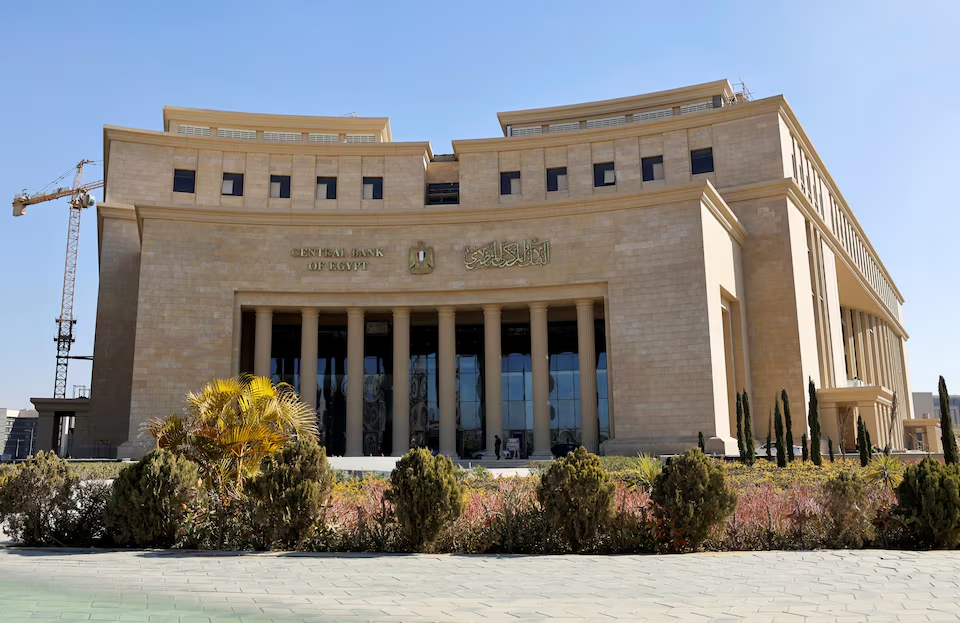
Egypt’s central bank has retained its benchmark interest rates, citing persistent inflationary pressures and growing external uncertainties linked to the ongoing geopolitical tensions in the Middle East.
The Monetary Policy Committee of the Central Bank of Egypt kept the overnight deposit rate unchanged at 19% and the lending rate at 20%. The decision reflects the committee's assessment of current and expected inflation dynamics amid an unfavorable external environment.
This decision aligns with market expectations, as analysts had widely projected that Egyptian policymakers would maintain rates amid concerns that regional conflicts and global energy price shocks could fuel renewed inflationary pressures.
The Egyptian central bank stated that the decision to maintain rates was necessary to preserve monetary stability while closely monitoring inflation and broader macroeconomic conditions.
The apex bank also warned that ongoing regional tensions could weigh on economic growth and inflation expectations in the near term.
The bank noted that real GDP growth moderated to 5% in the first quarter of 2026, compared to 5.3% recorded in the fourth quarter of 2025. Policymakers also warned that growth could slow further in the second quarter due to the ongoing regional conflict involving Iran, Israel, and the United States.
Analysts surveyed by Reuters had earlier projected that the central bank would likely keep rates unchanged because of concerns over rising inflation risks linked to geopolitical tensions.
Recent inflation data in Egypt showed a slight moderation in price pressures, although inflation remains significantly above the central bank’s target range. Annual urban consumer inflation eased unexpectedly to 14.9% in April 2026 from 15.2% recorded in March.
The decision comes as several emerging economies continue to balance inflation control with slowing growth and rising external risks.