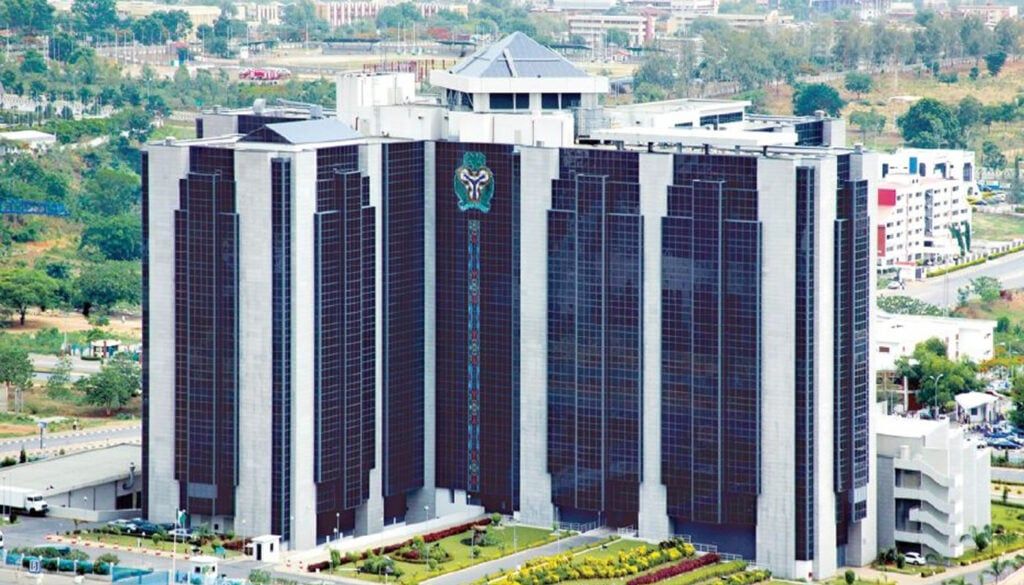
The Central Bank of Nigeria’s (CBN) directive, requiring banks, payment service providers, and fintech companies to localize customer and transaction data within Nigeria by January 1, 2027, is emerging as a significant catalyst for the country’s digital infrastructure industry.
While some industry stakeholders have expressed concerns regarding implementation costs and infrastructure readiness, operators of Nigeria’s largest data centres believe the policy could unlock substantial investment, strengthen data sovereignty, and reduce the nation’s reliance on foreign infrastructure.
Policy as a Catalyst for Digital Transformation
For data centre operators, this directive is more than a compliance requirement; it is viewed as a strategic economic intervention capable of accelerating Nigeria’s digital transformation. Ikechukwu Nnamani, Chief Executive Officer of Digital Realty Nigeria, described the directive as a positive development for both the data centre industry and the wider economy.
Nnamani stated that localizing banking and financial services data will stimulate demand for data centre services, encourage the expansion of existing facilities, and attract investment into new infrastructure projects. He noted that the increased demand for data hosting capacity would create jobs during both the construction and operational phases of new facilities, while also improving service quality through lower latency.
Economic Benefits and Forex Savings
A key benefit highlighted by Nnamani is the significant reduction in foreign exchange currently spent on overseas cloud and data hosting services. Many Nigerian financial institutions presently rely on servers and cloud infrastructure located in Europe, North America, and other international markets, leading to recurring foreign currency payments.
With the localization of data and services within Nigeria-based data centres, payments will be made in local currency, thereby reducing pressure on the naira. This move is expected to save foreign exchange that currently flows to countries where these servers are located, aligning with Nigeria's broader efforts to strengthen domestic economic activity and reduce demand for dollars.
Addressing Nigeria's Data Centre Capacity
A major question surrounding the CBN directive is whether Nigeria currently possesses sufficient infrastructure to accommodate the massive amount of banking and fintech data that could be repatriated over the next six months. However, data centre operators insist that capacity concerns are overstated.
Dr. Ayotunde Coker, Chief Executive Officer of Open Access Data Centres (OADC), noted that Nigeria has already established itself as a regional digital infrastructure hub, delivering infrastructure at globally competitive standards. Ikechukwu Nnamani of Digital Realty Nigeria believes that infrastructure supply naturally follows demand, and the CBN’s policy could provide the commercial incentives needed to accelerate investments in the sector.
Coker added that Lagos has increasingly emerged as West Africa’s digital infrastructure hub, attracting significant investment into large-scale facilities capable of supporting growing cloud, fintech, and artificial intelligence workloads. While power availability remains a global challenge for data centres, operators are leveraging gas-powered generation and collaborating with state governments to expand electricity infrastructure. The ongoing decentralization of Nigeria’s power sector could also provide additional opportunities for states to support large-scale digital infrastructure investments.
Engr. Gbenga Adebayo, Chairman of the Association of Licensed Telecommunications Operators of Nigeria (ALTON), previously dismissed concerns about Nigeria’s infrastructure readiness. He pointed to existing data centre capacity already serving international clients, stating, “If people overseas can host their data here, why can’t we host our own data here?” He explained that Nigeria currently has about six Tier III data centres, with additional facilities under development, emphasizing that hosting capacity is more crucial than the raw number of facilities.
Global Shift Towards Data Sovereignty
The CBN’s directive coincides with a period of unprecedented global growth in demand for computing infrastructure, largely driven by artificial intelligence applications. Mr. Yele Okeremi, Chief Executive Officer of Precise Financial Systems Ltd (PFS), stated that the CBN’s directive reflects a broader global shift towards treating data as a strategic national resource.
Okeremi argued that Africa has historically exported raw commodities, allowing others to capture most of the value through processing and industrialization, a risk he believes now exists in the digital economy. He emphasized, “If you do not control your data and continue to give it out, you are back to the basis of primary products again.”
Drawing from the resource-based theory of economic development, Okeremi highlighted data as one of the most valuable resources in today’s economy, particularly in an era increasingly defined by artificial intelligence. He questioned Africa’s position within the global AI value chain, despite the continent generating vast amounts of data that power digital platforms worldwide.