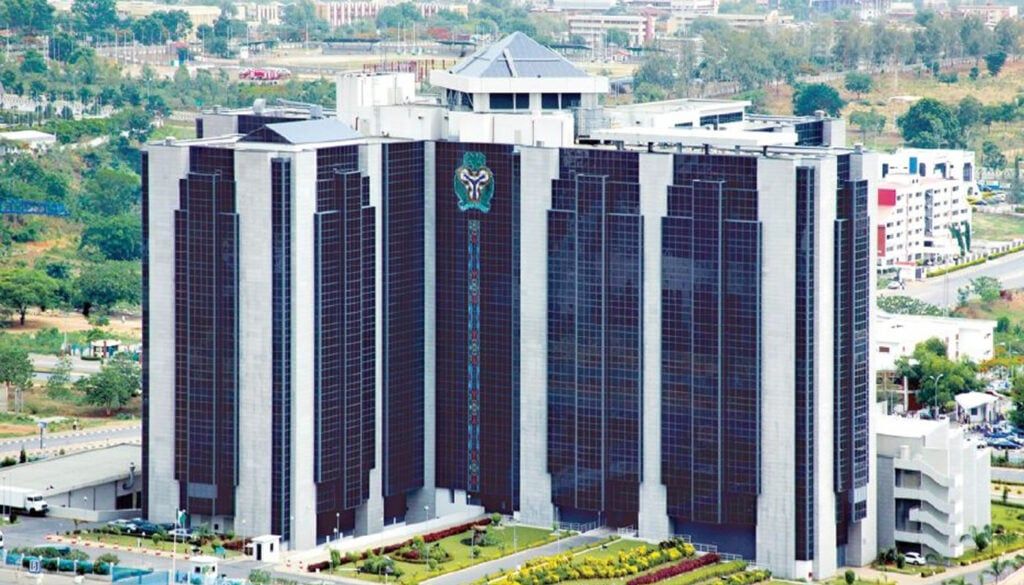
The Central Bank of Nigeria’s (CBN) directive requiring banks and fintech companies to host critical data within Nigeria by January 2027 will have a greater impact on fintech firms than traditional banks, according to Kenneth Ufomba, Managing Director of Signal Alliance Technology Holdings (SATH).
Speaking during SATH’s 30th anniversary media parley in Lagos, Ufomba noted that while most top-tier banks have already aligned with the regulator’s expectations over the years, many fintechs built on cloud-first models will face more complex migration challenges.
Ufomba explained that the cloud-first nature, which helps fintechs be more agile than traditional banks, will make compliance with the new directive more difficult for them. He stated, “The people that this impacts most are those fintechs, those companies who are born in the cloud, who are very agile in their strategy and do not have the liberty of housing Tier III or Tier IV data centres.”
He clarified that many banks, despite using global cloud platforms such as Microsoft Azure and Amazon Web Services (AWS), have already ensured that the categories of data required by regulators remain within Nigeria. SATH is actively engaging fintech companies to assess the implications of the directive and help them determine which data categories fall under the localization requirement before developing migration strategies. The company, which partners with Huawei, is leveraging local data centre infrastructure to support organizations seeking to comply with the new rules.
The CBN issued its directive in June, mandating all financial institutions and licensed payment operators to store and manage payment transaction data generated within Nigeria on local servers by January 1, 2027. Affected institutions include deposit money banks, microfinance banks, mobile money operators, switching and processing companies, payment terminal service providers, payment solution service providers, super agents, and other licensed payment operators.
Data Sovereignty and Capacity Concerns
The timing of the CBN’s directive coincides with a period of unprecedented growth in demand for computing infrastructure globally. While some stakeholders have raised capacity concerns, local data centre operators have debunked these claims.
Collin Onuegbu, Chairman of Signal Alliance, backed the CBN’s policy, describing it as a necessary step toward strengthening Nigeria’s data sovereignty. He emphasized that critical national and financial data should remain within the country, stating, “There’s something called data sovereignty, where you have to own your data because it’s the new real estate.” Onuegbu added that policies encouraging the development of more data centres across Nigeria and Africa would improve digital resilience and reduce dependence on foreign infrastructure.
Dr. Ayotunde Coker, Chief Executive Officer of Open Access Data Centre (OADC), dismissed concerns over Nigeria’s capacity to comply with the CBN’s payment data localization directive. He insisted that the country’s data centre infrastructure is sufficient to support the transition, noting that Nigeria’s data centre market is supported by more than $2 billion in projected investments by 2027. OADC alone is investing $240 million in a 24 megawatt hyperscale facility in Lekki.
Separately, Kenneth Ufomba also warned that many organizations are rushing to deploy Artificial Intelligence (AI) tools without establishing governance and compliance frameworks. He stressed that AI governance should precede implementation to ensure responsible deployment and measurable business value. Ufomba highlighted that many businesses remain focused on generic AI applications, stating, “When Microsoft Copilot came up, I used to tell people that it was AI 101. The danger is remaining in AI 101 when people are already moving to AI 201, AI 301 and today we’re talking about agentic AI.”