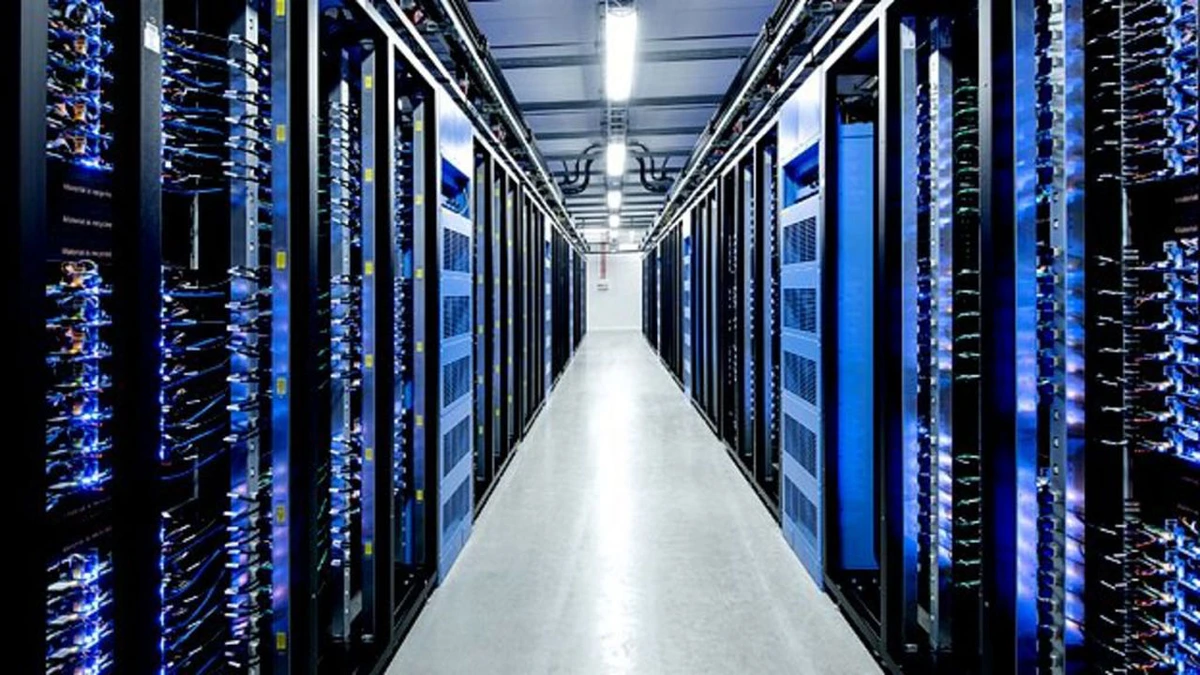
Sub-Saharan Africa remains a minor player in the global artificial intelligence and cloud infrastructure race. According to the International Monetary Fund’s 2026 paper, Unlocking the Potential: AI in Sub-Saharan Africa, the region hosts only about 160 data center facilities. This represents just 5.5% of global installations, despite the region holding a much larger share of the world’s population.
The infrastructure is also highly concentrated. Nearly half of the region's data centers are located in just three countries: South Africa, Nigeria, and Kenya. The rest of the continent has only a handful of facilities, highlighting an uneven digital divide.
Nigeria Secures Second Place but Battles Power Deficits
Nigeria is Africa’s second-largest data center market with 25 facilities. The country, alongside Egypt, Kenya, and South Africa, absorbed roughly 84% of the continent’s $2.2 billion in venture capital funding in 2024. It is also a key target in the Cassava Technologies and NVIDIA partnership, which is a $700 million deal to deploy 12,000 GPUs across Nigeria, South Africa, Kenya, Egypt, and Morocco.
However, Nigeria’s digital growth faces severe infrastructure strain. The IMF report reveals that 86% of Nigerian firms own or share a backup generator, the highest rate among the top three data center nations. This reflects persistent national grid unreliability.
Furthermore, Nigeria’s energy subsidies present fiscal risks. In 2022, electricity subsidies amounted to 0.2% of GDP, while petroleum subsidies reached 0.8% of GDP. The IMF warns that countries with subsidized energy systems could face rising fiscal pressures as AI-driven electricity demand increases.
Kenya Leads East African Green Energy Integration
Kenya ranks third on the continent with 19 facilities and serves as a major technology hub. The country anchors a partnership between Microsoft and G42, featuring a $1 billion, 100-megawatt green data center campus near Naivasha. This facility is powered directly by geothermal energy, proving that data center demand can make large-scale renewable projects financially viable.
With over 90% of its electricity coming from renewables, Kenya is leveraging its green energy profile to attract technology investments. The country is also recognized for its advanced ICT sector, driven by policies like the Data Protection Act of 2019.
Kenya’s digital ecosystem includes M-Pesa, an Agricultural Observatory Platform serving over 700,000 farmers, and health initiatives where AI-based support cut diagnostic errors by 16% across nearly 40,000 patient visits.
The Broader Sub-Saharan Infrastructure Gap
Tanzania ranks fourth with 11 facilities, utilizing AI tools like Shule Direct to support teachers. Mauritius and Angola tie for fifth with 10 facilities each. Angola is part of a $100 million International Finance Corporation commitment to expand Raxio Group data centers, though local firms still face average outage-related losses of 8.4% of annual sales.
Ghana ranks seventh with eight facilities, piloting tablet-based AI tools and drone deliveries. Senegal follows with seven facilities, utilizing the Tolbi machine-learning irrigation platform to cut water use by up to 60%.
Ethiopia, Mozambique, and Côte d’Ivoire each host six facilities, largely supported by the IFC's $100 million Raxio Group expansion. Botswana has five facilities, though its grid is heavily fossil-fuel dependent with renewables making up only 1.3% of capacity. DR Congo and Uganda each have four facilities, while Zambia rounds out the top 15 with three facilities.