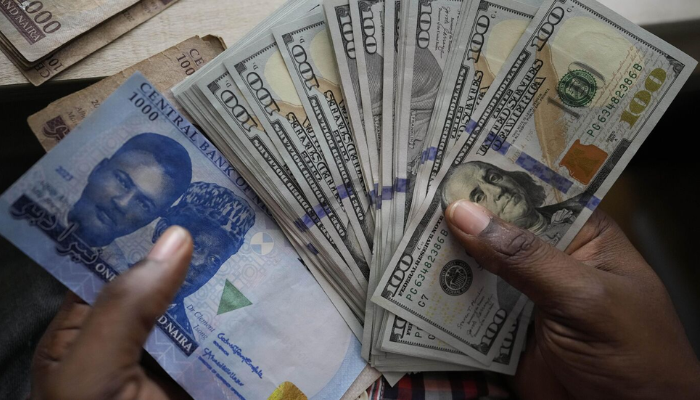
The naira strengthened against the dollar to close the week at N1,362.21/$1, buoyed by Nigeria’s gross external reserves which climbed to a record $50.04 billion. This new high in external buffers reinforces investor confidence and enhances the Central Bank of Nigeria’s (CBN) capacity to support the local currency.
The latest reserve figure slightly surpasses the previous peak of $50.03 billion recorded on March 11, 2026. Data from the CBN website indicates the naira appreciated by N11.04, or 0.8 percent, compared to the previous week's closing rate of N1,373.25/$1.
Over the five trading days, the naira gained 0.34 percent, moving from an opening rate of N1,366.79/$1 to N1,362.21/$1 by Friday. However, on a day-to-day basis, the local currency saw a slight weakening of 0.25 percent from N1,358.75/$1 on Thursday.
Activity at the Nigerian Foreign Exchange Market (NFEM) remained robust, with a total turnover of $2.51 billion across 1,420 deals for the week. The interbank segment accounted for $683.22 million in turnover from 679 deals.
In the parallel market, the naira held steady at N1,385/$1 throughout the week. This resulted in a widening of the gap between the official and parallel market exchange rates to N23, from N18 recorded on Thursday.
Nigeria’s external reserves, crucial for supporting the naira and meeting external obligations, continued their upward trend, crossing the $50 billion threshold. As of June 4, 2026, the reserves stood at $50.04 billion, marking a 3.56 percent increase from $48.32 billion recorded on May 7, 2026.
The CBN reported in February 2026 that gross external reserves had risen to $50.45 billion, signaling improved liquidity conditions and strengthening confidence in Nigeria’s foreign exchange position.
Olayemi Cardoso, governor of the CBN, stated that the current reserve level is sufficient to provide approximately 9.68 months of import cover, offering a stronger buffer against external shocks. Cardoso attributed the reserve growth to increased export earnings and remittance inflows.
Cardoso expressed optimism about continued reserve growth, noting, “I believe that as long as we are able to continue in this particular manner, you will see a regular accretion to our reserves. So maybe now we are saying that it is the highest in 13 years. Next time, we hope to say it is the highest in 15 years.”
The apex bank had projected in December 2025 that external reserves would rise to $51.04 billion in 2026, driven by easing pressure in the foreign exchange market, stronger oil receipts, and sustained inflows from remittances and foreign portfolio investments. The current reserve position indicates progress towards this target, reflecting the impact of tighter monetary policy, improved foreign exchange liquidity, and stronger capital inflows.