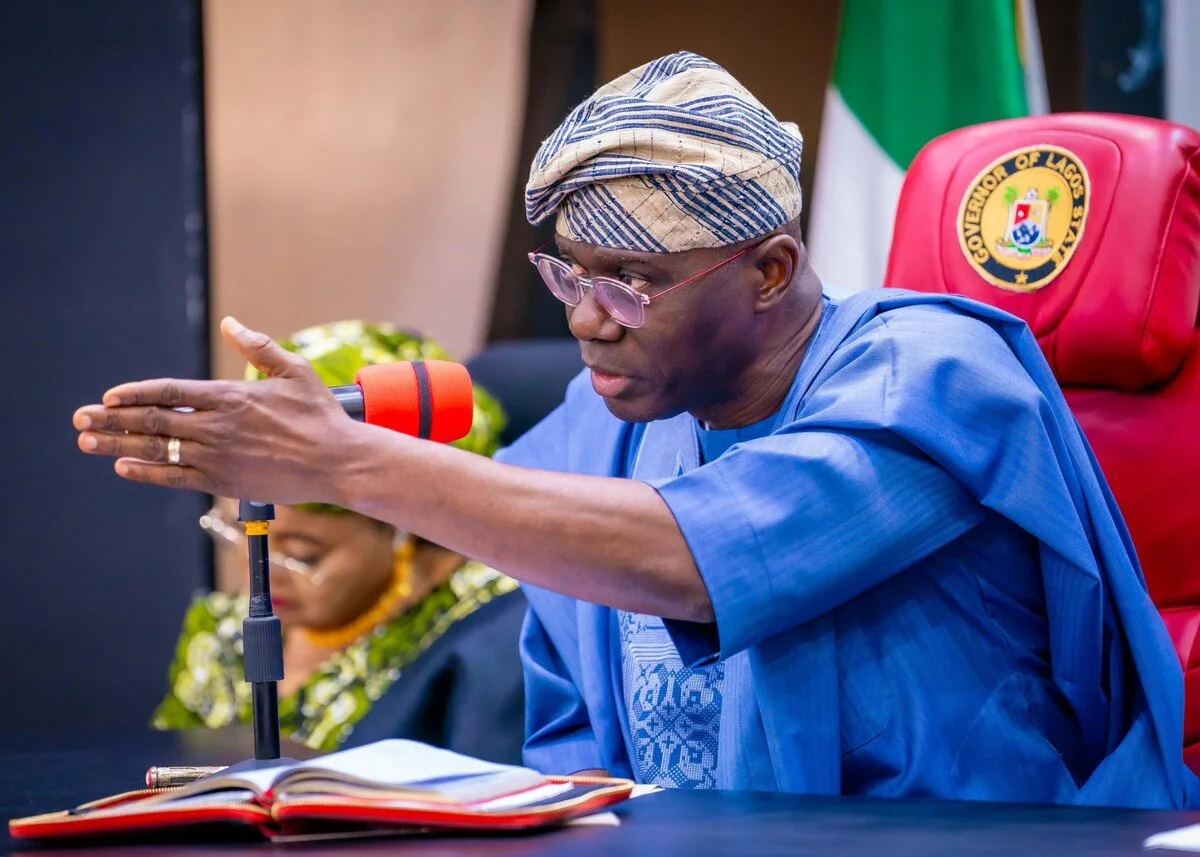
The Lagos State Government has sought the approval of the State House of Assembly to issue a N200 billion bond. This bond aims to finance key infrastructure projects across the state, as detailed in separate letters from the Commissioner for Finance, Mr. Abayomi Oluyomi, read during Tuesday’s plenary, according to the News Agency of Nigeria (NAN).
This proposed N200 billion Series V bond is a component of the state’s larger N1 trillion Debt and Hybrid Instruments Issuance Programme. The proceeds are earmarked for priority projects such as the New Massey Children’s Hospital, Lagos Island General Hospital, the Lagos Rail Mass Transit Line, Omu Creek Bridge, and other strategic infrastructure initiatives.
Leveraging FAAC Receivables
In a separate request, Commissioner Oluyomi also sought approval for Lagos State to participate in the Federation Account Allocation Committee (FAAC) Receivables Discounting Programme under the Lagos State Infrastructure Finance Fund. This initiative would enable the state to leverage future FAAC allocations to access approximately $17 million in third-party funding, providing immediate liquidity for infrastructure development and other capital projects.
Oluyomi emphasized that participation in this programme requires a formal resolution from the House of Assembly. He assured lawmakers of prudent financial management and sustainable infrastructure development. Speaker Mudashiru Obasa referred both requests to the Joint Committee on Economic Planning and Budget and the Committee on Finance for detailed scrutiny, directing them to submit their report on Thursday.
Historical Context of Lagos Bonds
Lagos State has a consistent history in Nigeria’s domestic debt market, utilizing bond issuances to finance major infrastructure projects. The state debuted its first N15 billion floating-rate bond in 2002, marking it as the first subnational government in Nigeria to access the domestic capital market.
Subsequently, the state raised N80 billion in 2012, issued an N87.5 billion Series II bond in 2017, and floated a N137.3 billion bond in 2020, all under larger multi-series debt programmes. According to the Lagos State Government, previous bond issuances have either been fully repaid or remain performing, reinforcing the state’s track record in the domestic debt market. In November 2025, Lagos had plans to raise up to N200 billion through a 10-year bond under its N1 trillion Debt and Hybrid Instruments Issuance Programme.
Expanding Rail Network Initiatives
The proposed bond comes as Lagos continues to expand its Lagos Rail Mass Transit (LRMT) network, with rail infrastructure among the projects expected to benefit from the financing. The 27-kilometre Blue Line, running from Marina to Okokomaiko, saw its first 13-kilometre phase between Marina and Mile 2 become operational in September 2023, while construction is ongoing on the 14-kilometre second phase to Okokomaiko.
The 37-kilometre Red Line is designed to run from Agbado in Ogun State to Marina in Lagos. Commercial operations currently cover the first 27-kilometre phase between Agbado and Oyingbo, with construction commenced on the final phase extending the line to Marina. Lagos is also preparing to commence construction of the 68-kilometre Green Line, a proposed rail corridor linking Marina to the Lekki Free Zone.
This Green Line project is estimated at $3 billion and is being developed in partnership with the Ministry of Finance Incorporated (MOFI) and China Harbour Engineering Company (CHEC). To support this, the Federal Government earmarked N146.14 billion as counterpart funding in the 2025 budget and proposed an additional N102.3 billion in the 2026 budget. These rail lines form part of the Lagos Strategic Transport Master Plan, which has been expanded from six to 11 rail lines and one monorail, aiming to build an integrated urban rail network and reduce road congestion across the metropolis.