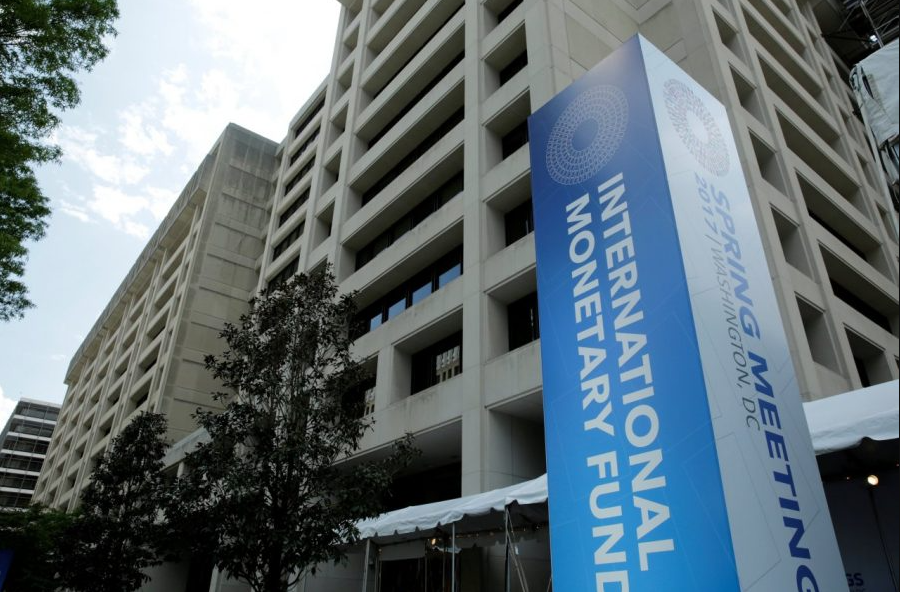
The International Monetary Fund (IMF) has declared that tokenization is poised to fundamentally transform financial market infrastructure (FMI) but will not lead to the demise of the institutions that form the bedrock of the global financial system. This perspective comes from an IMF working paper, “The Evolution of Financial Market Infrastructures in a Tokenized Economy: Exploring Blockchain Implementation Options for Issuance, Central Clearing, Settlement, and Reporting,” prepared by Yaiza Cabedo, Tommaso Mancini-Griffoli, Fabian Schär, and Nicolas Zhang.
The paper argues that despite the ability of blockchain technology and smart contracts to automate numerous core market functions, legal entities and regulated institutions will continue to be indispensable for governance, compliance, risk management, and accountability within the financial ecosystem.
The IMF highlighted that tokenization represents the most significant technological shift in financial market infrastructure since the dematerialization of securities. It stressed that this evolution will transform, rather than replace, the sector.
Smart contracts and distributed ledger technology can automate various core market functions, including record-keeping, reconciliations, delivery-versus-payment settlements, and collateral movements. This automation is expected to reduce operational frictions and enhance efficiency across financial services.
However, the IMF underscored that critical functions such as risk governance, margin calibration, default management, business continuity, legal oversight, and supervisory intervention cannot be fully replicated by computer code. The institution concluded that tokenization is more likely to redefine how financial market infrastructure operates rather than eliminate its core functions.
According to the IMF, the future of financial market infrastructure will likely be characterized by hybrid models. These models will combine blockchain technology with traditional institutional oversight to ensure stability and regulatory compliance.
Smart contracts are anticipated to manage an increasing share of operational and transactional processes. Concurrently, regulated institutions will maintain oversight of governance, compliance, legal accountability, and intervention during periods of market stress.
The paper noted that hybrid structures will remain necessary where blockchain-based settlements lack legal recognition, ownership depends on off-chain legal enforcement, or transactions span multiple distributed ledger platforms. While tokenization can reduce settlement risks and improve efficiency, it also introduces new challenges, including smart contract vulnerabilities, governance concentration, dependence on external data sources (oracles), privacy concerns, and fragmentation across blockchain networks.
The IMF advised policymakers to focus on clearly defining the boundary between processes that can be safely automated and those that require institutional oversight and legal accountability. The central policy question, the paper added, is no longer whether financial market infrastructure will remain relevant, but how existing institutions should evolve to accommodate blockchain-enabled financial systems.
Tokenization involves converting ownership rights or sensitive information into digital tokens that can be securely stored and transferred on blockchain networks without exposing the underlying data. Nigeria’s Securities and Exchange Commission (SEC) has recently intensified oversight of digital asset operators through an incubatory programme.
In mid-2025, President Bola Ahmed Tinubu signed the Investment and Securities Act (ISA) 2025 into law, marking a significant milestone in Nigeria’s capital market reform. This new legislation repeals the former Investments and Securities Act No. 29 of 2007, aiming to strengthen the legal and regulatory framework for investments and capital market activities in the country.
The ISA 2025 also classifies digital assets as securities. Tokenized assets are digital assets, but when they offer an investment gateway, they qualify as securities, placing tokenized equities on a regulatory knife-edge. Unlike traditional financial systems that rely on multiple intermediaries, tokenized markets can automate several transaction processes using programmable smart contracts.
Financial market infrastructures encompass payment systems, securities depositories, central counterparties, clearing houses, settlement systems, and trade repositories that support the issuance, clearing, settlement, and reporting of financial transactions. Global financial institutions, regulators, and central banks are increasingly exploring tokenization to improve market efficiency, reduce settlement costs, and support faster cross-border transactions. Despite these technological advances, the IMF maintains that legal certainty, regulatory oversight, and institutional governance will remain indispensable components of financial markets.