Around 20 percent of global liquefied natural gas (LNG) exports originating from the Persian Gulf are exposed, primarily volumes from Qatar.
US equities cut losses after President Donald Trump announced steps to safeguard commerce in the Strait of Hormuz, with Brent futures topping $85 a barrel at one point before settling at $81.40.
The International Energy Agency (IEA) is prepared to help stabilize the global oil market, noting that member countries collectively hold over one billion barrels in emergency stockpiles.
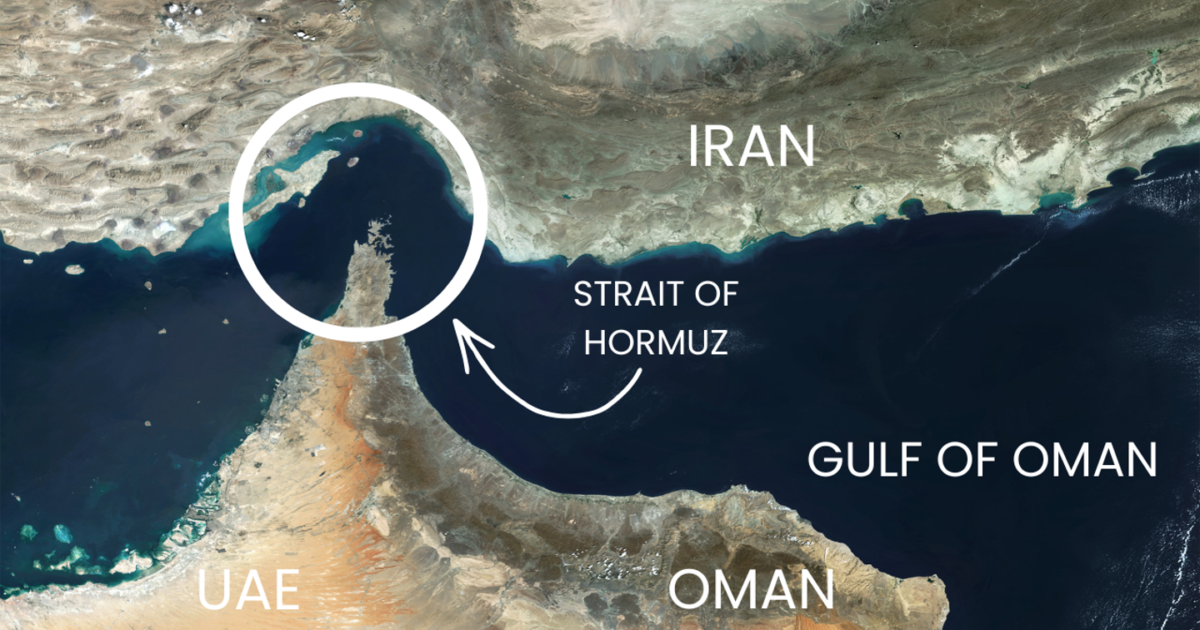
The strategic closure of the Strait of Hormuz by Iran is sending significant reverberations across global energy markets, with Asia anticipated to bear the brunt of the disruption. This critical chokepoint, situated between Oman and Iran, is a vital artery for global oil and gas flows, with approximately 13 million barrels per day traversing its waters in 2025, representing about 31 percent of seaborne crude trade, according to data from energy consultancy Kpler. The potential for a sustained blockade has triggered a surge in oil prices, with some analysts projecting crude to surpass $100 per barrel. Global benchmark Brent was last trading around $80 per barrel, marking a 2.6 percent increase on the day and a nearly 10 percent rise since the conflict escalated.
Beyond crude oil, roughly 20 percent of global liquefied natural gas (LNG) exports originating from the Persian Gulf are also exposed, primarily volumes from Qatar. QatarEnergy, a major LNG supplier, has reportedly halted production following Iranian drone strikes on its facilities at Ras Laffan and Mesaieed. This disruption is expected to disproportionately affect Asian economies with high import dependence. Nomura has identified Thailand, India, South Korea, and the Philippines as particularly vulnerable, while Malaysia, as a net energy exporter, could see marginal benefits.
South Asia faces acute physical and financial stress, especially within LNG supply chains. Pakistan and Bangladesh are especially exposed due to their heavy reliance on Qatar and the United Arab Emirates for their LNG imports, accounting for 99 percent of Pakistan’s imports and 72 percent of Bangladesh’s. India, with 53 percent of its LNG imports from these Gulf nations, faces a dual impact: higher oil import costs and elevated LNG contract prices, as a significant share of its LNG is Brent-indexed. Around 60 percent of India’s crude imports originate from the Middle East, amplifying risks to its current account.
China, the world's largest crude importer, is materially exposed but appears better positioned to absorb short-term shocks. The country imports over 80 percent of Iran's oil exports and relies on the Gulf for approximately 40 percent of its crude imports. About 30 percent of its LNG imports come from Qatar and the UAE. China’s LNG inventories, estimated at 7.6 million tonnes at the end of February, provide short-term cover. However, a prolonged outage could force Beijing to compete for Atlantic cargoes, tightening supply in the Pacific basin and intensifying price competition across Asia. Rystad Energy suggests that increased Saudi crude loadings and strategic petroleum reserves held by major consumers like China could offer temporary cushioning.
Japan and South Korea exhibit high oil dependence, with the Middle East supplying around 75 percent of Japan’s oil imports and roughly 70 percent of South Korea’s. Their LNG exposure to the Gulf is lower, with South Korea sourcing about 14 percent of its LNG from Qatar and the UAE, and Japan about 6 percent. Even without physical shortages, price effects are expected to be significant, particularly for economies with high energy import reliance. Inventory buffers are limited; South Korea holds about 3.5 million tonnes of LNG reserves and Japan around 4.4 million tonnes, enough to cover roughly two to four weeks of stable demand. Nomura flagged South Korea as especially vulnerable on the current account front, noting that net oil imports account for about 2.7 percent of its GDP.
Across Southeast Asia, the immediate impact is likely to be cost-driven rather than volume-driven. Spot-reliant LNG buyers will face sharply higher replacement costs as Asia competes with Europe for Atlantic cargoes. Thailand stands out as particularly exposed, with net oil imports equivalent to 4.7 percent of its GDP. Nomura estimates that every 10 percent rise in oil prices could widen Thailand’s current account deficit by around 0.5 percentage point of GDP.
In response to the escalating tensions, US equities initially joined a global equity rout on Tuesday due to surging oil prices. However, they cut their losses after President Donald Trump announced steps to safeguard commerce in the Strait of Hormuz. The waterway, which accounts for the transport of about one-fifth of global crude supplies, had been mostly devoid of traffic since the United States and Israel launched military attacks on Iran on Saturday. Crude prices continued to surge early Tuesday, with Brent futures topping $85 a barrel for the first time since July 2024 amid talk of $100 oil due to a lengthy outage of Strait of Hormuz activity. Brent ultimately finished at $81.40 per barrel, still up 4.7 percent, after Trump announced that the US Navy would escort oil tankers through the Strait of Hormuz if needed and ordered Washington to provide insurance for shipping. Art Hogan of B. Riley Wealth Management noted that the moderation in oil prices buttressed the stock market, with the S&P 500 finishing down 0.9 percent at 6,816.63.
European markets endured a bruising session, with London falling 2.8 percent and both Frankfurt and Paris dropping by more than three percent. Joshua Mahony, chief market analyst at Scope Markets, stated that European markets were being hit hard as the full inflationary impact of the conflict in Iran was coming home to roost. Data also showed an unexpected rise in eurozone core inflation. The European Central Bank’s chief economist, Philip Lane, warned that a lengthy Middle East conflict could trigger a “spike” in eurozone inflation and hit regional growth. The Dutch TTF natural gas contract, the European benchmark, shot up more than 40 percent to over 60 euros on Tuesday, its highest level since January 2023.
European natural gas prices had already surged 50 percent on Monday after Qatar's state-run energy firm announced it had halted liquefied natural gas production due to strikes. On Tuesday, US and Israeli strikes targeted across Tehran, with drones and missiles crashing into oil facilities and US diplomatic missions in the Gulf as Iran retaliated. The rise in energy costs is expected to complicate the efforts of most central bankers to bring down inflation while also cutting interest rates to support their economies. Capital Economics economists Jennifer McKeown and William Jackson predict that the US Federal Reserve, ECB, and Asian central banks would likely delay interest rate cuts, while the Bank of England and central banks in parts of Latin America and Central Europe could be forced to hike rates.
The International Energy Agency (IEA) has indicated its readiness to help stabilize the global oil market. The agency noted that member countries collectively hold over one billion barrels in emergency stockpiles. While oil production in the region remains largely unaffected, flows through the Strait of Hormuz and liquefied natural gas production have been “significantly impacted.” The IEA is scheduled to hold a meeting to assess developments. The agency coordinates global releases of oil inventories during periods of market disruption and has coordinated five emergency stock releases over the past 35 years. Oil futures climbed above $85 per barrel on Tuesday for the first time since July 2024, amid heightened concerns about critical energy infrastructure risks, including a fire at a major storage facility in the United Arab Emirates. The OPEC+ alliance’s agreement for a modest production increase has not been sufficient to calm the market, especially with shipping constraints through the Strait of Hormuz limiting supply flexibility.