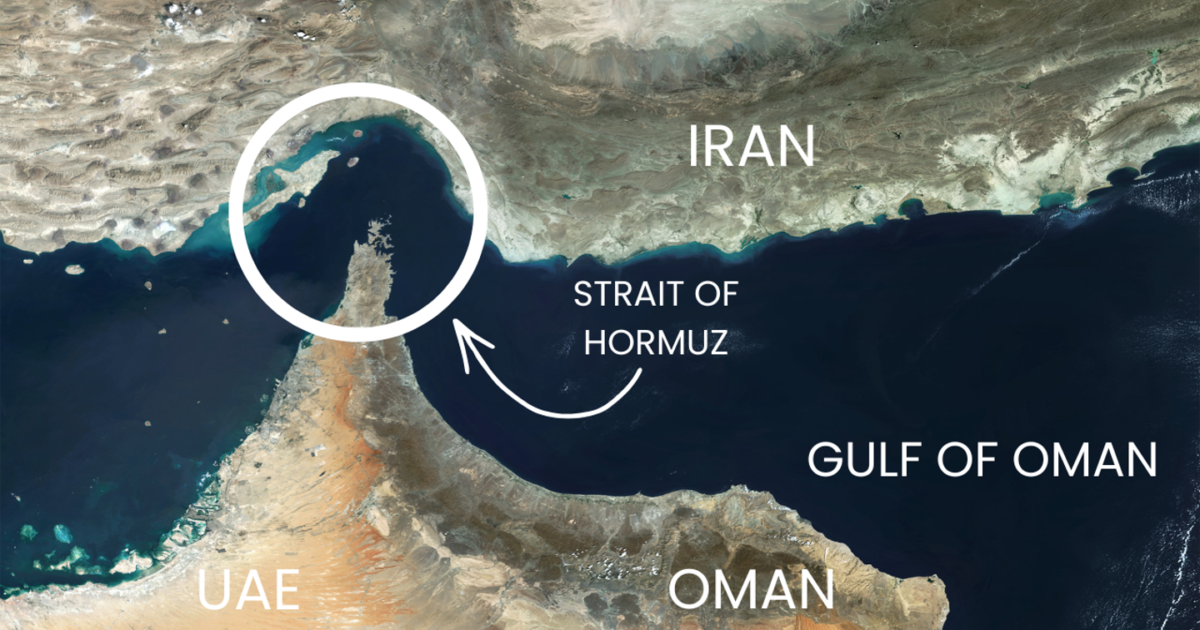
Iran has declared that the Strait of Hormuz will not reopen while a United States naval blockade remains in effect. This stance was reiterated on Thursday, even with an extended ceasefire, following Iran's announcement of seizing two ships attempting to transit the strategic waterway.
US Central Command (CENTCOM) stated late Wednesday that it had instructed 31 vessels to alter course or return to port as part of its own blockade measures against Iran. The situation intensified as the deadline for a return to conflict loomed.
US President Donald Trump had previously indicated on Tuesday his intention to maintain the truce, providing additional time for peace negotiations facilitated by Pakistan. Iran welcomed Pakistan's mediation efforts but offered no further comment on Trump's announcement.
Iranian parliament speaker Mohammad Bagher Ghalibaf stated, “A complete ceasefire only has meaning if it is not violated through a naval blockade.” He added, “Reopening the Strait of Hormuz is not possible amid a blatant violation of the ceasefire.”
Global oil prices experienced a four percent surge before moderating on Thursday, reacting to Iran's threat to keep the Strait of Hormuz closed amid the US blockade. The benchmark US oil contract, West Texas Intermediate (WTI), rose 4.06 percent to $96.73 per barrel around 0025 GMT. International benchmark Brent North Sea crude increased by 3.62 percent to $105.63, though both eased in subsequent minutes.
President Trump expressed a desire to allow Iran's leadership time to formulate a proposal, a move widely interpreted as a face-saving measure to avert renewed conflict. He suggested to the New York Post that talks could resume in Pakistan within two to three days, although Iran had not confirmed its participation, and Vice President JD Vance postponed his travel to Islamabad on Tuesday.
Trump also claimed that Iran had halted alleged plans to execute eight women arrested during recent anti-government protests at his request. However, Iran's judiciary dismissed these remarks as “false news,” asserting the women never faced the death penalty.
Ships Seized in Strait of Hormuz
Iran's elite Revolutionary Guards reported forcing two ships ashore from the Strait of Hormuz, a critical chokepoint for approximately one-fifth of global oil. The Guards stated that their naval force identified and stopped two violating ships in the Strait of Hormuz on Thursday morning.
The vessels were identified as the Panama-flagged container ship MSC Francesca and the Liberia-flagged Epaminondas. Panama's foreign ministry confirmed the seizure of the MSC Francesca, denouncing it as a “serious attack on maritime security” and an “unnecessary escalation.”
Maritime security monitors in the UK confirmed that three commercial vessels reported encounters with gunboats in the strait. One container ship reported being fired upon by a Revolutionary Guards boat 15 nautical miles northeast of Oman, sustaining damage to its bridge but no casualties, according to monitor UKMTO.
Under President Trump's orders, the US Navy is attempting to intercept vessels bound for or departing from Iranian ports, aiming to increase pressure on Iran's economy without initiating full-scale war. Amidst the blockade, the Pentagon announced Wednesday that Secretary of the Navy John Phelan would depart “immediately,” without providing a reason for his sudden departure.
Iran, in response to perceived attacks, has mandated that vessels must obtain permission to leave or enter the Gulf through the strait. While previously promising free passage during the ceasefire, Iran reverted to defiance after Trump announced the blockade. The US Defense Department stated Tuesday that US forces had intercepted and boarded a “stateless sanctioned” vessel, identified by AFP as linked to Iranian activity. Both nations accuse each other of ceasefire violations.
Lebanon Violence Precedes Talks
Following the ceasefire with Iran, the United States assisted in brokering a truce between Israel and Lebanon, including Hezbollah, an Iranian-backed Shia movement that had launched rockets into Israel in retaliation for attacks on its patron. Despite the declared truce, Israeli strikes reportedly killed five more people on Wednesday, according to Lebanese media.
Amal Khalil, a journalist for Al-Akhbar newspaper, was killed, and her colleague Zeinab Faraj was wounded in an Israeli strike near the border. French President Emmanuel Macron announced the death of a second French soldier wounded in a weekend ambush against UN peacekeepers in Lebanon, an attack blamed on Hezbollah, which has denied responsibility. A first soldier was killed in the Saturday ambush.
Israel and Lebanon, which lack diplomatic relations, are scheduled to hold a second round of talks in Washington on Thursday. A Lebanese official, speaking anonymously due to the sensitive nature of the discussions, indicated that Lebanon would seek a one-month extension of the ceasefire. The official also stated that Lebanon would request an end to Israeli bombings and destruction in areas where Israel is present, along with a commitment to the ceasefire.
According to Lebanese authorities, Israeli attacks on Lebanon have resulted in over 2,450 fatalities since the commencement of the war.