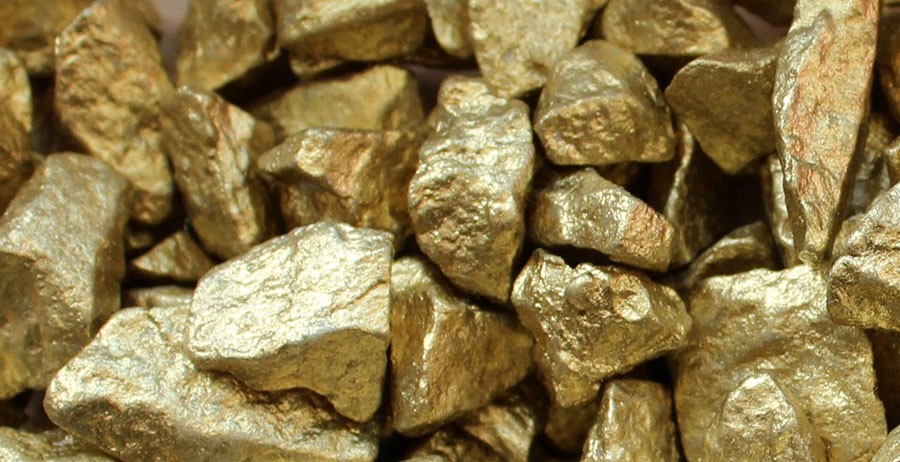
Ghana is set to commence purchasing 30% of the gold produced by large-scale mining companies starting July 1. This new agreement is designed to bolster the country’s foreign exchange reserves and foster the growth of its domestic gold refining industry.
The arrangement was officially announced in a government statement on Thursday, following an agreement reached with large-scale mining companies through the Ghana Chamber of Mines.
This policy builds upon Ghana’s domestic gold purchase programme, which was first introduced in 2022. Under that initial programme, the Bank of Ghana began acquiring a portion of gold from mining companies to diversify its foreign reserves, reduce reliance on foreign currencies, and enhance macroeconomic stability.
Initially, industrial miners were required to sell 20% of their annual gold output to the central bank. This helped Ghana’s gold holdings increase to 19.2 metric tonnes by February. Earlier this year, the government revamped the initiative with an ambitious target to raise reserves to 157 metric tonnes by 2028.
Under the new agreement, large-scale mining companies will now sell 30% of their gold production, in dore form, to the state-owned Gold Board (GoldBod), an increase from the previous 20% requirement.
These purchases will be made at a 0.55% discount to the Bank of Ghana’s reference price and will be paid for in Ghanaian cedis. Beyond strengthening the country’s gold reserves, the initiative is also expected to support Ghana’s goal of securing London Bullion Market Association (LBMA) accreditation for at least one domestic refinery by 2030.
The gold will first undergo local refining before being sent to an LBMA-accredited refinery for final melting, stamping, and eventual inclusion in the Bank of Ghana’s reserves. GoldBod already procures the entire production from Ghana’s artisanal gold mining sector.
This latest agreement follows negotiations that commenced earlier this year, after the Bank of Ghana proposed increasing the mandatory gold sales quota for industrial miners. In May, Nairametrics reported that the central bank sought to raise the allocation from 20% to 30% as part of efforts to accelerate reserve accumulation.
Paul Bleboo, Head of the Bank of Ghana’s Gold Management Programme, stated at the time, “This time, we intend to negotiate for 30% of annual production [from industrial miners] … with the entire 30% to be delivered in dore form.”
The agreement comes three months after Ghana reaffirmed its plans to overhaul its mining royalty regime, despite diplomatic pressure from the United States, China, and several other countries. Rather than maintaining the current flat 5% royalty on gold production, Ghana plans to introduce a sliding-scale system that links royalty payments to international gold prices.
Under the proposed framework, mining companies would pay higher royalties as bullion prices rise, with rates potentially increasing to as much as 12% if gold prices approach $4,500 per ounce. This reform aims to ensure the country captures a greater share of mining revenues during periods of elevated commodity prices. Lithium producers would also be brought under a similar variable royalty structure ranging between 5% and 12%, while other minerals would continue to attract the existing flat 5% royalty.
Ghana stands as Africa’s largest gold producer and ranks among the world’s leading bullion producers, with an annual output reaching about six million ounces in 2025. The precious metal forms the backbone of the country’s economy, contributing approximately 40% of export earnings and serving as one of Ghana’s most vital sources of foreign exchange.
Despite its prominent position as a leading producer, a significant portion of Ghana’s gold continues to be exported in raw or semi-processed form, thereby limiting the value captured domestically. To address this, Ghana inaugurated its first commercial gold refinery, the Royal Ghana Gold Refinery, in August 2024. This was established through a public-private partnership involving India’s Rosy Royal Minerals and the Bank of Ghana, which holds a 20% equity stake.
The refinery is an integral part of Ghana’s broader strategy to enhance local processing, improve traceability across the gold value chain, and position the country as a regional hub for gold refining and bullion trading.