Nigeria's recent transition to a shorter market settlement cycle, intended to accelerate the clearing of stock market transactions, has encountered an early setback. FTSE Russell announced on Tuesday, July 1, 2026, that it has paused the country's upgrade to frontier market status, stating, "FTSE Russell announces that the reclassification of Nigeria is under review."
The London-based global provider of market indices is placing the upgrade on hold after Nigeria pivoted this month from a T+2 settlement cycle to a T+1 model, reducing the settlement time by one working day. This reclassification was initially approved in March 2026, with an effective date of September 2026, following Nigeria's upgrade from an unclassified to a frontier market earlier this year.
Impact of T+1 Settlement
The policy shift to T+1 settlement, which commenced on June 1, 2026, aims to reduce clearing times for stocks, promising increased activity and liquidity, as well as faster settlement for domestic investors. However, it has fueled concerns that this approach could deter international investors, who, under the new arrangement, must fund trades before transactions can be executed.
FTSE Russell considers a requirement to prefund equity trades a negative for its Settlement Cycle (DvP) criterion, which is one of the five core FTSE Quality of Markets criteria required for attaining Frontier market status. An investment analyst, who requested anonymity, noted that foreign investors are now under more pressure to take a currency risk they typically avoid, contributing to a "significant pullback that we saw in June."
This move could further damage foreign investors' fragile confidence in Nigeria, especially after a prolonged dollar squeeze during the COVID-19 lockdowns trapped capital and prompted many to exit. Foreign capital inflow into Nigerian stocks dropped 17.4% to ₦400.1 billion in the year to May 2026, relative to the same period of 2025, according to data from Nigerian Exchange Limited.
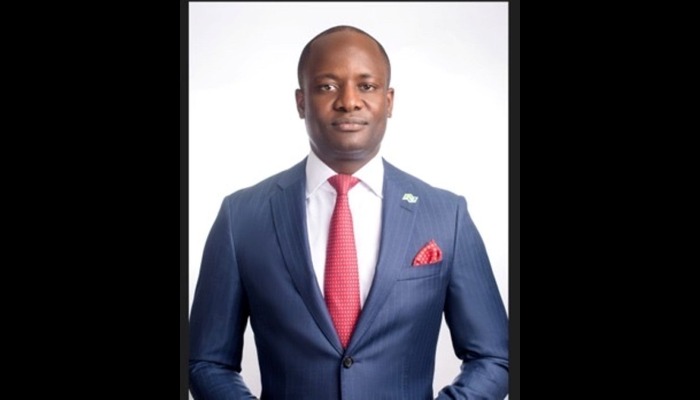
Arnold Dublin-Green, Chief Investment Officer at FTSE Equity Country Classification scheme, highlighted that inclusion was expected to bring between $100 million to $400 million in foreign portfolio inflows, with active investors potentially adding another $400 million. He warned that Nigeria may "kiss those critical, potential inflows goodbye" if it fails to regain its index status.
Industry Backlash and Defence
Nigeria’s capital market community has strongly defended the T+1 settlement reform, arguing that FTSE Russell's decision places undue emphasis on a single operational issue while overlooking broader regulatory, technological, and structural reforms. Chief Blakey Ijezie, founder of Okwudili Ijezie & Co. (Chartered Accountants), criticized the decision, stating, "FTSE Russell ought to be encouraging Nigeria to do better, not punishing the country for trying to modernize."
Ijezie pointed out that T+1 is a global trend adopted by markets like the United States, India, and Canada, which maintain positions in major global indices. He questioned why Nigeria is being penalized for following this trend, suggesting that concerns about T+1's compatibility should have been flagged before the March 2026 decision, not after Nigeria had already implemented the change.
Sehinde Adenagbe, Chairman of the Association of Securities Dealing Houses of Nigeria (ASHON), emphasized that a strong capital market is built on the effectiveness of its ecosystem, citing the success of Nigeria’s recent banking sector recapitalization exercise as a reflection of the market’s growing capacity. Tajudeen Olayinka, CEO of Wyoming Capital & Partners, added that Nigeria’s increasingly strong domestic institutional and retail investor base deserves greater recognition for providing stability.
David Adonri, Vice President of Highcap Securities Limited, maintained that market quality should not be measured through a single operational criterion in isolation, advocating for a balanced assessment that includes liquidity, regulatory oversight, technological infrastructure, transparency, and investor participation. Ambrose Omordion, Chief Operating Officer of InvestData Consulting Limited, described the transition as a long-term infrastructure reform that will ultimately improve market efficiency, transparency, and resilience.
Outlook and Investor Confidence
Market operators insist that Nigeria’s underlying fundamentals remain intact, supported by strong FY2025 and first-quarter 2026 corporate earnings, completed banking recapitalization, and sustained participation by domestic pension funds. The Nigerian Exchange Group, the Securities and Exchange Commission, and the Central Securities Clearing System now have a limited window to demonstrate that international investors can participate efficiently without mandatory prefunding.
The delay postpones the passive inflows expected from Frontier Market index inclusion, while the NGX continues to recover from its correction following the May 2026 all-time high of 252,508 points. FTSE Russell aims to communicate its decision on the review to the public by August 2026. MSCI, another provider of international stock indexes, which withdrew Nigeria from its Frontier Markets Index in 2024 (after FTSE Russell in 2023), will likely take a cue from this development during its own review.