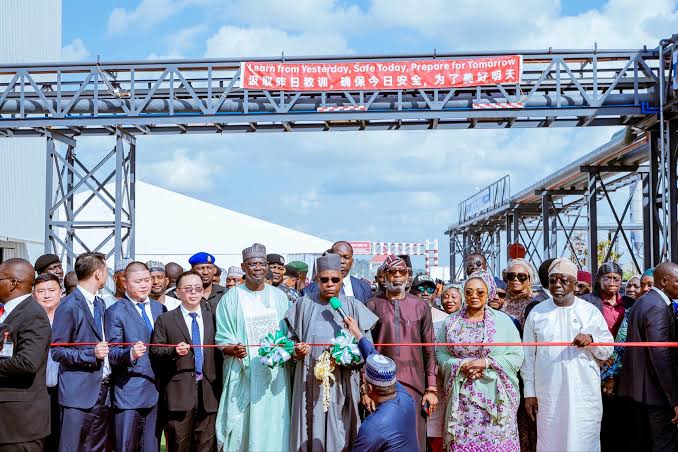
The Federal Government officially inaugurated Nigeria's largest lithium processing plant in Nasarawa State on Thursday, July 3, 2026. This facility, owned by Diamond New Energy Company Ltd. and located in the Endo Community, Nasarawa Local Government Area, boasts a daily processing capacity of 6,000 metric tonnes and an annual capacity of three million metric tonnes.
President Bola Tinubu, represented by Vice President Kashim Shettima, stated that the project reflects the government’s commitment to industrialisation, economic diversification, and the development of a value-added minerals industry. Lithium is a critical mineral essential for rechargeable batteries in electric vehicles, mobile phones, laptops, and energy storage systems, as well as renewable energy technologies.
New Plant Boosts Local Value Addition
President Tinubu described the commissioning as a significant step towards transforming Nigeria’s abundant mineral resources into industrial and economic value. He emphasized the deliberate movement from extraction to processing, from raw materials to value-added goods, and from isolated investments to integrated industrial ecosystems.
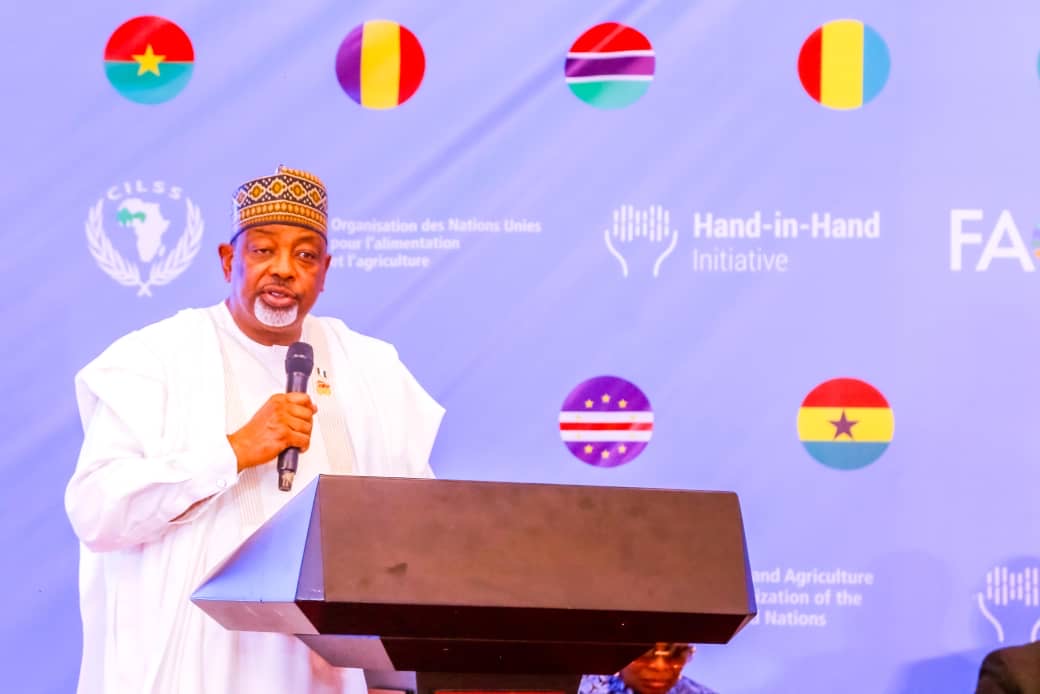
Governor Sule of Nasarawa State thanked the Federal Government and investors, assuring prospective investors of a business-friendly environment supported by abundant deposits of lithium, lead, zinc, copper, gemstones, gold, marble, and iron ore. Minister of Solid Minerals Development, Dele Alake, highlighted that the inauguration demonstrates the success of the Federal Government’s reforms in the mining sector.
Alake noted that local value addition has become a pillar of the Ministry of Solid Minerals’ policies, which operators have embraced. The government’s policy discourages raw mineral exports in favor of domestic processing, aiming to create jobs, attract investments, and develop skilled manpower.
Nigeria's Expanding Mineral Potential
Nigeria is emerging as one of Africa’s lithium producers, with commercially viable deposits across what geologists describe as the Nigerian Lithium Belt, a mineral-rich zone spanning approximately 450 miles. Major lithium deposits have been identified in Kogi, Nasarawa, Kwara, Ekiti, Cross River, Oyo, Plateau, and Kaduna states, with additional prospects in Bauchi, Niger, Edo, Taraba, and the Federal Capital Territory.
These areas contain high-grade lithium-bearing minerals like spodumene and lepidolite, crucial for manufacturing electric vehicle batteries, consumer electronics, and renewable energy storage systems. The government's focus on domestic processing follows the discovery of a new polymetallic mineral province in Kaduna State in late June, containing platinum group metals, gold, nickel, copper, lithium, and rare earth elements.
Minister Alake disclosed that the Federal Government’s mining reforms are expected to unlock about $2.6 billion in mineral processing investments. This includes an $800 million lithium processing investment, a $600 million lithium processing facility in Nasarawa State, a $200 million lithium processing plant near Abuja awaiting commissioning, and a $1 billion iron ore-to-steel project in Kogi State.
Surging Global Demand for Lithium
Global demand for lithium is projected to rise sharply over the next two decades due to the accelerating transition to clean energy technologies. A recent report by the United Nations Conference on Trade and Development (UNCTAD) forecasts a 353% increase in worldwide lithium demand between 2024 and 2040.
The report also projects that demand for graphite will grow by 131% over the same period. This surge is attributed to the rapid adoption of electric vehicles, battery storage systems, and renewable energy infrastructure, all heavily reliant on critical minerals.
UNCTAD projects that the proportion of lithium demand linked to clean technologies will increase from 62% in 2024 to 87% by 2040. This growing demand intensifies competition among mineral-producing countries, underscoring the importance for nations like Nigeria to expand domestic processing and move higher up the global critical minerals value chain.