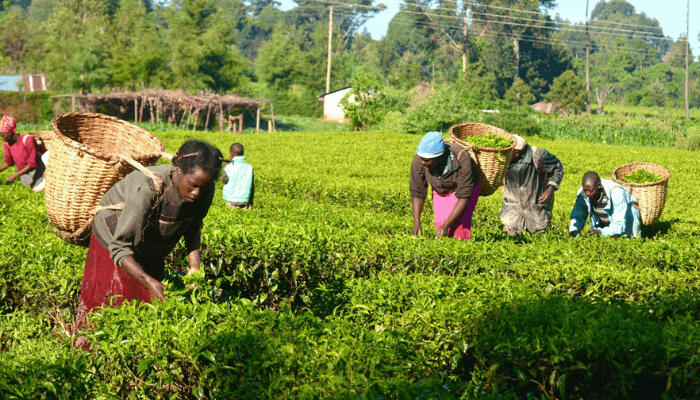
First City Monument Bank (FCMB) is demonstrating that agriculture can be both profitable and transformative, positioning itself as a leading financier in Nigeria's agribusiness sector. The bank deploys innovative financing models designed to help farmers increase productivity, access markets, and improve livelihoods, thereby contributing to national food security.
For many years, agricultural financing was considered a high-risk venture, often excluding smallholder farmers due to limited collateral, poor record-keeping, climate risks, and inadequate infrastructure. However, FCMB has developed a successful strategy that makes agricultural lending profitable while delivering significant developmental impact.
FCMB's Value-Chain Financing Model
Mr. Kudzai Gumunyu, FCMB’s Divisional Head of Agribusiness and Non-Oil Exports, stated that the bank has successfully developed a financing model supporting every player in the agricultural ecosystem. This includes input suppliers, farmers, processors, distributors, and exporters.
Gumunyu noted that agriculture contributes about 25% of Nigeria’s GDP, and the sector should significantly contribute to the bank's growth. He emphasized that Nigeria's heavy dependence on crude oil revenues exposes the economy to external shocks, underscoring the critical need for diversification.
“Whenever there is a problem in the oil sector, the Nigerian economy suffers. That is why diversification is critical. Since establishing our agribusiness unit in 2012, FCMB has deliberately focused on supporting agriculture and non-oil exports as part of our contribution to national development,” Gumunyu explained.
Unlike conventional lending, FCMB employs a value-chain and ecosystem financing model. This approach supports all participants, from input suppliers and seed companies to farmers, aggregators, processors, manufacturers, distributors, and exporters, ensuring all components function efficiently.
Strategic Risk Management and Aggregation
Gumunyu highlighted that this comprehensive approach allows the bank to better manage risk. “A value chain is only as strong as its weakest link. If one segment fails, the entire chain is affected. That is why we finance the whole ecosystem and ensure that all participants are properly connected,” he said.
Despite agriculture receiving only about four per cent of total banking sector lending, FCMB's exposure is significantly higher, at over thirteen per cent. This is attributed to the bank's deep understanding of the sector and its robust risk management structures.
FCMB's risk management focuses on evaluating the entire production and marketing process before loan approval, rather than solely relying on physical collateral. The bank ensures farmers and agribusiness operators are linked to reliable off-takers, helping maintain one of the lowest non-performing loan ratios in the sector.
A key risk management tool is structured aggregation models, where farmers are grouped under aggregators who provide quality inputs, extension support, and guaranteed market access. These aggregators purchase produce from farmers and sell to processors or larger buyers, ensuring stable product flow and payments.
This model has yielded remarkable results. One FCMB-supported aggregator, which began with approximately N16 million in financing, has grown into a major agricultural enterprise supporting over 300,000 farmers nationwide. Participating farmers now achieve average maize yields of about 4.2 tonnes per hectare, significantly above the national average of 1.5-2 tonnes, and receive prices approximately 38% higher than informal market channels.
Leveraging Technology and Inclusion
FCMB has also introduced mechanisms to de-risk agricultural financing, including insurance products covering droughts, floods, fire outbreaks, theft, and transportation risks. The bank collaborates with development finance institutions and guarantee providers to reduce exposure and expand access to affordable credit.
Technology plays a powerful role in FCMB’s efforts to promote financial inclusion among rural farmers. The bank leverages digital channels such as USSD banking, agency banking networks, and technology partnerships to reach underserved communities. Aggregators also serve as banking agents, helping farmers open accounts and access financial services.
The bank's commitment to inclusion extends to women and youth through specialized programs like its SheVentures initiative and partnerships with organizations such as the Mastercard Foundation. These initiatives provide affordable collateral-free loans, with some beneficiaries accessing financing at interest rates as low as nine per cent.
Boosting Non-Oil Exports and Future Outlook
FCMB's interventions are also helping Nigeria tap into non-oil export opportunities, financing major players in commodities such as cocoa, cashew, sesame, hibiscus, ginger, and soy products. These commodities are in strong international demand and represent important sources of foreign exchange earnings.
However, exporters face increasing challenges in meeting global quality and sustainability standards, such as the European Union Deforestation Regulation (EUDR). Gumunyu emphasized that compliance with such regulations, including certification, quality assurance, and traceability, is essential for maintaining market access.
Looking ahead, FCMB believes that stronger collaboration among government, financial institutions, and private-sector operators will be critical for improving food security and agricultural productivity. Key areas requiring greater focus include rural infrastructure, irrigation systems, mechanization, extension services, storage facilities, and market access.