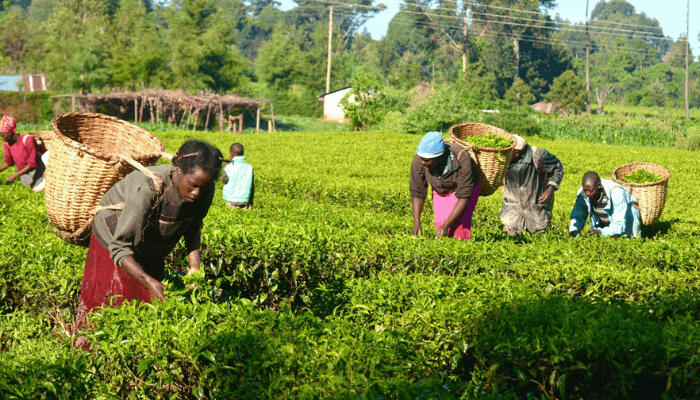
A German-funded agricultural finance initiative has unlocked nearly N49.8 billion in credit for farmers and agribusinesses in North-West Nigeria, significantly expanding access to funding in a sector long constrained by limited financing.
The programme, Global Programme on Agricultural Finance for Agribusiness Enterprises in Rural Areas (GP AgFin), implemented by Deutsche Gesellschaft für Internationale Zusammenarbeit, supports about 72,000 smallholder farmers and 16,000 agribusiness operators across Kano, Kaduna and Kebbi States.
At the close-out event in Kano, Andrea Ruediger, the programme’s Cluster Coordinator for Transformation of Agric Food Systems, stated that the initiative facilitated more than N49.8 billion in financing through partnerships with 11 financial institutions.
Rather than offering grants, the scheme focused on building sustainable, market-driven financing systems by designing tailored loan products for key agricultural value chains, including maize and potato production. These included input credit models structured to meet the realities of smallholder farmers and rural agribusinesses.
According to Ruediger, one of the programme’s major breakthroughs was improving financial literacy among farmers while also strengthening the capacity of banks and other lenders to better understand agricultural risks and opportunities.
“This approach ensured that financing was not only accessible but also sustainable, with both farmers and financial institutions better equipped to engage effectively,” she said.
Officials report that the initiative has already begun reshaping rural economies, with several beneficiaries reportedly expanding from subsistence farming into medium-scale enterprises employing dozens of workers.
Representing the Kano State government, Aliyu Isah, Commissioner for Livestock Development, noted that the programme enhanced value addition and boosted productivity across the state’s agricultural sector. Similarly, Bilkisu Sulaiman highlighted that the intervention improved livelihoods by easing access to finance and strengthening institutional support systems for farmers and agribusinesses.
Experts at the event, including representatives from National Agricultural Extension and Research Liaison Services, emphasized the role of data, extension services, and financial innovation in sustaining the gains recorded under the programme.
Despite the official conclusion of the eight-year project, Ruediger indicated that follow-up initiatives are already planned to expand agricultural financing models to other parts of the country, including Cross River, Oyo, and Ondo states.
The AgFin programme is part of broader international efforts to strengthen Nigeria’s agricultural value chains, improve rural incomes, and drive inclusive economic growth through private-sector-led financing.