CPPE Backs Dangote Refinery, Cautions Against Fuel Import Monopoly
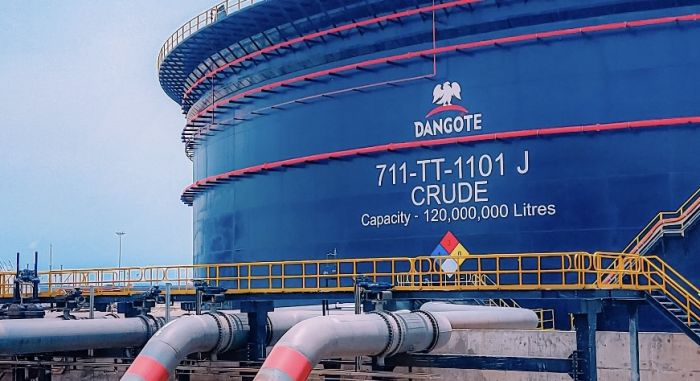
The Centre for the Promotion of Private Enterprise (CPPE) has defended the Dangote Refinery against monopoly claims, advocating for policies that support domestic refining over increased fuel imports.
The Centre for the Promotion of Private Enterprise (CPPE) has dismissed claims that the Dangote Refinery poses a monopolistic threat to Nigeria’s downstream petroleum sector, insisting that the country should prioritise policies that support domestic refining investments instead of encouraging increased fuel importation.
In a policy statement signed by its CEO Dr Muda Yusuf, the economic advocacy group argued that decades of fuel import dependence created deep structural distortions within the Nigerian economy, weakened the naira, intensified foreign exchange pressures, and contributed significantly to fiscal imbalances under the fuel subsidy regime.
The organisation stressed that Nigeria must prioritise the protection and expansion of local refining capacity rather than encourage policies that could expose domestic investors to excessive import competition and regulatory uncertainty.
The CPPE stated that the era of heavy dependence on imported petroleum products imposed enormous economic and fiscal costs on the country while exporting jobs and industrial value abroad.
Attempts to portray Dangote Refinery as a monopolistic threat are simplistic, fundamentally flawed and grossly unfair. The refinery did not prevent other investors from entering the sector. It did not cause the collapse of state-owned refineries. It simply undertook an extraordinary industrial investment at a scale unprecedented in Africa.
For decades, Nigeria’s dependence on imported petroleum products created deep distortions within the economy. It exerted enormous pressure on foreign reserves, weakened the naira, accelerated the collapse of domestic refineries, entrenched a rent-seeking ecosystem, worsened FX illiquidity, fuelled corruption within the subsidy regime and imposed severe fiscal burdens on public finances.
Nigeria has just witnessed one of the most consequential industrial investments in Africa through the establishment of the Dangote Refinery, alongside growing investments in modular refineries across the country. These investments should ordinarily be strategically supported, celebrated and strengthened.
Instead, there appears to be mounting pressure for unrestricted importation of refined petroleum products — a policy orientation capable of undermining domestic refining investments and discouraging future industrial commitments.
More insights
According to the CPPE, Nigeria’s former subsidy regime consumed trillions of naira annually, while petroleum imports exceeded $10 billion yearly at peak periods.
The group argued that unrestricted fuel imports could discourage future industrial investments in Nigeria.
It maintained that genuine competition in the downstream sector should come through the establishment of additional domestic refineries rather than dependence on imports.
The organisation also noted that strategic sectors across the world often benefit from fiscal protections and supportive industrial policies.
The CPPE advocates for policies that protect and expand local refining capacity, warning that a continued reliance on imports could undermine domestic investments and deter future industrial commitments. The group emphasized that true competition in the downstream sector should stem from the establishment of more refineries, not from an open door to imports. They also pointed out that strategic sectors globally often receive fiscal protections and supportive industrial policies.