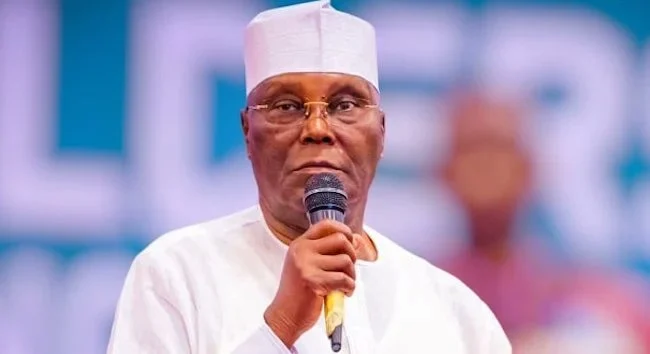
Former Vice President and African Democratic Congress presidential candidate, Atiku Abubakar, has challenged the Federal Government to provide a full account of an estimated ₦7.98tn oil revenue windfall. He questioned why the administration continues to embark on massive domestic borrowing despite crude oil prices significantly exceeding the 2026 budget benchmark.
In a statement issued on Sunday by his Senior Special Assistant on Public Communication, Phrank Shaibu, Atiku accused the Tinubu-led government of operating without fiscal transparency and discipline. He insisted that Nigerians deserve a clear explanation of revenues generated from higher international oil prices.
Atiku highlighted that the Federal Government had already raised about ₦5tn from the domestic bond market in the first half of 2026. This figure represents nearly 80 per cent of the amount borrowed during the same period in 2025, a pace he noted would typically be expected only when government revenues had fallen sharply.
He pointed out that the 2026 Appropriation Act pegged crude oil at $64.84 per barrel, while prevailing prices between March 1 and July 14, 2026, were above $92 per barrel. This gap translates to an additional $42.7m in revenue each day over the 135-day period.
According to Atiku's calculations, the cumulative excess revenue from this period amounts to $5.76bn, or approximately ₦7.98tn. He questioned, "Where has the money gone? Why is there no transparent disclosure of the proceeds from excess crude sales? Why is government borrowing heavily when oil revenues are significantly above budget projections?"
The ADC presidential candidate criticised the administration's failure to provide clear information on how excess oil earnings are being managed. He recalled that previous governments maintained mechanisms such as the Sovereign Wealth Fund and other fiscal buffers to warehouse and report such revenues, a practice he noted is absent today.
Atiku further argued that the benefits of higher oil earnings and the removal of fuel subsidy have not translated into improved living conditions for Nigerians. He cited recent United Nations findings indicating that about 80 per cent of Nigerians cannot afford a decent meal daily, while critical sectors like infrastructure, healthcare, and education continue to suffer.
The Tinubu administration has defended its borrowing strategy, stating it is part of efforts to finance budget deficits, infrastructure development, and ongoing economic reforms. These reforms include the removal of petrol subsidy and the unification of the foreign exchange market.
Nigeria’s 2026 budget was benchmarked on crude oil selling at $64.84 per barrel and production of about 1.5 million barrels per day. The sustained strength in global oil prices has intensified debate over additional revenues and their management.
Looking ahead to the 2027 general election, Atiku pledged that an administration under his leadership would adopt a rules-based fiscal framework. This framework would ensure all revenues earned above the budget oil benchmark are publicly accounted for and channelled towards reducing Nigeria’s debt burden, strengthening fiscal reserves, and financing investments in infrastructure, healthcare, education, and agriculture, rather than recurrent expenditure.
He concluded by insisting on accountability, stating, "Nigerians deserve answers. They deserve accountability. Above all, they deserve a government that manages national wealth in the public interest, not one that presides over unprecedented opacity while asking future generations to repay debts incurred in the midst of plenty."