Three of Nigeria’s major domestic carriers, Air Peace, United Nigeria Airlines, and Aero Contractors, remit over N3 billion monthly into the coffers of the Nigeria Civil Aviation Authority (NCAA). These payments are made through the five percent Ticket Sales Charge (TSC), Cargo Sales Charge (CSC), and Charter Sales Charge.
The details of these substantial monthly remittances emerged as the NCAA moved to intervene in an impending industrial dispute. Aviation labor unions and domestic airlines are currently clashing over historical debt accumulations and staff unionisation rights.
Labor Unions Threaten Strike Over Legacy Debts
Despite the multi-billion-naira monthly remittances, two major labor unions issued a three-day strike notice on August 7, 2026. The Air Transport Service Senior Staff Association (ATSSAN) and the National Union of Air Transport Employees (NUATE) threatened to picket airlines.
The dispute centers on legacy TSC debts accrued during past global spikes in aviation fuel costs. Additionally, the unions are demanding explicit declarations from the airlines to allow uninhibited worker unionisation.
Federal Government Intervenes With Repayment Framework
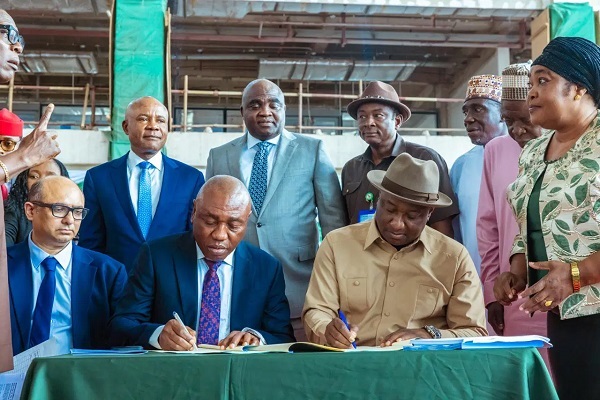
In response to the strike threat, Chris Najomo, the Director General of the NCAA, alongside the Minister of Aviation and Aerospace Development, Festus Keyamo, intervened to stop the planned action. The regulators confirmed that the airlines have already commenced structured repayment plans for their historical debts.
Michael Achimugu, the Director of Public Affairs and Consumer Protection at the NCAA, stated that the regulator cannot use labor to collect its debts. He confirmed that the Director General instructed the unions to suspend the planned picketing because the airlines have started paying.
To resolve the historical debt backlog without crippling domestic carriers, the Federal Government and the NCAA established a multi-tiered repayment framework. Under this agreement, indebted airlines paid a 10 percent upfront commitment on legacy debts, with the balance being liquidated via structured monthly instalments. Additionally, the Federal Government granted a 30 percent waiver on historical debts to prevent over-regulating airlines out of business.
Aero Contractors CEO Calls for Tax Overhaul
Ado Sanusi, the Managing Director and CEO of Aero Contractors, described using labor unions for debt collection as an aberration. He called for an urgent review of the decades-old statutory charges that burden domestic operators.
Sanusi stressed that while airlines are actively paying billions into the system, the high tax burden threatens the sustainability of domestic aviation. This echoes long-standing concerns raised by the International Air Transport Association (IATA) regarding over-taxation in Nigeria.
He noted that the NCAA possesses direct statutory powers, including license suspensions or referral to anti-graft agencies, if an operator intentionally defaults. This renders union-led picketing unnecessary and detrimental to industry stability.