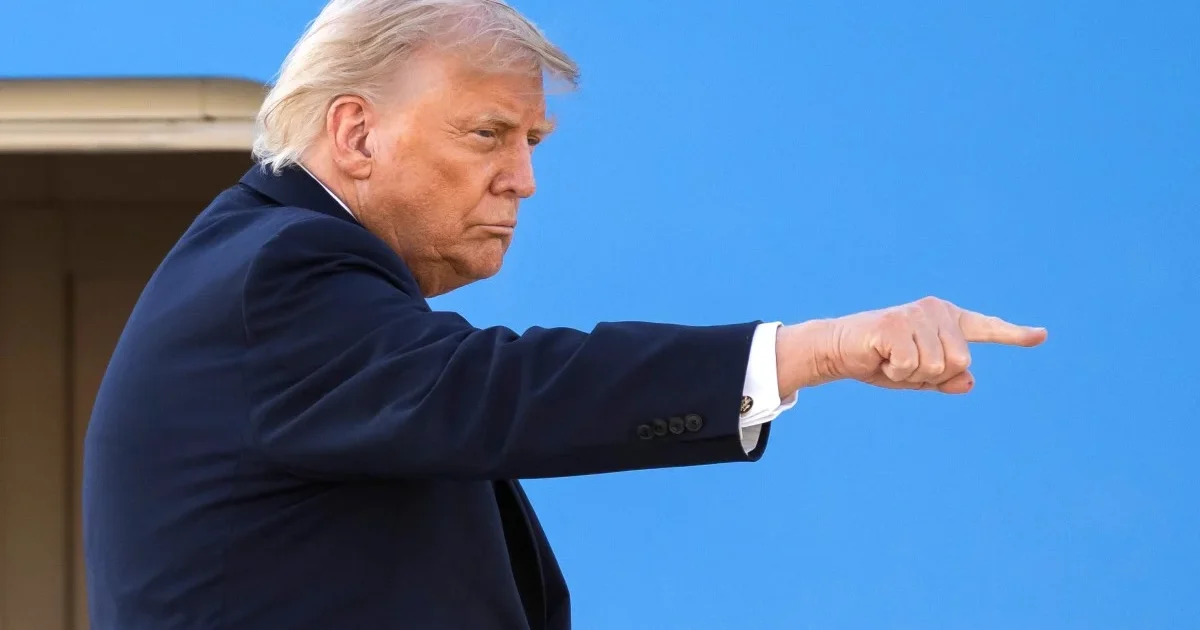
US President Donald Trump has fiercely defended his recently signed agreement with Iran, dismissing critics as "fools" ahead of negotiations on its implementation. The deal, signed in Versailles, aims to resolve the ongoing conflict between the two nations and has led to a significant drop in oil prices.
Oil prices tumbled over three percent on Thursday, extending losses seen since the news of the accord broke. This decline follows the agreement signed by Trump and Iranian President Masoud Pezeshkian, which is expected to lead to the reopening of the Strait of Hormuz, a critical chokepoint for global oil supply.
Trump took to social media to criticize those who accused him of not being tough enough on Iran, pointing to a record high in the stock market and falling oil prices as evidence of his success. "These fools, who think I haven’t been tough enough on Iran, when the Stock Market Just Hit A RECORD HIGH, and Oil prices are ‘tumbling’ down, are either jealous, bad people, or stupid," he posted.
The agreement stipulates that Washington will immediately waive oil sanctions crippling Iran's economy. Furthermore, upon reaching a final agreement on Iran's nuclear program, the US will facilitate the release of a $300 billion reconstruction fund supported by regional nations.
In return, Iran has agreed to dilute its enriched uranium stocks, a process that will be supervised by the UN atomic agency. UN officials are reportedly ready to define the concrete steps for implementing the deal.
Despite the positive steps towards de-escalation, the deal has faced criticism. Some hardliners in Iran have described the conflict resolution as an "imposed war." In the US, Senator Bill Cassidy called the agreement the "worst foreign policy blunder in decades," arguing that Iran's nuclear ambitions were not curbed and that threatening the Strait of Hormuz proved effective.
Even some media outlets typically supportive of Trump have cited critics who believe the agreement provides Iran with substantial financial benefits without addressing its nuclear program. The status of Iran's ballistic missile program remains a point of contention, with Iran asserting it will not be part of any negotiations.
The reopening of the Strait of Hormuz is a key aspect of the deal. Pakistan's Prime Minister Shehbaz Sharif, who helped mediate the agreement, stated that Iran will "instantly reopen the Strait of Hormuz." A two-month negotiation period will now commence, with global attention focused on the strait's accessibility and progress on Iran's nuclear program.