At the dawn of a century increasingly defined by Africa’s demographic dividend and its historically underutilised industrial potential, a singular institutional force is systematically recalibrating the continent’s economic trajectory. The Tony Elumelu Foundation (TEF) stands at the vanguard of a structural transformation, one that deliberately replaces the old models of systemic dependency with the robust mechanisms of enterprise and traditional charity with the democratisation of opportunity.
Rooted in the transformative philosophy of Africapitalism, the belief that the African private sector must play the lead role in the continent’s development, the foundation is not merely a conduit for financial grants; it is the architect of a pan-African movement. By placing the levers of economic destiny squarely in the hands of indigenous innovators, TEF is nurturing a resilient generation of entrepreneurs poised to drive inclusive, long-term prosperity across Africa.
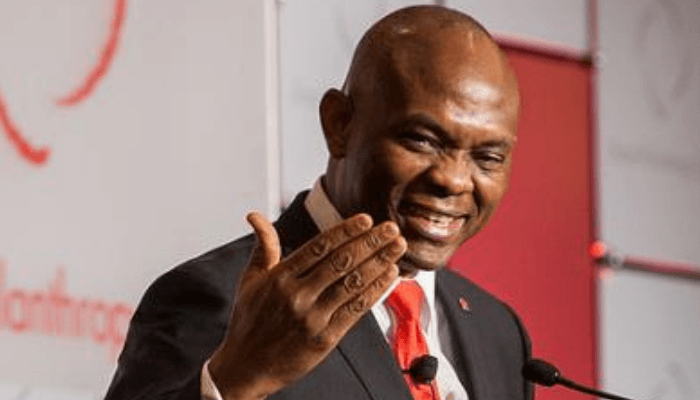
At the heart of this vision is Tony Elumelu, a figure whose career as a visionary banker and industrialist has been defined by a commitment to scalable, institutional impact. Elumelu’s leadership in the financial sector provided the blueprint for his philanthropic approach, a transition from giving to investing in human capital.
Unlike traditional aid systems that often perpetuate cycles of stagnation, Elumelu’s strategy is anchored on the radical empowerment of the individual as a primary creator of communal wealth. His guiding principle is as profound as it is pragmatic: Africa’s development cannot be an outsourced endeavour; it must be constructed by Africans themselves, fuelled by domestic ingenuity and sustained by local markets.
This shift in the developmental narrative represents a move away from the poverty alleviation mindset toward a wealth creation framework that prizes dignity and self-reliance above all.
The operational excellence of the TEF is further codified in the clarity of its mission: to empower African entrepreneurs across all 54 sovereign nations. This is not a localised pilot programme but a continental mandate designed to catalyse a transformation that is both inclusive of marginalised groups and sustainable across economic cycles.
At its core, the Foundation envisions a self-reliant Africa where entrepreneurship serves as the primary engine for job creation, technological innovation, and social stability. This mission is executed through a meticulously structured ecosystem that synthesises $5,000 in non-refundable seed capital with rigorous business training, high-level mentorship, and unprecedented access to global markets. This holistic approach ensures that beneficiaries are not merely funded in a vacuum but are technologically and managerially equipped to navigate the complexities of competitive global environments.
Reinforcing this strategic direction is the Foundation’s Chief Executive Officer, Somachi Chris-Asoluka, whose leadership has emphasised that TEF’s mandate transcends fiscal support to achieve the unlocking of human potential at a historic scale. In the administrative halls of the foundation, an application is never viewed as a mere request for capital; it is scrutinised as a bold, nascent vision for Africa’s future. Under Chris-Asoluka’s stewardship, the foundation has positioned entrepreneurship as a unifying socio-political force, a mechanism capable of dismantling the barriers of unemployment, gender inequality, and economic exclusion.
The true metric of success, in this view, is the multiplier effect, the phenomenon where one empowered entrepreneur becomes a localised anchor for dozens of livelihoods, creating a ripple effect of stability for entire regions.
This philosophy finds its most potent practical expression in the TEF Entrepreneurship Programme. Since its inception in 2015, the programme has disbursed over $100 million to more than 24,000 entrepreneurs. The macroeconomic implications are staggering: the initiative has facilitated the creation of over 1.5 million jobs and generated $4.2 billion in revenue. These figures are far more than clinical statistics; they represent a fundamental reimagining of the African future. They speak to revitalised communities where the youths no longer consider the Jakpa option as their only path to success but instead see their own communities as fertile ground for innovation.
The Foundation’s 2026 milestone further underscores the accelerating momentum. In a landmark announcement that captured global attention, TEF unveiled 3,200 young entrepreneurs selected for its latest cohort, chosen from a staggering pool of over 265,000 applicants. Elumelu has described this initiative as a mission to “democratise luck and prosperity”, a phrase that acknowledges the vast talent pool currently stifled by a lack of institutional support. His conviction remains steadfast: entrepreneurship is Africa’s most viable pathway to sustainable development. This perspective reframes the act of spreading wealth not as an act of altruism but as “enlightened self-interest”. In an interconnected continent where poverty in one region poses a collective security and economic risk to all, the empowerment of these young Africans becomes the only logical safeguard for the prosperity of the few.
The tangible impact of this model is best viewed through the experiences of the beneficiaries, whose successes validate the Africapitalist theory. In Nigeria, Samira Abdullahi has leveraged the TEF framework to scale her fashion enterprise by 200 per cent, generating $40,000 in annual revenue while simultaneously providing vocational training to young women in her community. In the southern tip of the continent, South Africa’s Kemiso Motholo has scaled a venture that now impacts over 20,000 lives, while in East Africa, Kenya’s Aisha Langat has pioneered an agro-allied business generating over $500,000 in revenue and providing critical market access to 12,000 farmers. These testimonies illustrate a universal truth: when African entrepreneurs are granted the tools of modern business, they do not merely seek personal profit; they become engines of community development, solving local problems with global standards of efficiency.
When viewed through a global lens, Elumelu’s model invites compelling comparisons with the world’s most influential philanthropic icons. While the Bill & Melinda Gates Foundation has revolutionised global health, Warren Buffett redefined large-scale charitable giving, and Jack Ma championed digital inclusion in Asia, the TEF model is uniquely tailored to African structural reality. Beyond these global comparisons, Elumelu’s work resonates with a profound moral urgency within the African political context. At a time when many on the continent are preoccupied with the accumulation of political and personal capital, Elumelu is deliberately channeling his resources to expand the horizons of others. This contrast highlights a burgeoning shift in the African leadership ethos, a move towards prioritising legacy over accumulation and measurable impact over fleeting influence.
The Foundation’s success also shines a spotlight on the vital importance of global collaboration. At the recent 2026 unveiling, TEF Co-Founder Dr Awele Elumelu issued a clarion call for expanded partnerships, noting that while thousands are supported annually, hundreds of thousands of viable ideas remain unfunded due to scale constraints. International partners, including the European Union and UNICEF, have increasingly recognised the TEF programme as a transformative force capable of reshaping Africa’s economic trajectory. These partnerships signify a growing global consensus that the most effective way to engage with Africa is through the support of its entrepreneurs.
Ultimately, the significance of the Tony Elumelu Foundation extends far beyond the provision of seed capital. By fostering innovation in critical sectors such as green energy, agrotech, and the creative industries, TEF is building the infrastructure of the future. As the continent navigates the complexities of the 21st-century global economy and prepares to host the world’s largest workforce by 2050, the TEF model offers the only scalable solution to the challenge of productive engagement. It represents a blueprint for a new economic order where prosperity is shared, opportunity is created through merit, and the African narrative finally shifts from potential to performance. Through the Foundation, the vision of an Africa developed by Africans is no longer a distant aspiration; it is a living, breathing reality that is already in motion, rewriting the history of a continent, one entrepreneur at a time.