The Organization of the Petroleum Exporting Countries and its allies (OPEC+) have approved another 188,000 barrels per day (bpd) increase in oil production quotas for August 2026. This decision extends its phased plan to gradually restore crude supplies to the global market, marking the third consecutive monthly increase of the same volume, following similar adjustments for June and July.
The announcement came on Sunday, July 5, 2026, after a virtual meeting of seven participating member countries: Saudi Arabia, Russia, Iraq, Kuwait, Kazakhstan, Algeria, and Oman. This production adjustment is part of the gradual phase-out of additional voluntary production cuts first announced in April 2023.
OPEC+ Decision and Market Stability
OPEC+ stated that the phased increase is intended to support oil market stability. The group stressed that production adjustments “may be returned in part or in full subject to evolving market conditions and in a gradual manner,” retaining full flexibility to increase, pause, or reverse the phase-out if necessary.
The latest increase also provides an opportunity for participating countries to accelerate compensation for previous overproduction, reaffirming their commitment to fully comply with the Declaration of Cooperation and compensate for any excess production recorded since January 2024. The next meeting to review market conditions, production compliance, and compensation is scheduled for August 2, 2026.
Impact of Middle East Calm
The decision to raise quotas comes as the Middle East situation calms, following a period where Gulf countries had to cut output due to the near-paralysis of the Strait of Hormuz. Between the first quarter of 2026 and May, combined production by Saudi Arabia, Iraq, and Kuwait fell by some six million barrels per day, according to OPEC data.
On June 17, Tehran and Washington signed a memorandum of understanding, committing to remove obstacles to maritime traffic in the Strait of Hormuz. Since then, ship transport in the region has slowly recovered, with oil prices dropping sharply to levels comparable to those seen before the conflict.
Giovanni Staunovo, a commodity analyst at UBS, noted that production is likely still below OPEC+’s targets, as “shut-in production takes time to restart.” Saxo Bank analyst Ole Hansen added that “July will show an improvement with August probably being the month where the pickup accelerates,” assuming shipping continues to normalise.
Looking ahead, Jorge Leon, an analyst at Rystad Energy, anticipates a surplus for next year. While rebuilding inventories should help absorb initial flows, producers may face strong downward pressure on prices later on. OPEC+, already weakened by the United Arab Emirates’ exit in May, will need to manage sliding prices while members push for production increases.
Iraq, in particular, has requested higher production quotas to compensate for its shortfall during the Middle East conflict, as stated by the Iraqi Oil Ministry in late June. However, Hansen believes Iraq’s request “is not imminent” given that production volumes are still far from pre-conflict levels, suggesting it may become part of the 2027 capacity review.
Nigeria's Oil Sector Outlook
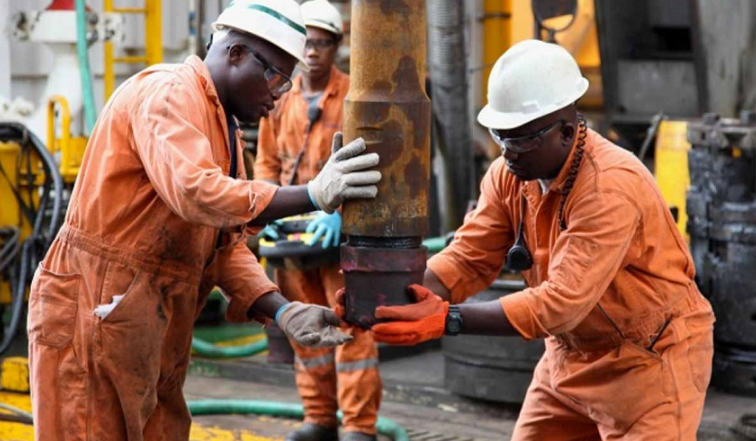
Nigeria continues its efforts to increase crude oil production to meet its fiscal targets. Official data shows the country’s combined crude oil and condensate production averaged 1.73 million barrels per day in May, with natural gas production at 7,774 million standard cubic feet per day.
Despite relatively stable production, the Nigerian National Petroleum Company Limited (NNPC Ltd.) recorded weaker financial performance in May 2026. Its Operational and Financial Report indicated revenue declined to N4.335 trillion in May from N4.97 trillion in April, while profit after tax fell to N462 billion from N481 billion, reflecting softer oil market conditions.
For the 2026 fiscal year, the Federal Government benchmarked crude oil production at 1.84 million barrels per day, with an upper target of 2.06 million barrels per day. The budget is also anchored on an oil price benchmark of $64.85 per barrel and an exchange rate ranging from N1,400 to N1,512 per U.S. dollar.
Brent crude traded around $72 per barrel on Friday, well below its recent peak of over $120 per barrel, as easing supply concerns and recovering oil exports from the Middle East continued to weigh on prices. Any sustained increase in OPEC+ output could further pressure global oil prices, with significant implications for oil-exporting nations like Nigeria, whose government revenues remain heavily dependent on crude oil sales.