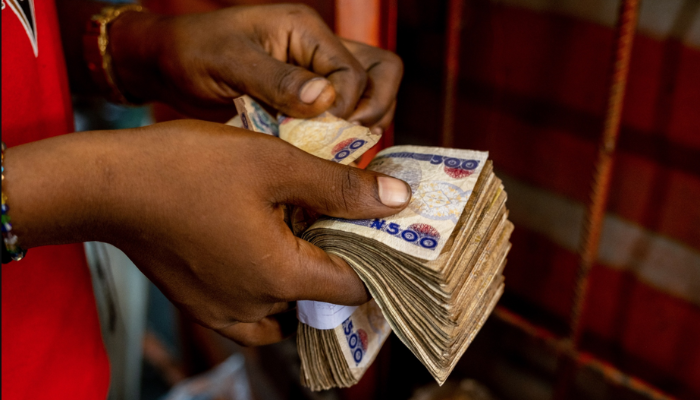
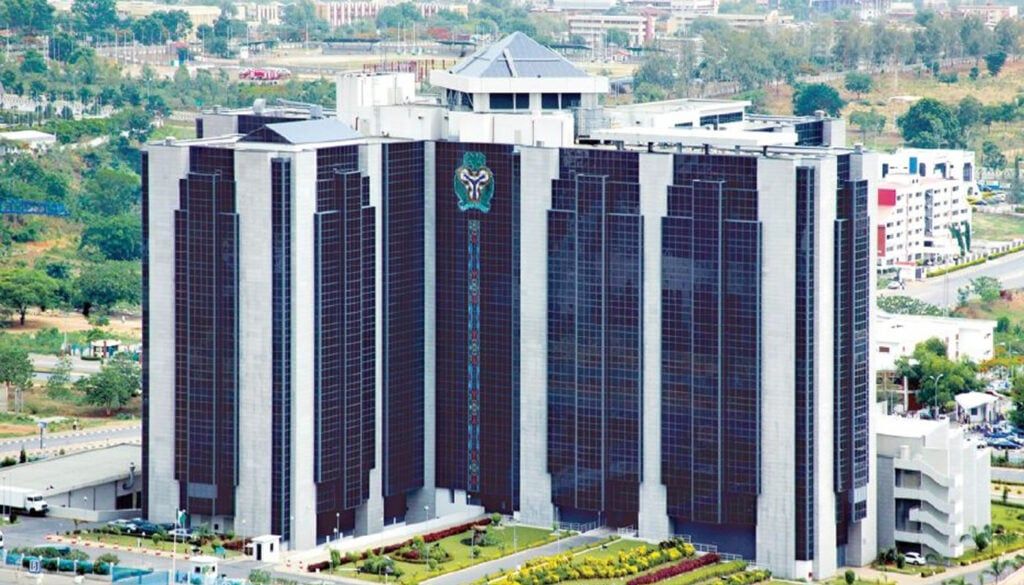
Nigerians held N5.19 trillion outside the banking system as of May 2026, underscoring the persistent reliance on cash transactions despite ongoing efforts to promote digital payments and financial inclusion.
The latest Money and Credit Statistics from the Central Bank of Nigeria (CBN) revealed that currency outside banks increased to N5.19 trillion in May from N5.08 trillion in April, representing a month-on-month rise of N109.34 billion or 2.15%.
This figure also stood N559.16 billion higher than the N4.63 trillion recorded in May 2025, reflecting a year-on-year increase of 12.07%.
Persistence of Cash Dominance
The CBN data further indicated that total currency in circulation increased to N5.69 trillion in May 2026 from N5.65 trillion in April, a month-on-month rise of N43.59 billion or 0.77%.
Annually, currency in circulation grew by N675.19 billion, or 13.46%, from N5.02 trillion recorded in May 2025.
A significant portion of the cash printed and released into the economy continues to remain outside the formal banking system. Currency outside banks constituted 91.27% of total currency in circulation in May 2026, an increase from 90.03% in April.
This means that more than N9 out of every N10 in circulation was held by households, businesses, and participants in the informal economy rather than being deposited with banks. While this ratio is slightly below the 92.40% recorded in May 2025, it highlights the continued prevalence of cash-based transactions across large segments of the economy.
Bank Reserves Decline
Conversely, reserves held by banks with the CBN experienced a decline. Bank reserves decreased from N34.603 trillion in April to N33.763 trillion in May, marking a decrease of N840.77 billion or 2.43%.
This decline suggests lower liquidity buffers within the banking system during the month, even as more cash circulated outside formal financial channels. However, compared with May 2025, bank reserves remained significantly higher, increasing by N2.90 trillion from N30.865 trillion a year earlier, representing an annual growth of 9.39%.
CBN's Digital Push and Targets
These figures suggest that Nigeria's transition towards a more digital economy is occurring alongside sustained demand for physical cash, rather than replacing it. Cash continues to play a central role in retail trade, transportation, informal commerce, and rural economic activities, despite the rapid growth of instant payment platforms, mobile banking applications, fintech services, and agent banking networks.
During the recent launch of the Nigeria Payment System Vision (PSV) 2028 in Abuja, CBN Governor Olayemi Cardoso stated that the new vision builds on Nigeria’s progress in digital payments. It aims to accelerate the country’s transition towards a more inclusive and technology-driven financial ecosystem.
The apex bank has set a target to reduce cash circulating outside the banking system to below 40% of total currency in circulation. To achieve this, more than 10 million QR-code and tap-to-pay acceptance points are expected to be deployed across markets, transport hubs, rural communities, and commercial centres nationwide.