Africa's Vulnerability to Oil Shocks
Africa cannot indefinitely absorb the impact of global oil price shocks, according to insights from Goldman Sachs and BusinessDay. Recent geopolitical escalations, particularly around the Strait of Hormuz, have heightened the risk of oil prices surging into the $100–$115 range, exacerbating existing economic fragilities across the continent.
While oil exporters like Nigeria might see a potential strengthening of reserves towards the $60 billion mark, import-dependent nations face widening current account deficits, pressure on foreign exchange reserves, and rising inflation. This situation is described as a "household tax" that disproportionately affects lower-income populations.
Diesel Price Surge Cripples Businesses
The domestic impact of global energy price volatility is acutely felt in Nigeria, with diesel prices nearly doubling from N774 to around N1,300. This sharp increase has forced businesses to re-evaluate their operational strategies, including budget adjustments for power generation and restructuring logistics to maintain operations.
Industry leaders like Omon Anenih note that diesel prices often remain elevated even when global oil prices decrease, as suppliers anticipate future spikes. This sustained high cost directly impacts business overheads and consumer prices.
Nigeria's Limited Gains from High Oil Prices
Despite being an oil exporter, Nigeria is not fully benefiting from the current rise in global oil prices. Chinwe Egwim points out that the country still imports a significant portion of its refined petroleum products, which erodes the gains from crude oil exports.
Furthermore, Laura Fisayo-Kola-Olarewaju highlights that Nigeria's current oil production level of approximately 1.3 million barrels per day is substantially below the government's benchmark of 1.8 million barrels per day. This production shortfall limits the potential revenue increase from higher global prices.
Economic Outlook and Future Considerations
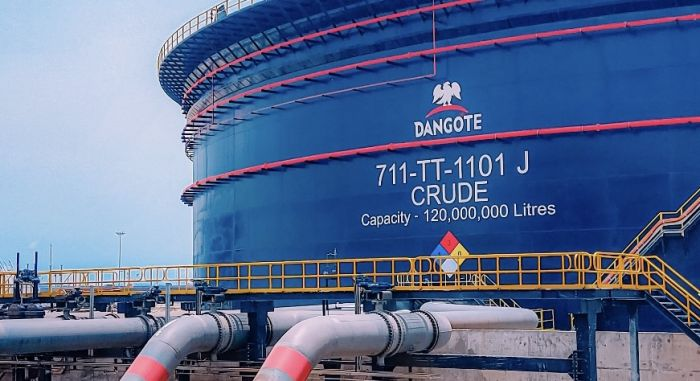
The ongoing energy price volatility, coupled with other economic factors like artificial intelligence and financial market trends, is shaping Nigeria's economic outlook. While the Dangote Refinery is expected to play a role in strengthening local infrastructure and creating jobs, the immediate challenges posed by high diesel costs and production shortfalls remain significant.
The article also touches upon the potential impact of geopolitical tensions on remittance flows, adding another layer of vulnerability to the Nigerian economy. Energy strategy remains critically tied to imported fuel, underscoring the need for structural changes beyond framing energy solely as a climate issue.