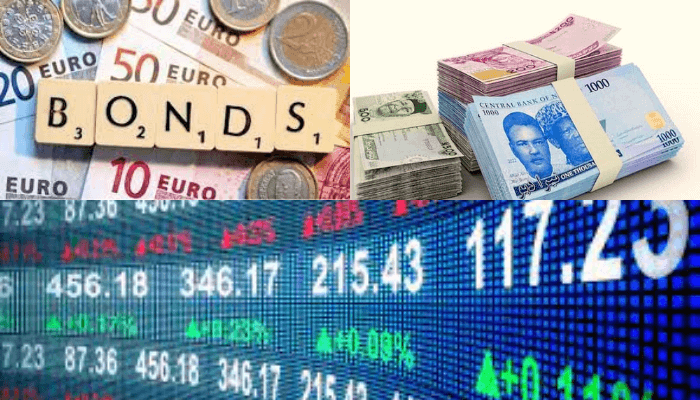
Nigeria has raised over $4.5 billion from international investors in the past two years, successfully tapping the Eurobond market twice. In December 2024, the nation raised $2.2 billion, followed by another $2.35 billion less than a year later, attracting substantial investor demand.
Despite this strong appetite, the federal government is exploring a proposed $5 billion financing arrangement with First Abu Dhabi Bank (FAB). This move indicates a potential shift in Nigeria's external borrowing strategy, moving beyond traditional Eurobond issuances.
The proposed $5 billion deal with FAB, described as a Total Return Swap (TRS), has drawn scrutiny. Under this arrangement, Nigeria would provide approximately $6.65 billion in its own government bonds as security to receive dollars upfront. The deal, lasting up to 6 years, involves Nigeria paying a floating interest rate plus around 4 percent, while FAB collects returns from the naira bonds.
Concerns have been raised by economists and the International Monetary Fund (IMF) regarding the transparency and risks associated with this bilateral financing. The IMF has advised Nigeria to exercise caution, suggesting that more transparent sources like Eurobonds and concessional financing are available.
Analysts like Titilayo Daramola suggest the government's interest in the UAE-backed arrangement might be due to timing, as returning to the Eurobond market too soon after recent issuances could be ill-advised. She believes the government is exploring alternative avenues rather than abandoning Eurobonds.
Bilateral financing arrangements are often favored for their speed and flexibility compared to the extensive process of Eurobond issuances. Adebisi Sobalaje of SanlamAllianz Nigeria Insurance Limited noted that structured swap agreements could be cheaper than Eurobonds if well-structured, offering faster execution and potentially lower costs.
However, the complexity of the TRS deal raises transparency issues. Critics, including an unnamed economist, worry about the terms and conditions, which they find complicated and overwhelming. Questions remain about how these arrangements perform during adverse economic conditions, such as currency depreciation.
Faith Iyoha, an economist at the Nigerian Economic Summit Group (NESG), emphasizes that debt sustainability hinges more on the terms of borrowing and the utilization of funds rather than the source. She argues that both Eurobonds and bilateral facilities can be problematic if they finance consumption instead of investments that boost productive capacity.
Iyoha suggests that borrowed funds should be directed towards projects that expand productive capacity, generate foreign exchange, and create jobs, such as infrastructure, export-oriented industries, and human capital development. This perspective highlights the critical challenge for policymakers in ensuring borrowed funds contribute to long-term economic growth.
The debate over Nigeria's foreign financing strategies underscores the need for careful consideration of not just where funds are sourced, but how they are invested. The success of the $5 billion Abu Dhabi deal, and indeed any external borrowing, will ultimately depend on its contribution to Nigeria's economic productivity and sustainability.