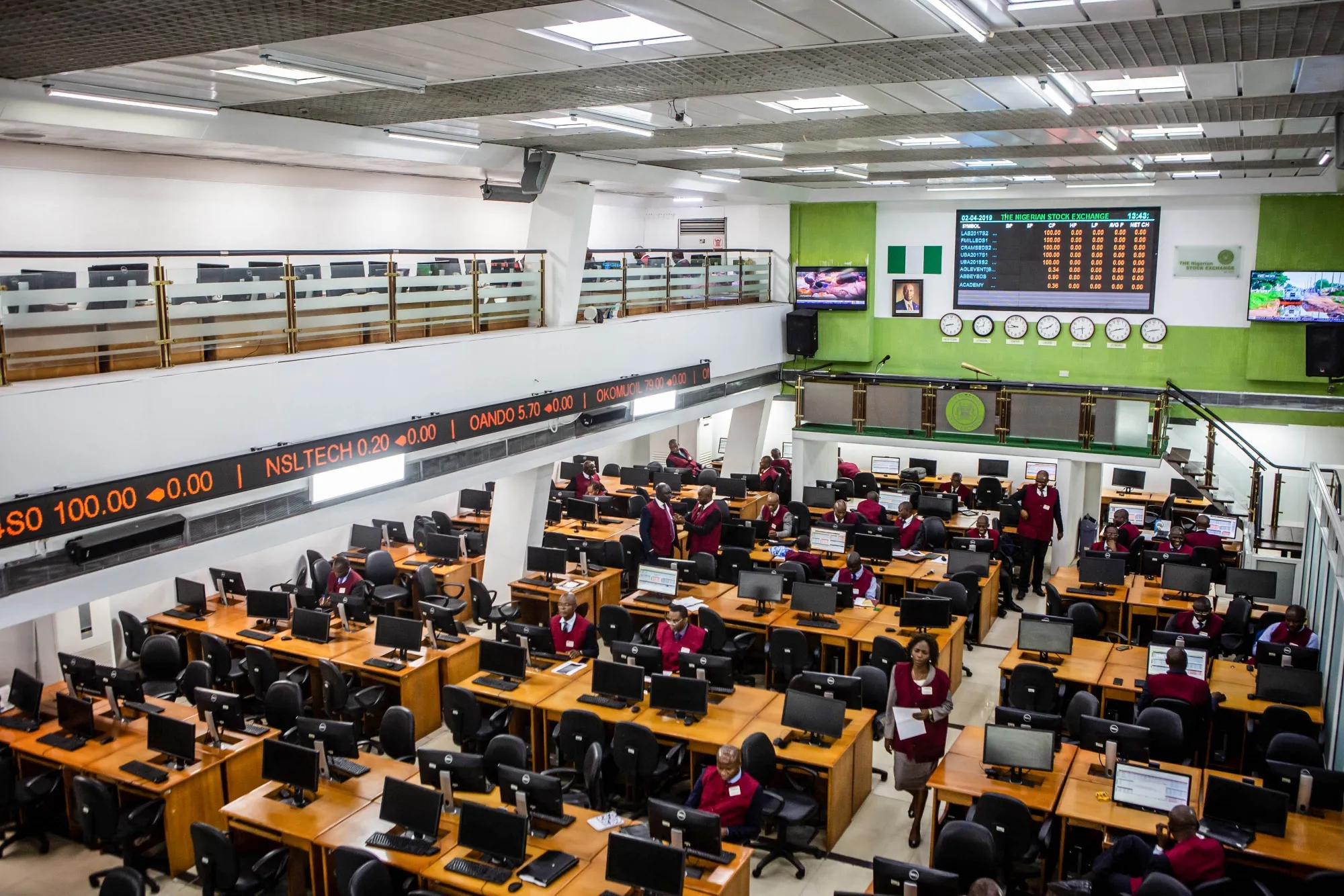
Leading market analysts and investment advisers anticipate that the anticipated listing of the Dangote Petroleum Refinery and the accelerating deployment of political capital ahead of Nigeria’s 2027 election cycle will be the defining variables for the NGX All-Share Index in the second half of 2026.
Coming off one of its strongest first-half performances in recent history, with the ASI surging more than 54.71% year-to-date and briefly touching an all-time high of 252,508 points in May 2026, the Nigerian equities market entered a sharp correction in June that erased more than N15 trillion in market capitalisation and pulled the benchmark index to 235,941 points by June 19.
Expert Perspectives on H2 2026
Mr. Charles Fakrogha, CEO, ECL Asset Management Limited, described H1 as a period of exceptional returns, counselling measured optimism for the months ahead. He stated, “We all started the year with a positive mindset, and it worked for us. We saw year-to-date returns increasing, and investors were smiling at the bank. But looking forward to H2, I see the market rebounding — and I do begin to see Q2 results coming out in late July affecting the market positively.”
On sectors, Fakrogha highlighted, “Oil and gas did well, the telecom sector and the banking sector made an impact for me, and I still have a positive outlook for them. But capital will also flow to consumer goods, industrials, and the agricultural sector. Food security is going to be very, very key — the likes of Presco and Okomu Oil have a lot of prospects.” He also raised caution about the NGX’s T+1 settlement transition, noting, “Operators are really complaining at the back end. There are infrastructural issues which I believe cannot be sorted out overnight.”
Mr. Abiodun Ogunniyi, Head of Research, GTI Securities, offered deeper insight, anchoring his analysis in a detailed study of pre-election year market behaviour across three previous cycles: 2014, 2019, and 2022. He observed, “My first interpretation of the H2 2026 outlook is in the context of the pre-election year we are currently in. In pre-election years, the stock market tends to be strong from January to May, and then we start seeing some weakening from June. That decline tends to be very strong in August and September — in fact, in the pre-election years we analysed, the ASI was actually negative in both months.”
Ogunniyi identified four defining characteristics of second-half pre-election dynamics: equity market weakness, rising fixed income yields, rotation from equities into fixed income, and naira depreciation pressure. He questioned, “Why should I take an equity position for a 20 to 25% return when I can get almost 20% in the fixed income market right now — especially the 364-day bill yielding about 21%? Less volatility, less risk, less uncertainty.” He concluded, “For people on the sidelines, the second half of the year is going to present a lot of bargain opportunities.”
Chief Blakey Okwudili Ijezie, founder, Okwudili Ijezie & Co. (Chartered Accountants), offered a direct verdict on H1 and firm conviction on H2 catalysts. He stated, “The stock market is up between 54% and 55%. The stocks I advised people — some have climbed over 100%, 150%. The likes of Wapco, Fidelity Bank, Zenith, MTN, and GTCO. It can’t be better.”
On the Dangote Refinery IPO, Ijezie was explicit: “The dip I saw in the market in the last 14 days resulted probably from people leaving the equity markets to buy the private placement. When the IPO comes up in September, a lot of people will exit the NGX to buy it. The market will drop — certainly. The law of supply and demand will take its course. But that is the time people like us will go back in.” He identified three preferred sectors for H2: Telecommunication (Airtel and MTN), Banking (the FUGAZ names), and Cement manufacturing (Dangote Cement, BUA Cement, and Wapco), adding selective interest in upstream oil, specifically Aradel Holdings and Seplat Energy.
Structural Backdrop and Market Dynamics
The structural backdrop for H2 2026 is meaningfully more complex than the first half, with several forces pulling in opposing directions. Rising NTB stop rates, with the 364-day bill now yielding about 18.34% at the June 17 auction and OMO bills pricing between 20% and 22%, are creating genuine competition for equity capital, particularly among institutional investors.
The Dangote Petroleum Refinery IPO is the single most consequential capital market event on the horizon, with the potential to simultaneously draw billions in investment capital away from the secondary market and, if oversubscribed, inject proceeds back into fundamentally strong large-cap names. Both Ogunniyi and Ijezie noted that the net effect on the broader market remains difficult to predict with precision.
Pre-election money supply expansion, which the CBN and IMF research identify as accounting for approximately 50% of Nigeria’s inflation problem, could complicate the CBN’s monetary policy calculus and delay anticipated rate cuts, keeping fixed income yields elevated and sustaining competitive pressure on equities through Q3. Nigeria’s anticipated inclusion in the FTSE Russell Frontier Market Index, expected before year-end, remains a remarkable factor that could trigger a surge in foreign portfolio inflows if confirmed.
Sector Outlook: Where Capital is Expected to Flow
Across all three expert views, consensus emerged around a core set of sectors likely to attract institutional and retail capital in H2. Banking remains a first-choice sector, supported by completed recapitalisation exercises, robust earnings growth, expanding digital revenues, and the certainty that political campaign spending must flow through the banking system.
Telecommunications is similarly favoured, with subscriber growth, rising data consumption, and resilient cash flows providing earnings visibility. Industrial goods, particularly cement, benefit from infrastructure spending and the government’s push toward cemented road construction. Upstream oil names, specifically Aradel Holdings and Seplat Energy, are cited for production visibility and foreign currency earnings. Agribusiness is an emerging consensus pick, with food security concerns and policy support strengthening long-term demand for names like Presco and Okomu Oil Palm.
Insurance, however, was the sector all three analysts explicitly avoided, citing structural illiquidity, thin margins, low public trust, and a regulatory environment that consistently works against retail shareholder interests.