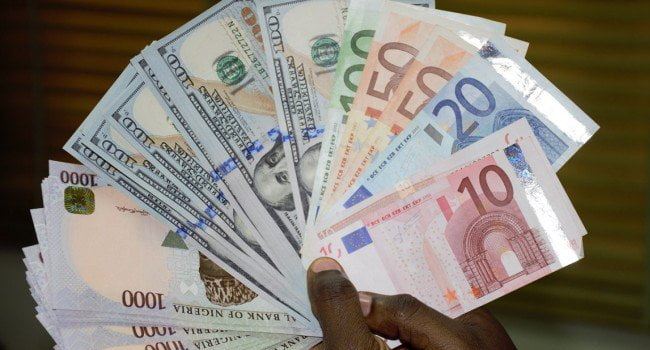
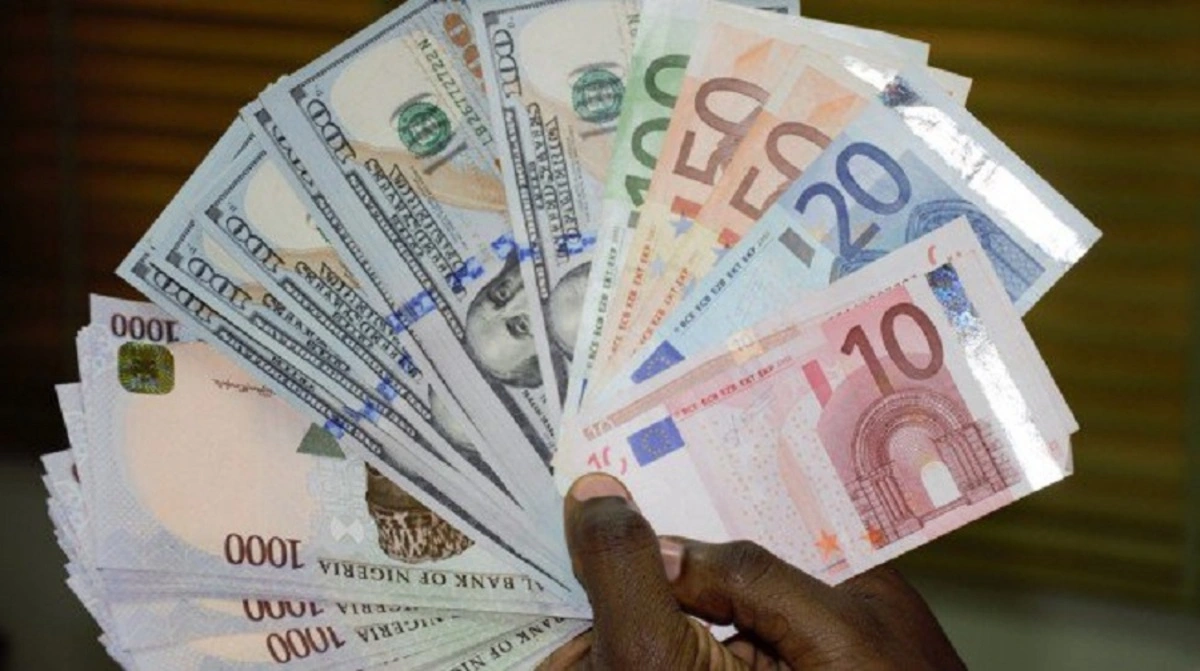
The Nigerian naira is experiencing a resurgence, buoyed by recent foreign exchange (FX) reforms and a rally in oil prices. This confluence of factors has brightened the prospects for the naira and Nigeria's external reserves, signaling a potential turnaround for the nation's economy.
Oil prices rose last Thursday, driven by geopolitical tensions, with Brent crude futures increasing by 94 cents, or 1.4 per cent, to $69.34 a barrel, and US West Texas Intermediate (WTI) crude jumping 1.5 per cent to $64.13 per barrel. Analysts project that oil prices may remain high due to geopolitical risks, US restrictions on Russian oil, and sustained Chinese demand.
The rise in oil prices is particularly beneficial for Nigeria, where over 80 per cent of income is derived from petrodollars. Consequently, the naira has strengthened, trading below the N1,400/$1 level on the official market for the first time in over a year. Data from the Central Bank of Nigeria (CBN) shows that the Nigerian Foreign Exchange Market (NFEM) rate strengthened to N1,396.99/$1 on Thursday, up from N1,400.48/$1 on Wednesday. The NFEM rate had previously reached levels as weak as N1,422.07/$1 on 22 January and N1,421.63/$1 on 23 January, before easing to N1,418.95/$1 on Monday and N1,401.22/$1 on Tuesday.
The naira also appreciated in the parallel market. According to Cowry Asset Management Limited, the naira strengthened by 1.06 per cent to N1,454/$ in the parallel market.
Aminu Gwadabe, President of the Association of Bureaux De Change Operators of Nigeria (ABCON), noted the stability of the naira across markets after years of volatility.
Bismarck Rewane, Managing Director of Financial Derivatives Company (FDC), estimates the fair value of the naira at about N1,257 to the US dollar, suggesting the local currency is undervalued by approximately 11 per cent based on the purchasing power parity (PPP) model. Rewane stated that the appropriate exchange rate based on current PPP estimates stands at N1,256.79 to the dollar.
Charlie Robertson, author of The Time Travelling Economist, observed, “A weak dollar is dislocating many markets, but it is good for Africa, as we are seeing with the naira.”
Nigeria's external reserves have also seen significant growth, increasing by $5.82 billion, or 14.45 percent, to $46.11 billion as of January 28, 2026, from $40.29 billion recorded on December 2, 2024, according to CBN data. The reserves crossed the $46 billion mark for the first time in about eight years, reaching levels last seen on August 27, 2018, when they stood at $45.9 billion.
Foreign capital inflows have also surged, reaching US$20.98 billion in the first 10 months of 2025, a 70 per cent increase over total inflows for 2024 and a 428 per cent surge compared to the US$3.9 billion recorded in 2023.
CBN Governor, Olayemi Cardoso, stated that the naira now trades within a narrow, stable range, with the gap between the official and parallel markets shrinking to under two per cent, from over 60 per cent. He noted that Nigeria's external sector strengthened decisively in 2025, with the current account balance rising over 85 per cent to US$5.28 billion in Q2, up from US$2.85 billion in Q1. Foreign reserves reached US$46.7 billion by mid-November, providing over 10 months of forward import cover.
Cardoso highlighted that foreign reserves are being rebuilt organically through improved market functioning, stronger non‑oil exports, and robust capital inflows. Non-oil exports have grown by more than 18 percent year-on-year, supported by ongoing reforms and greater exchange-rate flexibility. Remittances increased by approximately 12 per cent this year.
Prof. Abiodun Adedipe, founder and Chief Consultant of B. Adedipe Associates Limited (BAA Consult), pointed to the elimination of arbitraging and roundtripping, petrol subsidy removal (which ended a US$10.7 billion annual waste), and bank recapitalisation as major policy shifts yielding positive results. He also highlighted tax reforms, the Nigerian Education Loan Fund, the Consumer Credit Corporation, Recapitalized Bank of Agriculture, National Credit Guarantee Company Ltd, and single-digit interest rate mortgage loans as crucial steps for sustainable economic growth.
Adedipe noted that Nigeria's economy is supported by a large and youthful population (estimated at 237.53 million in July 2025), rapid urbanization (54.28 per cent in December 2023), and deepening internet penetration (48.15% in April 2025). Tele-density stood at 79.65 per cent in May 2025. Nigeria has 123 million internet users, ranking 11th globally.
The CBN emphasized that monetary reform is coordinated with fiscal policy, strengthening macro stability and reducing domestic borrowing costs. There will be no return to financing fiscal deficits by the Central Bank.
The Nigerian National Petroleum Company Limited (NNPC Ltd) reported a revenue surge to N5.08 trillion in October 2025, up from N4.27 trillion in September. Profit after tax (PAT) rose sharply to N447 billion in October, compared to N216 billion in September. Production hit 6,997 million standard cubic feet per day (mmscf/d) in October, up from 6,284 mmscf/d in September. Gas sales climbed to 4,713 mmscf/d, while crude oil production experienced a slight dip, falling to 1.58 million barrels of oil per day (mmbopd) in October from 1.61 mmbopd in September.