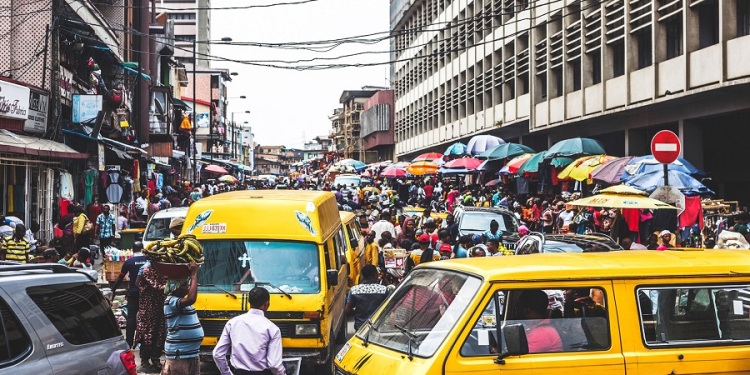
Twelve market women in Oshodi participate in an 'ajo,' a rotating savings scheme that has historically served as an informal bank for Nigerian traders. Each member contributes N50,000 monthly.
In January 2022, when Mama Aisha collected her N600,000, she purchased a second-hand chest freezer for N570,000, leaving her with N30,000. However, by January 2023, when Mama Chioma's turn came, food inflation had driven the price of the same freezer to N980,000.
Mama Chioma's N600,000 collection fell short by N380,000. This scenario, replicated across numerous 'ajo' and 'esusu' groups nationwide, demonstrates how inflation facilitates a significant, non-legislated transfer of real wealth from later participants to earlier ones.
The inflation episode from 2022 to 2024, which saw headline inflation reach a peak of 34.80% in December 2024 and food inflation consistently above 40% for much of that year, was more than just a price stability issue. It represented a large-scale redistribution of real wealth.
While inflation has moderated since early 2025, with headline inflation at 15.38% and food inflation at 14.31% as of March 2026 (partly due to rebasing on 2024 prices), this does not reverse the redistribution. The cumulative price level has not decreased.
Across Africa, inflation pressures in April 2026 remain mixed but generally elevated. Factors contributing to this include currency instability, food supply constraints, fiscal pressures, and reliance on imports.
Data from various countries' statistical offices indicates a wide range of inflation rates. While some economies are experiencing easing inflation due to tighter monetary policy and improved foreign exchange liquidity, others face structural challenges that sustain price pressures.
As of April 2026, inflation rates vary significantly across the continent. Burundi recorded the lowest rate among the top 10 African countries with the highest inflation, at 8.60% in April 2026, a decrease from 10.80%. This easing is attributed to improved food supply conditions and reduced short-term price pressures.
Sierra Leone's inflation rose to 10.24% in March 2026 from 8.05%, driven by a weak currency, reliance on imported food, and rising logistics and energy costs. Botswana saw a significant jump to 10.30% in April 2026 from 4.20%, largely due to imported inflation, higher fuel and transport costs, and exchange rate pass-through effects.
Rwanda experienced a sharp increase to 11.50% in April 2026 from 7.70%, linked to higher transport costs, imported inflation, and rising food prices. Angola recorded a slight decline in inflation from 12.42% to 11.58% in April 2026, supported by FX market stability and tight monetary policy, though food inflation remains a key concern.
Libya reported an inflation rate of 12.40% in March 2026.